Dual Frequency Fish Finder: A Quick Guide
A dual frequency fish finder uses two different sonar beams to help you find fish more effectively. One beam is narrow and good for identifying small targets precisely. The other is wider, covering more area to help you spot fish schools. This lets you see more detail and cover more water.
You might be wondering if it’s really worth upgrading to a dual frequency unit. We found that having both a narrow and a wide beam gives you a better overall picture of what’s beneath your boat. It’s like having two different tools that work together to give you a clearer view of fish and underwater structure.
- Dual frequency fish finders use two sonar beams.
- A narrow beam offers precise targeting.
- A wide beam covers more area.
- This combination helps you find more fish.
- It gives a better view of the underwater world.
Ready to learn more? Below, we’ll break down exactly what dual frequency fish finders do and how they can help you catch more fish.
Understanding Dual Frequency Fish Finders
A dual frequency fish finder sounds fancy, but it’s really about using two different types of sonar signals. Think of it like using two different tools for a job. One tool is for fine detail, and the other is for covering a lot of ground. This helps you see more of what’s happening below your boat.
How Sonar Works on Your Fish Finder
Fish finders send sound waves, called sonar, into the water. These waves bounce off objects like fish, the bottom, or underwater structures. The fish finder then listens for these returning echoes. It uses the time it takes for the echo to return to figure out how deep something is. The strength of the echo tells it about the size and type of object.
Why Two Frequencies?
Sonar frequencies affect how the sound waves travel. Higher frequencies have shorter, narrower beams. These beams provide more detail. They can pick out smaller objects and structure very clearly. However, these narrow beams don’t cover a large area. They are great for looking directly below your transducer.
Lower frequencies have longer, wider beams. These beams cover a much larger area of the water column. They are good for spotting schools of fish or general bottom contours. But, the wider beam can return a less detailed image. It might not pick up very small fish or subtle structure changes.
The Benefits of a Dual Beam System
When you combine these two types of beams, you get the best of both worlds. A dual frequency fish finder gives you both precision and coverage. You can use the narrow beam to identify a specific structure or a single fish. Then, you can switch to the wide beam to see if there are more fish nearby or in a larger school.
Pinpointing Your Target
Imagine you see a promising spot on your fish finder. With a dual frequency unit, you can use the narrow beam to get a close-up look. This beam helps you distinguish between a submerged log and a school of baitfish. It can even help you see the difference between a large game fish and the bottom structure it’s near.
Covering More Water Efficiently
The wide beam is your go-to for covering ground. If you’re trolling or moving across a large area, this beam helps you scan a broad swath of the water. You can spot groups of fish or changes in the lakebed without having to constantly steer your boat. This saves you time and helps you find where the fish are holding.
Understanding the Frequencies Used
Most dual frequency fish finders use two common frequencies. These are typically 200 kHz and 50 kHz. The 200 kHz frequency is the higher one. It provides that detailed, narrow beam we talked about. It’s excellent for shallow to medium depths.
The 50 kHz frequency is the lower one. It creates a wider beam that travels deeper into the water. This makes it ideal for fishing in deeper lakes or offshore. Research has shown that lower frequencies are better at penetrating deeper water and providing a clearer image there (NOAA).
Frequency Comparisons
It’s helpful to see how these two frequencies stack up. Here’s a simple comparison:
| Frequency | Beam Width | Detail Level | Best For |
|---|---|---|---|
| 200 kHz (High) | Narrow | High Detail | Pinpointing targets, shallow to medium depths |
| 50 kHz (Low) | Wide | Lower Detail | Covering large areas, deep water fishing |
Choosing the Right Dual Frequency Fish Finder
When you’re looking for a dual frequency fish finder, there are a few things to keep in mind. It’s not just about having two frequencies. It’s about how they work together and what other features your unit offers.
Consider Your Fishing Environment
Are you mostly fishing in shallow rivers or deep offshore waters? If you fish in shallow areas, the 200 kHz beam might be sufficient most of the time. However, even in shallow water, a wider beam can help you spot schools of fish moving through. For deeper water, the 50 kHz frequency is almost essential. It gives you a better chance of seeing what’s on the bottom.
Beam Angle Matters
The angle of the beam is also important. A wider beam angle on the 50 kHz setting will cover more ground. A narrower beam angle on the 200 kHz setting will give you sharper images. Many units will list the beam angle in degrees. For example, a 200 kHz beam might be 15-20 degrees, while a 50 kHz beam could be 40-60 degrees.
Other Features to Look For
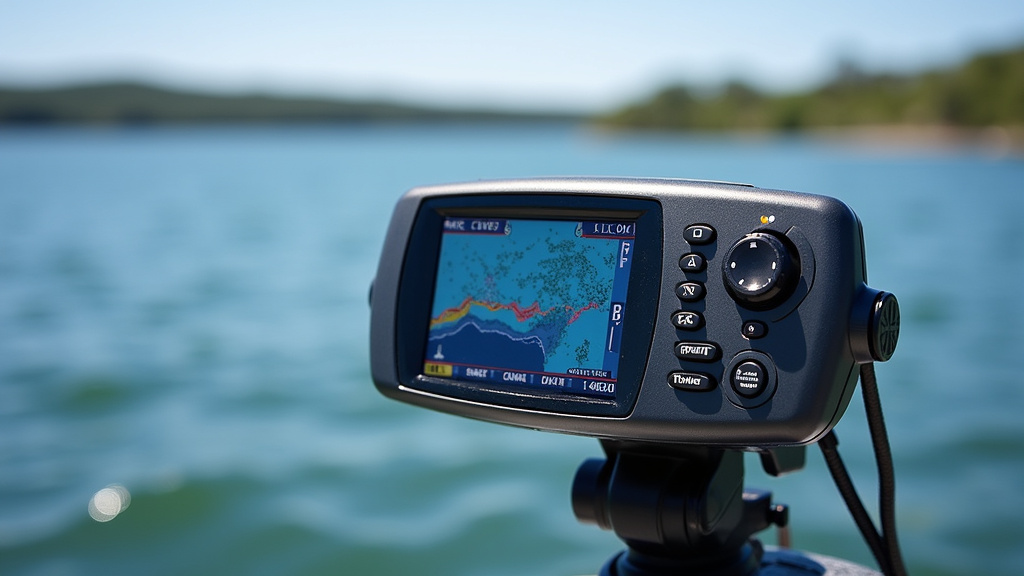
Beyond dual frequency, think about what else you need. Do you want GPS to mark spots? How about a color screen for better visibility? Many modern units offer down-imaging or side-imaging for even more detailed views. These can be great additions to your dual frequency setup. We found that a unit with a bright, clear screen made a big difference on sunny days.
Making the Most of Your Dual Frequency Unit
Once you have your dual frequency fish finder, learning to use it effectively is key. It takes a little practice, but you’ll soon see the benefits.
Practice and Experimentation
Don’t be afraid to switch between frequencies. Try using the narrow beam when you spot something interesting. Then, use the wide beam to see if there’s more to it. Many anglers find they use the 200 kHz beam for most of their fishing. They switch to the 50 kHz beam when they want a broader view or are in deeper water. Many experts suggest regular practice to build your interpreting skills (Bassmaster).
Interpreting the Display
Learn to read the different signals. A strong, solid return on the 200 kHz beam might be a large fish. A scattered return on the 50 kHz beam could indicate a school of smaller fish. The bottom can also look different on each frequency. The narrow beam shows sharp detail of rocks or weeds. The wide beam gives a smoother line for the general bottom contour.
A Checklist for Success
Here’s a quick checklist to help you get the most out of your dual frequency fish finder:
- Understand which frequency is active.
- Practice switching between beams.
- Observe how targets look on both frequencies.
- Learn to read the bottom on each beam.
- Note the depth and water conditions.
- Adjust sensitivity settings as needed.
Conclusion
You now know that a dual frequency fish finder offers a powerful advantage on the water. By combining a narrow, high-frequency beam for detail with a wide, low-frequency beam for coverage, you get a much clearer picture below. This lets you pinpoint fish and structure more effectively, whether you’re in shallow bays or deep offshore waters. Don’t be afraid to experiment with both frequencies. Start practicing with your unit today. You’ll soon be spotting more fish than ever before.
Frequently Asked Questions
Do I really need a dual frequency fish finder?
For most anglers, a dual frequency fish finder is a worthwhile upgrade. It provides a better overall view of what’s underwater compared to a single-frequency unit. You can get both detailed views and broad area coverage, which helps you find more fish in various conditions.
What’s the main difference between 200 kHz and 50 kHz?
The 200 kHz frequency uses a narrow beam and offers high detail, making it great for pinpointing targets in shallower water. The 50 kHz frequency uses a wider beam and penetrates deeper water, making it better for covering large areas and seeing in deeper conditions.
Can I use the narrow beam in deep water?
While the narrow 200 kHz beam provides great detail, its signal weakens significantly in deep water. For depths over 100 feet, the wider 50 kHz beam is generally more effective at showing bottom structure and fish. You’ll often use the 50 kHz setting for deeper fishing.
How do I know which frequency to use at any given time?
It’s best to learn by experimenting. Start with the 200 kHz beam in shallower areas to identify structure. If you see something interesting, switch to 50 kHz to see if there’s a larger school or more targets in the vicinity. In deeper water, you’ll likely start with the 50 kHz beam.
Are there fish finders with more than two frequencies?
Yes, some advanced fish finders offer triple or even quad frequency sonar. These units often add even higher frequencies for extreme detail in very shallow water, or additional lower frequencies for enhanced deep-water performance. However, for most everyday anglers, dual frequency provides an excellent balance of capability.