What Is a Fish Finder Screen Made Of? What to Know
A fish finder screen is typically made of an LCD or TFT display panel housed in a rugged, waterproof casing. Most modern screens use a liquid crystal display (LCD) to show sonar data, often protected by a durable, scratch-resistant surface.
We found that manufacturers prioritize sunlight-readable displays and durability for marine environments. The screen is a key component of the fish finder’s head unit, designed to withstand splashes, impacts, and harsh UV exposure while providing clear visuals.
- The primary component is an LCD or TFT display panel.
- It’s protected by a tough, often tempered glass or plastic cover.
- The casing is usually made from durable, waterproof plastic or composite material.
- Higher-end models may use brighter screens with better resolution for clarity.
- The entire assembly is built to be rugged and weather-resistant.
Below, we break down the specific materials and construction details that make these screens tough enough for life on the water.
What the Display Panel Itself Is Made Of
The heart of your fish finder screen is the display panel that creates the image you see. Most units use one of two main technologies. We found that the choice often comes down to balancing performance, power use, and cost.
LCD vs. TFT: The Common Choices
LCD (Liquid Crystal Display) is the standard in most fish finders. It works by using a backlight behind a layer of liquid crystals. The crystals twist to block or let light pass, creating the pixels of your map and sonar chart. It’s reliable and affordable.
TFT (Thin-Film Transistor) is a more advanced type of LCD. It adds a tiny transistor to each pixel. This gives you faster response times and better contrast. Many experts say TFT screens provide a sharper picture, especially on higher-end models.
The Role of the Backlight
An LED backlight is what makes the screen visible. Older units used fluorescent backlights, but LEDs are now standard. They are brighter, use less power, and last longer. The quality of this backlight is what makes a screen “sunlight-readable.” It has to be powerful enough to wash out the sun’s glare.
The Protective Cover Over the Display
You wouldn’t put an expensive screen on your boat without protecting it. The clear layer in front of the display panel is critical for durability. It has to fight scratches, impacts, and UV rays from the sun.
Glass vs. Plastic: The Clear Shield
Manufacturers use two main materials for this shield. Tempered glass is found on premium models. It’s very hard and resists scratches from keys or sand. It also provides the clearest possible view.
The downside? It can be heavier and, if it breaks, it shatters into many small pieces.
Polycarbonate or Acrylic plastic is more common. It’s lightweight and incredibly tough against impact. It won’t shatter if you drop a wrench on it. The trade-off is that it scratches more easily than glass. Some higher-end plastics have special coatings to improve scratch resistance.
Coatings That Make a Difference
Beyond the base material, special coatings add important features. An anti-glare coating reduces reflections, helping you see in bright light. A hard coating adds a layer of scratch resistance to plastic covers. We found that oleophobic coatings are also used to repel fingerprints and water spots.
The Rugged Casing That Houses It All
The screen doesn’t float in mid-air. It’s encased in a tough housing that forms the front of the head unit. This casing has to protect the internal electronics from water, salt, and physical shocks.
Common Materials for the Housing
ABS Plastic is a very common choice. It’s a hard, durable thermoplastic that’s easy to mold and relatively inexpensive. It holds up well in marine environments.
Polycarbonate Blends are sometimes used for even greater impact resistance. These are the materials used in things like safety glasses and bulletproof barriers.
Fiberglass-Reinforced Plastic is another option. Adding glass fibers to the plastic mix makes the housing stiffer and stronger, often without adding much weight.
How It’s Built to Be Waterproof
Getting the materials right is only half the battle. How they are assembled determines if water gets inside. Every joint, button, and port is a potential leak point.
Manufacturers use a combination of methods. Ultrasonic welding can fuse plastic parts together without glue or screws, creating a solid seal. Rubber gaskets are placed around the edges and buttons. When the unit is screwed together, these gaskets compress to block water. Potted electronics means the circuit boards are sometimes covered in a protective compound, shielding them from any moisture that might sneak in.
Understanding Waterproof Ratings
You’ll see ratings like IPX7 or IPX8 on the box. This isn’t marketing jargon; it’s a standard from the International Electrotechnical Commission. It tells you exactly how waterproof the unit is.
| Rating | What It Means | Typical Use |
|---|---|---|
| IPX6 | Protected against powerful water jets. | Handles heavy spray and rain. |
| IPX7 | Protected against temporary immersion in water (up to 1 meter for 30 minutes). | Can survive a splash or brief dunk. |
| IPX8 | Protected against continuous immersion beyond 1 meter. | Suitable for permanent marine installation. |
For a boat-mounted fish finder, IPX7 is the minimum you should consider. IPX8 provides even more peace of mind.
Sunlight Readability: More Than Just Brightness
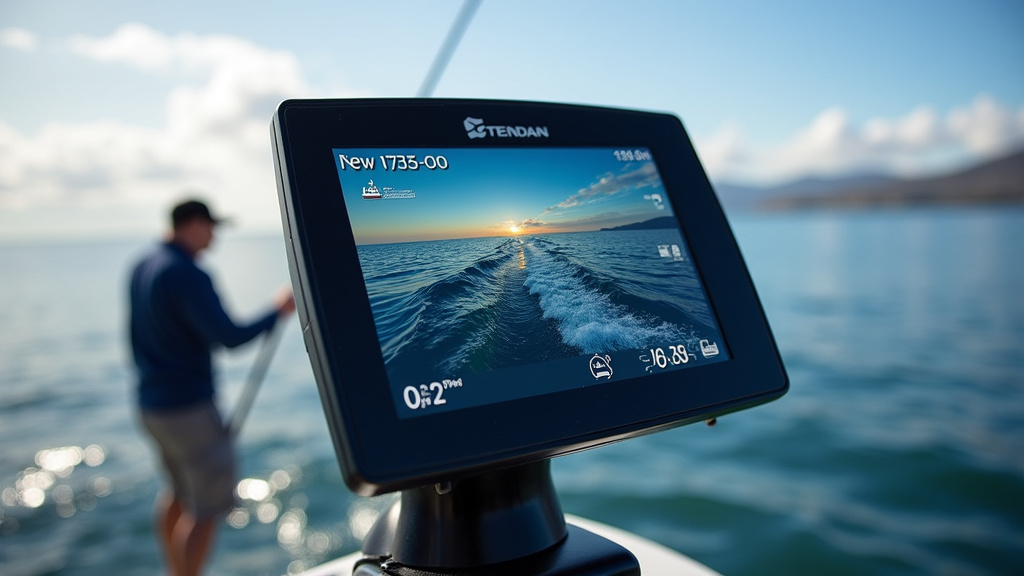
A screen that looks great in your garage is useless if you can’t see it on the water at noon. Sunlight readability is a complex feature. It depends on the backlight intensity, measured in nits. Many units now have 1000 nits or more.
But brightness alone isn’t enough. The display’s contrast ratio matters too. This is the difference between the brightest white and the darkest black. A higher contrast ratio makes symbols and fish arches pop against the background. Some premium screens also use optical bonding, where air is removed between the display and the protective cover, reducing internal glare.
Durability Standards and Testing
How do companies know their screens will last? We found that reputable brands conduct rigorous testing. Units might be subjected to salt spray chambers to test for corrosion. They undergo vibration testing to simulate a boat engine’s constant rumble.
They also perform drop tests, where the unit is dropped from a specified height onto hard surfaces. Temperature cycling tests expose the unit to extreme hot and cold to ensure materials don’t crack or fail. These tests often align with military standards (MIL-STD) for ruggedness.
What to Look For When Shopping
Now you know what it’s made of. But how do you choose? Focus on these practical aspects when comparing models.
- Check the IP Rating: Don’t settle for less than IPX7 for a primary unit.
- Look at Nits: Higher is better for daytime viewing. 700-1000+ nits is a good range.
- Ask About the Cover: Is it glass or plastic? Does it have scratch-resistant coating?
- Consider the Mount: A strong, gimbal-mounted bracket reduces vibration and makes adjustment easy.
- Read Reviews for Real-World Use: See what other boaters say about durability and screen glare after months of use.
Checklist: Inspecting a Fish Finder Screen
When you have the unit in your hands, give it a quick once-over with these points in mind.
- Is the protective cover free of any deep scratches or imperfections?
- Do the buttons feel solid and click positively, with no sticking?
- Is the casing free of cracks, and are all screw holes intact?
- Does the power port have a sturdy rubber cap that seals tightly?
- Is the screen mounting bracket made of thick, corrosion-resistant metal?
Choosing a fish finder means trusting it will work when you need it. Understanding what the screen is made of helps you pick a unit built for the long haul, not just the first sunny day. Focus on the quality of the display panel, the protective cover, and the waterproof assembly, and you’ll find a screen that serves you well for seasons to come.
Conclusion
You now know what goes into a durable fish finder screen. The display is an LCD or TFT panel, shielded by tempered glass or tough plastic. This assembly is housed in rugged, waterproof materials like ABS or fiberglass-reinforced plastic. Remember, the key to longevity is a quality protective cover, high nit brightness for sunlight, and a solid IPX7+ rating. This knowledge helps you look beyond specs and assess real-world build quality. Your next step should be visiting a marine retailer to handle different models. Compare the screen feel, button solidity, and bracket strength yourself. Trust what you can see and touch, and you’ll choose a unit built to last.
Frequently Asked Questions
Can a cracked fish finder screen be repaired?
Repairing a cracked screen is often not cost-effective. The display panel, protective cover, and waterproof seals are typically integrated as one sealed unit. For most models, replacing the entire head unit is the standard and more reliable solution.
How should I clean my fish finder screen without damaging it?
Use a soft, damp microfiber cloth to wipe away dust and salt spray. For stubborn grime, a cloth lightly dampened with water or a mild, non-ammonia glass cleaner is safe. Never use paper towels, abrasive cleaners, or harsh chemicals, as they can scratch the surface or strip coatings.
How long can I expect a fish finder screen to last?
A well-maintained fish finder can last 5 to 10 years or more. The primary factors are UV exposure and saltwater corrosion. Always rinse the unit with fresh water after use in saltwater and use a protective cover when it’s not in use.
Is it safe to mount a fish finder on the console using suction cups?
While suction cup mounts exist, they are generally not recommended for permanent console mounting. They can fail from vibration, temperature changes, or impacts, potentially damaging your unit. A fixed, screw-mounted gimbal bracket is the most secure and trustworthy method.
Can I use a pressure washer to clean my fish finder?
No, you should never use a pressure washer. The high-pressure stream can force water past the seals, even on highly rated units, causing internal damage. Stick to rinsing with a gentle stream of fresh water from a hose.