What Does CHIRP Stand for in Fish Finders?
CHIRP in fish finders stands for Compressed High Intensity Radar Pulse. It’s a type of sonar technology that sends out a chirped frequency sweep rather than a single traditional frequency. This allows your fish finder to paint a much clearer picture of what’s below your boat.
Unlike older sonar systems, CHIRP sonar uses a range of frequencies for each pulse. This means it can distinguish between closely spaced objects, like fish holding tight to structure. Many anglers find CHIRP technology offers superior target separation and detail.
- CHIRP means Compressed High Intensity Radar Pulse.
- It uses a range of frequencies for better sonar signals.
- This leads to clearer images and better fish detection.
- CHIRP offers superior target separation.
Ready to understand how this advanced sonar can help you find more fish? Let’s break down exactly what CHIRP means for your fishing trips.
Understanding CHIRP Technology in Your Fish Finder
CHIRP technology in fish finders is a big deal for anglers. It simply means Compressed High Intensity Radar Pulse. This isn’t just a fancy acronym. It’s a smarter way for your fish finder to see what’s underwater. Think of it as upgrading from a fuzzy black-and-white TV to a high-definition, color screen. CHIRP helps you see fish and structure with much greater clarity. This technology can make a real difference in your success on the water. We’ll dive into how it works and why it’s better than older sonar types.
How CHIRP Sonar Differs from Traditional Sonar
You might be familiar with traditional sonar. Traditional sonar sends out a single, constant frequency pulse. It’s like tapping a bell once. You get a sound, and you can tell how far away something is based on the echo. It works, but it has limitations. CHIRP sonar is different. Instead of one frequency, it sends out a sweep of frequencies with each pulse. Imagine ringing a bell that gradually gets louder and then softer. This sweep allows the sonar to gather much more information.
The Single Frequency Approach of Traditional Sonar
Traditional fish finders use what’s called a single-frequency pulse. This pulse is either high or low. A high frequency offers great detail but doesn’t penetrate deep water well. A low frequency penetrates deep water but offers less detail. You often have to choose between detail and depth. This can be frustrating when you’re trying to find fish in different conditions. You might miss fish if they are small or close together.
The Multi-Frequency Advantage of CHIRP
CHIRP sonar changes this by sending out a range of frequencies with every ping. This pulse starts low and sweeps up to high, or vice versa. This multi-frequency approach gives your fish finder a broader picture. It’s like getting multiple perspectives at once. The technology then analyzes these returning echoes. It can differentiate between signals that are very close together. This is a huge improvement for identifying individual fish.
What the “Compressed High Intensity Radar Pulse” Really Means
Let’s break down that acronym: CHIRP stands for Compressed High Intensity Radar Pulse. What does that tell us? First, “Compressed.” The pulse is sent out in a way that allows for a lot of energy to be packed into a shorter time. This makes the signal stronger. Second, “High Intensity.” This means the signal is powerful. A stronger signal can travel further and return clearer echoes, even in deep water. Finally, “Radar Pulse.” While it uses “radar” in the name, it’s important to remember this is still sonar technology. It’s about sound waves, not radio waves.
The “Compressed” Aspect: More Energy, Less Time
The “compressed” part of CHIRP is key. Traditional sonar sends out a pulse of a single frequency for a set duration. CHIRP uses advanced signal processing. It sends out a pulse that contains a range of frequencies over that same duration, but with more power packed in. Think of it like a compressed audio file. You get more information in a smaller package. This allows the fish finder to send out a stronger signal without needing a physically larger transducer.
The “High Intensity” Factor: A Stronger Signal
“High Intensity” refers to the power of the sonar pulse. Because CHIRP uses signal processing to compress the energy, it can deliver a more powerful pulse. This stronger pulse travels further into the water and bounces back more effectively. This means you get clearer readings, especially in deeper water. It’s like shouting versus whispering. The louder shout (high intensity pulse) is easier to hear and understand, even from a distance.
Benefits of Using CHIRP Fish Finders
So, why should you care about CHIRP? The benefits translate directly to better fishing. You’ll see clearer images, better target separation, and improved fish detection. This means fewer missed opportunities and more confidence in your sonar readings. It’s about making smarter decisions on the water. Let’s look at the specific advantages.
Superior Target Separation: Seeing Individual Fish
This is perhaps the biggest advantage of CHIRP. Traditional sonar can sometimes show closely spaced fish as one large blob. CHIRP’s ability to differentiate between frequencies allows it to tell these fish apart. Research has shown that CHIRP can achieve much better target separation. This means if there are two fish right next to each other, or a fish right next to a log, you’re more likely to see them as distinct targets. This is a game-changer when trying to target specific fish.
Clearer Sonar Images: Less Clutter, More Detail
CHIRP sonar provides a cleaner, more detailed image on your fish finder screen. By sweeping through frequencies, it reduces “noise” or interference. This clutter can obscure important details on traditional sonar. CHIRP filters out much of this unwanted signal. The result is a crisper, more defined image of the bottom, underwater structures, and any fish present. You’ll be able to see subtle changes in the bottom contour and identify bait balls more easily.
Improved Fish Detection: From Small Baitfish to Big Game
Whether you’re targeting small panfish or large game fish, CHIRP offers enhanced detection. The improved clarity means that even small fish or baitfish will stand out. For larger fish, the clearer signal helps in identifying them more reliably, even when they are near the bottom or other structures. Many experts agree that CHIRP technology significantly improves the chances of detecting fish that might be missed by older sonar systems. This gives you a real advantage.
Better Performance in Different Water Conditions
CHIRP technology performs well across a variety of water depths and conditions. The ability to use a range of frequencies means it can adapt. In deeper water, the lower frequencies in the sweep can penetrate effectively. In shallower water, the higher frequencies provide fine detail. This versatility makes CHIRP a reliable choice for all types of fishing. You won’t have to worry as much about switching settings between different fishing spots.
CHIRP Frequencies: What to Look For
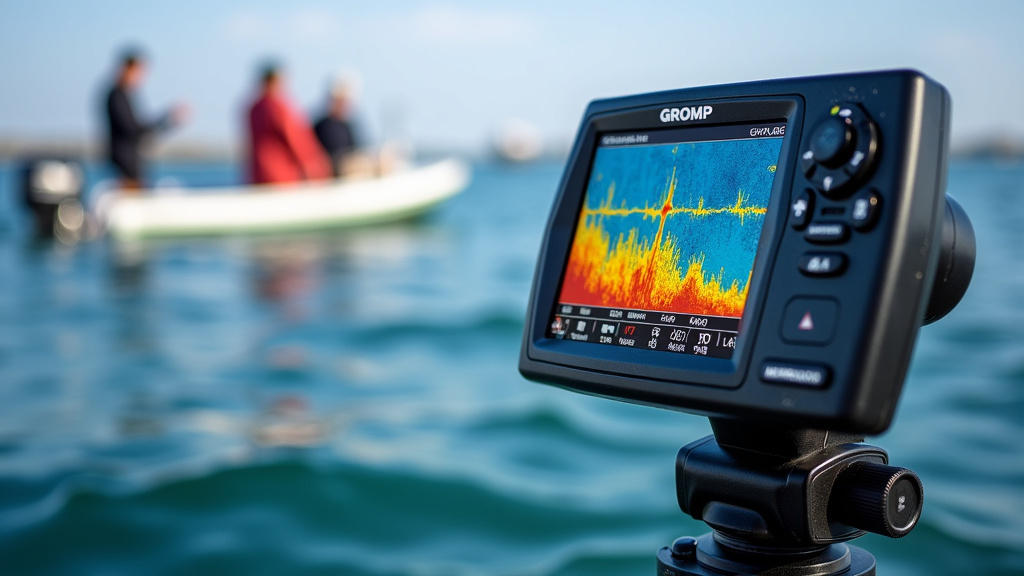
CHIRP fish finders typically operate using a range of frequencies. These are often categorized into three types: low, medium, and high. Different CHIRP units will offer different combinations of these frequencies. Understanding these can help you choose the right unit for your needs.
Low Frequency Range
The low-frequency CHIRP range typically spans from about 28 kHz to 50 kHz. These frequencies are excellent for penetrating deep water. They provide a wider cone angle, meaning they cover a larger area of the bottom. However, they offer less detail compared to higher frequencies. They are great for getting a broad overview of the underwater terrain.
Medium Frequency Range
Medium frequency CHIRP usually falls between 80 kHz and 130 kHz. This range offers a good balance between depth penetration and detail. Many anglers find this range to be a versatile sweet spot for general fishing. It provides good coverage and a reasonable level of detail for identifying fish and structure.
High Frequency Range
The high-frequency CHIRP range typically starts around 130 kHz and can go up to 250 kHz or even higher. These frequencies offer the most detail and target separation. They are excellent for shallow water or when you need to pinpoint specific objects or identify very small fish. However, their penetration depth is limited, and they have a narrower cone angle.
Choosing a CHIRP Fish Finder: What to Consider
When you’re looking for a new fish finder with CHIRP, a few things are important. You’ll see terms like “Full Spectrum CHIRP,” “Wide CHIRP,” or specific frequency ranges. Consider what type of fishing you do most often.
- Full Spectrum CHIRP: This means the unit can broadcast and receive across the entire range of frequencies available. This offers the most versatility.
- CHIRP Transducer: Make sure your fish finder comes with a CHIRP-compatible transducer. The transducer is what sends and receives the sonar waves.
- Your Target Depth: If you fish in deep water, look for units that emphasize low-frequency CHIRP capabilities.
- Detail Needs: For shallow water or identifying small bait, prioritize high-frequency CHIRP.
- Screen Size and Resolution: A larger, higher-resolution screen will make those detailed CHIRP images easier to see.
Ultimately, the best CHIRP fish finder for you will depend on your fishing style and budget. But understanding the core principles of CHIRP will help you make an informed decision. You’ll be better equipped to see what’s below the surface.
Conclusion
You’ve learned that CHIRP stands for Compressed High Intensity Radar Pulse. This sonar technology uses a range of frequencies to give you a clearer picture underwater. It’s a significant upgrade from traditional single-frequency sonar. You’ll experience better target separation, meaning you can see individual fish more easily. Plus, CHIRP provides less cluttered and more detailed sonar images. This helps you make smarter decisions on the water. Ready to upgrade your fishing experience? Consider a CHIRP fish finder for your next outing to see the difference for yourself.
Frequently Asked Questions
Is CHIRP technology worth the extra cost for a fish finder?
For many anglers, CHIRP technology is worth the investment. It provides much clearer images and better fish detection than traditional sonar. This can lead to more successful fishing trips. If you’re serious about finding fish and understanding what’s below your boat, CHIRP is a strong consideration.
Can I upgrade my existing fish finder to CHIRP?
You cannot simply upgrade older fish finder models to CHIRP sonar. CHIRP technology requires specific hardware, especially the transducer, to work. You’ll need to purchase a new fish finder unit that is designed to use CHIRP sonar. Ensure any new unit you consider is CHIRP-compatible.
What’s the difference between “Full Spectrum CHIRP” and regular CHIRP?
Full Spectrum CHIRP means the unit can transmit and receive across the entire range of frequencies available in its CHIRP system. Regular CHIRP might use a more limited set of frequencies. Full Spectrum offers the most versatility and detail for various fishing conditions.
Does CHIRP sonar work better in saltwater or freshwater?
CHIRP sonar performs well in both saltwater and freshwater environments. Its ability to use a range of frequencies helps it adapt to different water conditions. It offers improved clarity and target separation regardless of whether you are fishing in a lake or the ocean.
How does CHIRP sonar help identify different types of fish?
CHIRP’s superior target separation allows it to distinguish between closely grouped fish. The detailed images can also help differentiate between fish size and behavior. For example, you might better identify a school of baitfish versus a larger game fish nearby.