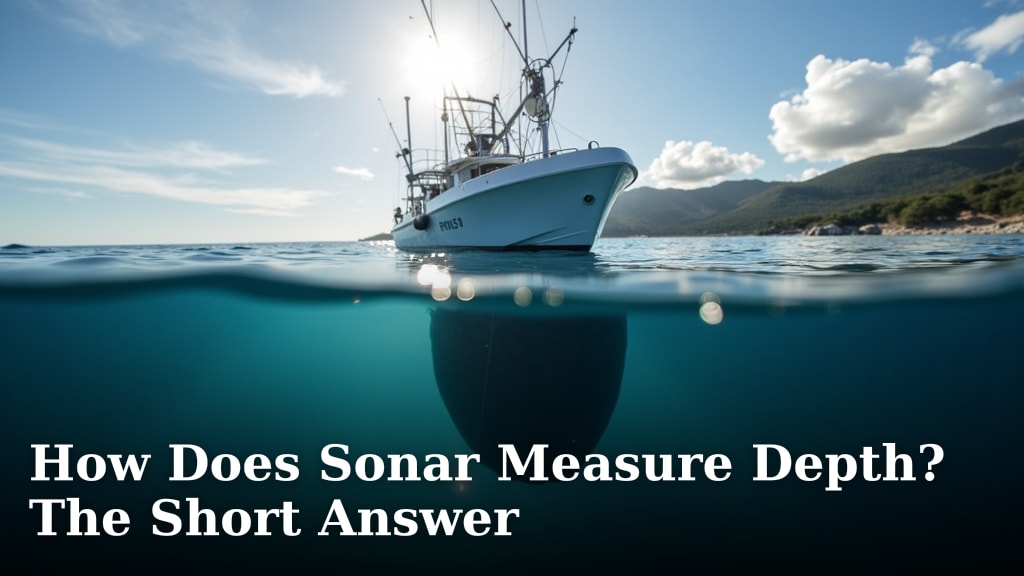
How Does Sonar Measure Depth? The Short Answer
Sonar measures depth by sending sound waves down and timing how long it takes for them to bounce back. This technique, often called echolocation, works by calculating the time of flight of the sound pulse. The faster the echo returns, the shallower the water, and the longer it takes, the deeper the water. It’s a lot like how bats use sound to navigate!
This reliable method is fundamental for everything from fishing to navigation. By using these sound pulses, sonar systems create a clear picture of the underwater terrain. Understanding how sonar works helps you make better decisions on the water, ensuring safety and efficiency. It’s a clever application of basic physics.
- Sonar sends sound waves and listens for echoes.
- The time it takes for the echo to return tells us the depth.
- Faster echoes mean shallower water.
- Slower echoes mean deeper water.
- This method is vital for boating and fishing.
Let’s break down the simple science behind how sonar measures depth, step by step.
Understanding How Sonar Gauges Water Depth
Sonar is a clever tool that helps us understand what’s beneath the surface of the water. It works by sending out sound waves and then listening for them to bounce back. Think of it like shouting in a canyon and listening for your echo. The time it takes for that echo to return tells us how far away a surface is. In sonar, that surface is usually the bottom of a lake, river, or ocean.
The core principle is simple physics: sound travels at a known speed through water. By measuring the time it takes for a sound pulse to travel down and back, we can calculate the distance. This distance is, of course, the water depth. It’s a very reliable way to get accurate depth readings, which is why it’s used in so many applications.
The Science Behind the Sound Waves
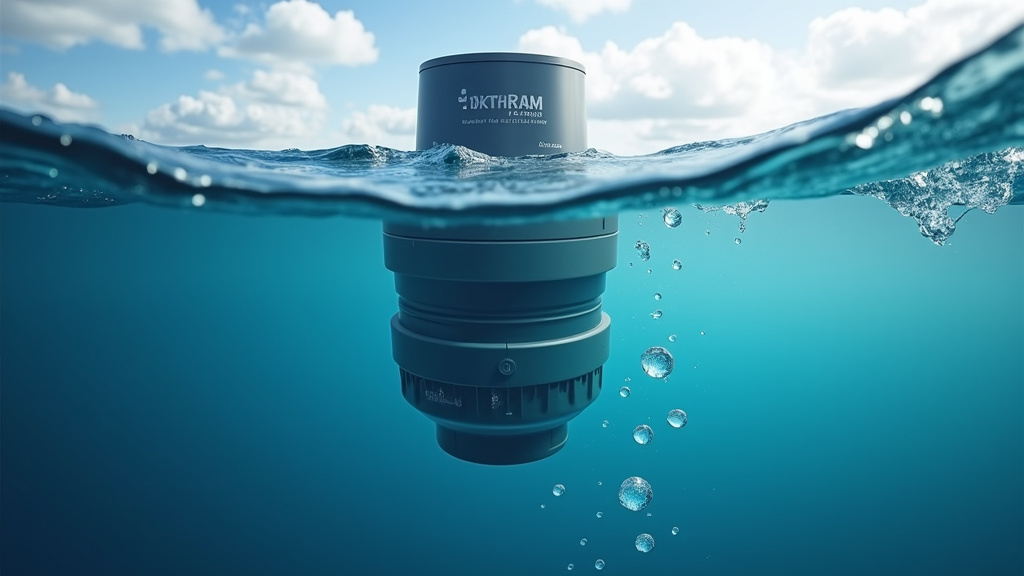
At its heart, sonar uses a device called a transducer. This is the part of your fish finder or depth sounder that both sends out the sound pulse and receives the echo. When the transducer sends out a pulse, it’s like a quick, sharp sound wave. This wave travels downwards through the water. If it hits anything solid, like the seabed, it bounces back towards the surface.
The transducer is designed to pick up these returning sound waves, or echoes. It’s like having super-sensitive ears that can hear the faintest whisper from the depths. The sonar unit then takes this information and does some quick math to figure out the depth.
Sending Out the Signal: The “Ping”
The sound wave sent out by the transducer is often called a “ping.” It’s not a continuous sound, but a short burst of acoustic energy. This ping is sent out at a specific frequency. Different frequencies have different properties. Higher frequencies provide more detail but don’t travel as far. Lower frequencies travel further but offer less detail. Your sonar device chooses the best frequency for the job.
The transducer essentially acts like a speaker for this ping. It vibrates very rapidly to create the sound waves. The strength of the ping can also be adjusted, much like the volume on a stereo. A stronger ping might be needed to reach deeper water or cut through noisy conditions.
Receiving the Echo: The Return Trip
Once the sound wave hits the bottom, it reflects back up. This reflected wave is the echo. The transducer, after sending the ping, immediately switches to “listening mode.” It’s like waiting for your echo to come back after you shout. The echo returns to the transducer, causing it to vibrate in response.
The sonar unit then measures the exact moment this echo is received. This measurement is incredibly precise. It’s this precise timing that is the key to accurate depth measurement. The sooner the echo is heard, the closer the bottom is.
Calculating the Depth: Time of Flight
The entire process is based on something called the “time of flight.” This is simply the total time it takes for the sound pulse to travel from the transducer to the bottom and back again. Let’s say the entire trip takes 1 second. Since the sound had to go down and then back up, the actual one-way trip to the bottom took only half a second (0.5 seconds).
The sonar unit knows the speed of sound in water. This speed can vary slightly depending on water temperature, salinity, and pressure, but sonar units are designed to account for these factors. For example, the average speed of sound in freshwater is about 4,820 feet per second. In saltwater, it’s a bit faster, around 5,000 feet per second.
The Simple Math Involved
Here’s where the calculation happens. If the round trip took 0.5 seconds, and sound travels at 4,820 feet per second, the math is:
Distance = Speed × Time
But we need the one-way time, so:
Depth = (Speed of Sound × Time of Flight) / 2
So, if the time of flight was 0.5 seconds and the speed of sound was 4,820 feet per second:
Depth = (4,820 ft/s × 0.5 s) / 2
Depth = 2,410 ft / 2
Depth = 1,205 feet
This calculation is done thousands of times per second by your sonar unit. This allows it to provide a nearly instantaneous depth reading on your display. It’s a constant process of sending, receiving, and calculating.
Factors Affecting Sonar Readings
While the basic principle is straightforward, several things can influence how well your sonar works and the accuracy of its readings. You’ve probably noticed that water conditions can change how things appear underwater.
Water Conditions
The speed of sound is the most critical factor influenced by water conditions. As mentioned, temperature, salinity (how much salt is in the water), and pressure (which increases with depth) all affect this speed. Most sonar units have built-in sensors or allow you to input these conditions to make adjustments.
You might also encounter what’s called “air entrainment.” This happens when a lot of air bubbles are present in the water, often from waves, rain, or the boat’s propeller. These bubbles can scatter the sound waves, making it harder for the sonar to get a clear echo from the bottom. This can lead to erratic or missing depth readings.
The Seabed or Lakebed Material
What the sound wave hits also matters. A hard, rocky bottom will reflect the sound wave very strongly, giving a clear, sharp echo. This is ideal for accurate depth readings.
However, soft mud or thick weeds can absorb a lot of the sound energy. This means the echo returning to the transducer will be weaker and might be harder for the sonar to detect reliably. In these cases, the sonar might show a deeper reading than what’s actually there, or it might struggle to get a lock on the bottom at all. It’s like trying to hear an echo in a soft, carpeted room versus a stone hall.
What Your Sonar Display Shows You
The information gathered by the sonar is translated into an easy-to-understand display on your fish finder or chartplotter. You’re not just seeing numbers; you’re seeing a representation of the underwater world.
Depth Readings and Symbols
The most obvious display is the numerical depth reading, usually shown in feet or meters. This is the primary piece of information. But many units also use graphical displays to show the bottom contour. You might see a line representing the seabed, which can help you identify drop-offs, humps, and other underwater features.
Some sonar systems also have indicators for water temperature and even water clarity. These are additional pieces of data that can be helpful for understanding fish behavior and choosing the right fishing spots. It’s like getting a whole report card on the water you’re on.
Interpreting the Bottom Structure
Beyond just depth, sonar can give you clues about the type of bottom you’re over. A strong, solid line on the display often indicates a hard bottom like rock or gravel. A softer, fuzzier line might suggest mud or sand. This interpretation is key for anglers looking for specific types of fish that prefer certain bottom structures.
Modern fish finders often use different types of sonar technology, like DownScan or SideScan, which provide even more detailed images of the bottom and structures directly below or to the sides of your boat. This advanced imaging helps you see things like submerged trees, rocks, and even schools of fish with remarkable clarity.
A Quick Checklist for Understanding Sonar Depth
Let’s quickly recap the main points about how sonar measures depth:
- Sonar sends sound waves (pings) down into the water.
- It listens for the echoes that bounce back from the bottom.
- The time it takes for the echo to return is measured precisely.
- This “time of flight” is used with the speed of sound to calculate depth.
- Water conditions and bottom material can affect the accuracy.
- Sonar displays depth numbers and often graphical representations of the bottom.
Conclusion
You’ve learned that sonar measures depth through a simple yet clever process of sending sound waves and timing their echoes. This “time of flight” calculation, combined with the known speed of sound in water, gives you accurate depth readings. Remember that factors like water temperature and bottom material can influence these readings, so keep that in mind when you’re out on the water. Understanding this basic science helps you use your sonar more effectively for safer boating and more successful fishing. Now, you’re better equipped to interpret what your fish finder is telling you.
Frequently Asked Questions
Does the type of boat affect how sonar works?
Not directly. The sonar unit itself is what sends and receives the sound waves. However, the boat’s propeller can create air bubbles that interfere with sonar signals, especially in rough water or at high speeds. Keeping your transducer clean and positioned correctly can help minimize these issues.
Can sonar tell me what kind of fish are in the water?
Basic sonar primarily tells you depth and shows you the shape of the bottom. More advanced fish finders use different sonar technologies to help you identify fish arches or schools of fish. However, they don’t typically identify the species of fish directly.
How often does my sonar unit send out a “ping”?
Your sonar unit sends out pings very rapidly, often thousands of times per second. This constant stream of pings allows it to create a near real-time image of the underwater environment on your display, giving you up-to-date information as you move.
Why might my sonar reading jump around sometimes?
Erratic sonar readings can happen if the sound waves are being scattered or absorbed. This is often caused by things like air bubbles in the water, dense weeds, or very soft mud on the bottom. A hard, clear bottom will usually provide the most consistent readings.
Can I use sonar in very shallow water, like a creek?
Yes, you can, but it’s important to use the right settings. Higher frequency sonar beams provide more detail in shallow water but don’t travel as far. Ensure your transducer is mounted properly to avoid hitting the bottom and that your unit is set to a shallow water mode if available.