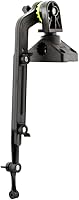
9 Best Fish Finder Mounts for Ice Fishing (November 2026)
The best fish finder mount for ice fishing include the Scotty 0163 Ball-Mount Fish Finder and Universal for shuttle and shelter screens, the WINDFRD Aluminum Swing Arm Fish Finder Mount for large 5 to 12-inch screens, and the EDSRDPLT Universal Kayak Fish Finder Mount for all-in-one track and transducer setups.
On this page (7 sections)
The best fish finder mount for ice fishing is the Scotty 0163 Ball-Mount, because it holds a 7 to 9-inch screen 6.5 inches up on a 1.5-inch ball.
That height clears a shuttle rail and the ball lets you tilt away from glare with gloves on.
You do not need a special ice-only mount.
You need a stable base, the right plate for your unit and joints that stay tight when cold.
Our score weighs specs, features and buyer feedback against what you are shopping for.
Start with the best fish finder for ice fishing guide if you have not picked a unit yet.
A mount cannot fix a unit that does not suit ice use in the first place.
Our picks at a glance
-
1
 Best for shuttle and shelter screens
Scotty 0163 Ball-Mount Fish Finder and Universal
9.7/10 our score
See it on Amazon -
2
 Best for large 5 to 12-inch screens
WINDFRD Aluminum Swing Arm Fish Finder Mount
9.6/10 our score
See it on Amazon -
3
 Best for all-in-one track and transducer setups
EDSRDPLT Universal Kayak Fish Finder Mount
9.2/10 our score
See it on Amazon
- 4
 Check it
EDSRDPLT Fish Finder Mount Base
Best for 360-degree freezing-weather tweaks - 5
 Check it
WINDFRD Fish Finder Track Mount with Transducer
Best for screen plus transducer on one track - 6
 Check it
RAM MOUNTS Fish Finder Mount for Humminbird
Best for Humminbird Helix 8, 9, 10 and Solix 10 - 7
 Check it
Brocraft Marine Universal Fish Finder Mount
Best for quick-removal L-shape deck mounts - 8
 Check it
Scotty 367 Universal Fish Finder Mount
Best for 7 to 9-inch screens on a budget - 9
 Check it
Railblaza Fish Finder Mount R-Lock R
Best for low-profile removable deck bases
Best fish finder mounts for ice fishing: the 9 picks compared
The Scotty 0163 leads for a shuttle or shelter because its plate and height match common 7 to 9-inch screens.
The WINDFRD swing arm follows for larger screens, and track kits cover anglers who want a transducer arm in the same setup.
Scotty 0163 Ball-Mount Fish Finder and Universal: Best for shuttle and shelter screens
- 1.5-inch ball mount
- Plate for 7 to 9-inch fish finders
- Mount height 6.5 in
- Base 2.25 x 2.25 in
A tall ball mount that holds a 7 to 9-inch screen steady on a shuttle or shelter frame.
Pros
- Fits 7 to 9-inch screens
- 6.5-inch height clears a shuttle rail
- Smooth full range of motion
Cons
- Ball system needs a matching base
- Plastic construction
This mount suits an angler who fishes from a shuttle, a flip shelter or a portable pack with a 7 to 9-inch screen.
The plate is shaped for 7 to 9-inch fish finders, so a common ice unit sits flat without an adapter.
The 1.5-inch ball gives strong clamping force while still moving through a full range of motion.
That matters on ice, where you may loosen, tilt and retighten with gloves on several times in a morning.
Standing 6.5 inches tall on a 2.25 by 2.25-inch base, it lifts the screen above a shuttle rail or a bucket rim.
You can see it from a seated position without crowding your skimmer or tip-downs.
Scotty makes this in black plastic and rates it water resistant.
Cold plastic can stiffen, so tighten the knob firmly and check it after the shelter warms up.
The trade-off is the ball system itself.
You need a matching base, and plastic will not match an all-aluminum arm for raw strength.
For most ice screens, though, this balance of height, fit and motion is hard to beat.
WINDFRD Aluminum Swing Arm Fish Finder Mount: Best for large 5 to 12-inch screens
- Aluminum swing arm
- Fits 5 to 12-inch screens
- 360-degree rotation
- 110 lb static capacity
A heavy-duty aluminum arm with two pivots for big screens that must not wobble on ice.
Pros
- Handles screens over 10 in
- All-aluminum build
- Two pivot points rotate 360 degrees
Cons
- Heavier than ball mounts
- Drill-down base suits fixed installs
This arm suits an angler running a large screen, up to 12 inches, on a fixed shuttle or shelter frame.
It is built around a 6-inch aluminum arm with two pivot points, so the screen rotates a full 360 degrees.
WINDFRD rates it for 110 lb static and 22 lb dynamic load, so a big unit will not sag when you swing it toward you.
The base drills down to a flat surface, such as a dashboard or deck. On ice, that suits a hard shuttle frame or a screwed-down shelter board, not a bare bucket.
Powder-coated marine-grade aluminum and stainless hardware resist salt spray for thousands of hours.
For ice use, the real benefit is stiffness. The arm will not flex like a smaller plastic ball when a cable tugs on the screen.
Compatibility lists cover Garmin, Lowrance and Humminbird units in the 5 to 12-inch range. Confirm your exact model against that list before you order.
The trade-off is weight and permanence. At 2.3 lb and drill-down, it is not the pick for a mount you carry in a pack.
Choose it when strength for a big screen matters more than portability.
EDSRDPLT Universal Kayak Fish Finder Mount: Best for all-in-one track and transducer setups
- Transducer arm 9 to 14 in
- Tool-free rail install
- 1.5-inch ball head
- Track base included
A kit with a fish finder mount and telescoping transducer arm for track systems.
Pros
- No tools or drilling
- Adjustable transducer arm
- One-box kit
Cons
- Needs a gear track
- Kayak-first design
This kit suits an angler who wants the screen and the transducer in one sliding setup.
It includes a 1.5-inch ball head, a fish finder mount, a track base and a telescoping transducer arm.
The arm adjusts from 9 to 14 inches, so you can fine-tune transducer depth and angle for clearer readings.
That reach helps on a shelter edge where a short arm would put the transducer too close to the screen mount.
Installation is tool-free on a gear track, with no drilling. For ice fishing, the kit can move between tracks on a shuttle or a kayak without new holes.
EDSRDPLT builds it from marine-grade composite and stainless steel. The parts resist sun, salt and splash, and the design comes off fast for transport or storage.
Compatibility covers most Garmin, Lowrance and Humminbird models. Check your unit's plate pattern before you rely on that claim.
The trade-off is the track requirement. Without a gear track, this kit has nothing to grab.
It is also a kayak-first design, so a flasher user may not need the transducer arm.
EDSRDPLT Fish Finder Mount Base: Best for 360-degree freezing-weather tweaks
- 360-degree dual ball joint
- 1.5-inch ball
- AMPS pattern
- Marine-grade composite
A dual ball bracket you loosen, angle and tighten for a glare-free view.
Pros
- Any-angle adjustment
- Strong 1.5-inch clamping
- Lightweight composite
Cons
- Not for Helix 5, 7, 8, 10, 12 or Solix 10
- Screens over 12 in not suitable
This bracket suits an angler who tweaks the viewing angle often through the day.
Its dual ball joint system turns a full 360 degrees, so you loosen one switch, set the angle and tighten it down.
The 1.5-inch ball gives stronger clamping force than a small ball mount. Once tight, EDSRDPLT says it stays put in rough conditions, which helps when a shuttle bumps over ice or a cable pulls on the screen.
Marine-grade composite with stainless steel bolts keeps it light and resistant to wear, corrosion and UV damage. That mix is easy to carry in a pack and easy to wipe clean.
The base uses a 38mm hole pattern and an AMPS universal pattern. That helps it fit many units, and the base and bracket come apart for easy setup.
One limit is clear. It is not compatible with the Humminbird Helix 5, Helix 7, Helix 8, Helix 10, Helix 12 or Solix 10.
EDSRDPLT recommends screens of 9 inches or less, and warns that units over 12 inches are not suitable.
The trade-off is brand fit. Garmin, Lowrance and Raymarine units fit the stated list better than Humminbird Helix units.
If you run a Helix, check the RAM pick below instead.
WINDFRD Fish Finder Track Mount with Transducer: Best for screen plus transducer on one track
- Transducer arm 11.42 to 17.91 in
- 1.5-inch double-socket ball
- Track T-bolt base
- 10 lb capacity
Holds the screen and the transducer arm on a single sliding track base.
Pros
- Screen and transducer together
- Long adjustable arm
- Slides along a track
Cons
- 10 lb limit
- Needs a track or drill-down base
This combo suits an angler who wants one track setup for both the screen and the transducer.
It uses 1.5-inch double-socket ball technology with a 360-degree ratcheting slip disc on the transducer adapter.
The transducer arm extends from 11.42 to 17.91 inches. That longer reach is useful when the screen sits high on a shuttle and the transducer needs to clear ice or a shelter edge.
A universal track ball and T-bolt let the whole mount slide along an existing track for fast repositioning.
It can also be secured with the included drill-down mounting track when you want a fixed spot.
The main structure uses glass-reinforced nylon, with aluminum hardware and rubber balls. WINDFRD includes four sets of M5 by 20 marine-grade 316L stainless screws and lock nuts.
Compatibility lists Garmin Striker and ECHOMAP Plus, Lowrance Elite and Hook Reveal, and Humminbird Piranha Max 4Di, plus other units. Check your exact model before you order.
The trade-off is the 10 lb weight limit and the track or drill-down base. It will not match the WINDFRD swing arm for big-screen strength.
Choose it for a tidy, sliding two-in-one setup rather than maximum load.
RAM MOUNTS Fish Finder Mount for Humminbird: Best for Humminbird Helix 8, 9, 10 and Solix 10
- D size 2.25-inch ball
- Powder-coated marine aluminum
- Short double socket arm
- Lifetime warranty
A Humminbird-specific RAM mount with a large D-size ball for near-infinite angles.
Pros
- Made for Helix 8, 9, 10 and Solix 10
- Large 2.25-inch ball
- Lifetime warranty
Cons
- Brand-specific fit
- Heavier at 3 lb
This RAM mount suits a Humminbird angler with a Helix 8, 9 or 10, or a Solix 10.
It is a complete flat surface, drill-down solution with a D-size 2.25-inch rubber ball and a short double socket arm.
Ball and socket technology gives near-infinite adjustability. On ice, you can set the screen low for a seated view, then raise or tilt it when glare hits the shelter.
The kit includes a 3.68-inch round base and a 1.5 by 4.5-inch rectangle base. Both connect to the short arm, so you can choose the base that fits your shuttle or shelter frame.
RAM Mounts builds it from powder-coated, marine-grade aluminum. The larger D-size ball holds heavy devices better than a standard 1.5-inch ball.
RAM Mounts backs it with a lifetime warranty. That matters when a mount is a permanent part of your shelter setup.
The trade-off is brand-specific fit and weight. It is made for the listed Humminbird units, not as a universal plate, and at 3 lb it is heavier than plastic ball mounts.
If you run a Humminbird Helix 7 for ice, note that this mount is listed for Helix 8, 9 and 10, not the 7.
Brocraft Marine Universal Fish Finder Mount: Best for quick-removal L-shape deck mounts
- Aluminum L-shape
- Multi-pattern top plate
- Quick removal
- Adjustable rotation
An L-shaped aluminum mount that locks down fast and lifts off for transport.
Pros
- Quick removal
- Multi-pattern plate
- Water resistant aluminum
Cons
- Boat deck focus
- No ball-joint tilt
This L-shaped mount suits an angler who wants to lock a sounder down fast and remove it just as fast.
You fasten your sounder bracket to the multi-pattern top plate, then lock the mount into the system.
The patented design allows quick removal and infinitely adjustable rotation.
That is handy when you pack up a shelter at dusk and want the screen in your pack, not left on a frame overnight.
Brocraft builds it from aluminum and rates it water resistant.
Aluminum will not flex the way a thin plastic arm can, and it handles knocks on a shuttle or a boat deck.
The L-shape puts the screen offset from the base.
That can help an angler who wants the display beside a rail instead of directly over the mounting point.
The multi-pattern plate fits many units, but you still need to match your sounder bracket to the plate.
Measure your bracket holes before you order.
The trade-off is the lack of a ball-joint tilt.
Rotation helps with direction, but a ball mount gives finer tilt control for glare.
Choose this for speed of removal and a rigid deck mount, not for the widest angle range.
Scotty 367 Universal Fish Finder Mount: Best for 7 to 9-inch screens on a budget
- Fits 7 to 9-inch screens
- 360-degree rotation
- Multi-pattern top plate
- Nylon and stainless fasteners
A light universal mount with a multi-pattern plate for most 7 to 9-inch units.
Pros
- Fits most brands
- 360-degree rotation
- Light at 4.8 oz
Cons
- Accessories sold separately
- Pot mount type
This Scotty mount suits an angler with a 7 to 9-inch screen who wants a simple, light universal fit.
Its multi-pattern top plate fits most electronic brands, and it rotates a full 360 degrees.
At 4.8 ounces, it is light enough to carry in a pack or leave on a shuttle without adding much weight.
That lightness helps when you move between a shelter, a bucket and a vehicle.
Scotty builds it from nylon with stainless steel fasteners for extra durability. The mount is water resistant, which suits splash and melt.
It is also made in the USA, a detail some buyers weigh when they compare universal mounts.
Accessories are sold separately, so check whether you need a base or post to complete the system. Scotty lists this as a pot mount, so confirm the base type fits your shuttle or shelter frame.
The trade-off is limited height and load. It does not provide the 6.5-inch lift of the Scotty 0163, and it is not rated for the big screens the WINDFRD arm handles.
Choose it for a light, budget-friendly 7 to 9-inch setup with 360-degree rotation.
Railblaza Fish Finder Mount R-Lock R: Best for low-profile removable deck bases
- 3-axis friction joints
- R-lock lockable joint
- Up to 3.3 lb
- Low-profile base
A removable mount that leaves only a low-profile base on the deck.
Pros
- Easily removable
- Lockable joints
- Level display on angled surfaces
Cons
- 3.3 lb limit
- Needs a Railblaza base
This Railblaza mount suits an angler who wants a clean, low-profile deck.
It is a platform for fish finders or chart plotters with square or round bases, and it is easily removable.
Once you remove it, only a low-profile Railblaza mount remains on the deck.
That is a real benefit on ice, where a tall fixed post can snag lines, boots or a shelter door.
The 3-axis mount has friction joints top and bottom with R-lock lockable joints.
The centre joint adjusts in 15-degree increments, and you can mount it on an angled surface and still keep the display level.
Railblaza rates it for fish finders up to 1.5 kg, or 3.3 lb.
That covers many portable ice units, but you must weigh your screen and cable before you choose it.
With the correct Railblaza base, you can also mount it on a rail or an inflatable tube.
That flexibility helps on a shuttle with a rail instead of a flat deck.
The trade-off is capacity and the base requirement.
A big screen over 3.3 lb is too much, and you need a compatible Railblaza base.
Choose it for removability and a tidy deck, not for large screens.
How to compare mounts for ice fishing
The best fish finder mount for ice fishing is the one that fits your screen, your base and your gloves.
We compared ball size, plate fit, height, material, load and base type across all 9 picks.
Start with plate fit. A mount can be strong and still wobble if the plate does not match your unit.
Check the exact hole pattern and screen size before you look at extras.
Next, check ball size. A 1.5-inch ball is common and strong for most ice screens.
A 2.25-inch D-size ball, like the RAM pick, holds heavier units with more tilt range.
Then check the base. Drill-down bases suit a shuttle or shelter frame.
Track bases suit a gear track, and low-profile bases suit a deck you want to keep clear.
The wrong base will not hold, no matter how good the arm is.
We also weighed height. A 6.5-inch mount, like the Scotty 0163, clears a rail.
A short arm may put the screen too low to read from a seated position.
Finally, weigh material. Aluminum arms suit big screens and fixed installs, while composite and nylon mounts are lighter and easier to carry.
Both can work on ice if the plate and base fit.
What mount type fits your ice setup?
A ball mount fits most shuttle and shelter setups because it tilts in any direction.
You loosen one knob, set the glare angle and tighten it again.
That speed matters with gloves on.
A swing arm fits large screens on a fixed frame.
The WINDFRD arm holds up to 12-inch screens and swings on two pivots.
It suits a shuttle you keep rigged all season.
A track kit fits anglers who slide the screen and transducer along a rail.
The EDSRDPLT and WINDFRD track kits hold both parts on one base.
They suit a kayak, a SUP or a shuttle with a gear track.
A low-profile removable mount fits a deck you want to keep clear.
The Railblaza base stays behind when you lift the screen off.
That suits a shelter that packs down flat.
Which base do you already have?
If you have a flat shuttle frame, choose a drill-down or ball base.
If you have a gear track, choose a track T-bolt.
If you have only a rail, check for a rail-compatible base before you order.
If you have no base at all, start with a ball mount and a flat base you can screw down.
That gives you the most angle choices for the least money.
If you fish from a bucket, a short mount may be enough for a small screen.
A tall mount can tip a bucket setup, so weigh the screen and keep the center of gravity low.
How big is your screen?
Screen size is the first filter.
Most picks here fit 7 to 9-inch units.
The WINDFRD swing arm fits 5 to 12-inch screens, and the EDSRDPLT base recommends 9 inches or less.
Measure the housing, not just the display.
The plate must match the back of the unit and the bracket holes.
A screen that measures 7 inches diagonally may still have a wider housing.
If you run a best Humminbird ice fishing fish finder unit, check the exact model list.
The EDSRDPLT base above is not for Helix 5, 7, 8, 10, 12 or Solix 10.
The RAM mount is for Helix 8, 9, 10 and Solix 10.
If you are still deciding between a screen and a flasher, our best flasher for ice fishing guide compares that choice.
A flasher often needs no screen mount at all.
What if your screen is over 9 inches?
Choose a mount rated for your size.
The WINDFRD swing arm is the only pick here rated to 12 inches.
A 7 to 9-inch plate will not safely hold a 12-inch unit.
Check the weight limit next.
A large screen with cables can pass a mount's load even when the plate fits.
Stay well under the stated limit.
Support the cable so it does not pull on the unit.
A cable loop with slack stops a tug from loosening the mount through the day.
Do you need a transducer arm?
A transducer arm is useful when you want one setup to hold the screen and the transducer.
The EDSRDPLT arm reaches 9 to 14 inches, and the WINDFRD arm reaches 11.42 to 17.91 inches.
Angle matters more than length.
A small tilt moves the sonar cone, and a clear reading depends on that angle.
A ratcheting or adjustable arm helps you set it once and repeat it.
If you already use a through-ice transducer on a cable, you may not need an arm.
Many anglers pair a screen mount with a separate cable and skimmer.
That keeps the mount simpler and lighter.
If you are new to sonar, start with Do Fish Finders Really Work? What to Know before you buy an arm.
It explains what the reading shows and what it does not.
Can a track arm work outside a kayak?
Yes, if you have a gear track.
The EDSRDPLT kit installs tool-free on a track, and the WINDFRD kit slides on a track T-bolt.
Both can work on a shuttle with a track.
Without a track, choose a drill-down base instead.
A track mount will not grip a bare rail or a bucket rim.
Check the track width before you order.
A T-bolt that fits one track system may not fit another.
Measure the slot and compare it with the base.
How do you set up and care for a mount on ice?
Set the mount up before you drill the hole.
Place the screen where you can see it from your normal seated spot, with your rod or tip-down in reach.
Tighten every joint, then test it with gloves on.
If you cannot loosen and retighten it with gloves, you will struggle when the screen needs a glare adjustment.
Angle the screen first, then check the cable.
Let the power and transducer cables hang with a loop so they do not pull the unit when you move.
Wipe melt and splash off the mount after fishing.
Dry the joints before you store it, since trapped moisture can stiffen a ball or a friction joint.
Keep a spare knob or thumbscrew in your pack if your mount uses one.
A lost knob on ice can end a trip, and a spare weighs almost nothing.
For general sonar basics before you mount anything, read How Does a Castable Fish Finder Work? What to Know to see how different sonar types place their transducer.
What about the Vexilar FLX-28?
If you run a flasher-style unit like the Vexilar FLX-28, you may not need a screen mount.
A flasher often sits on its own pack or a shuttle mount built for that unit.
Check the manual for the approved mount before you add a universal plate.
A universal plate that fits the housing may still block a cable or a control.
If you move between a flasher and a screen unit, a removable base helps.
The Railblaza low-profile base, for example, lets you lift one unit off and leave the base behind.
Verdict: which mount should you buy?
Pick the Scotty 0163 if you run a 7 to 9-inch screen on a shuttle or in a shelter.
Its height, ball motion and plate fit cover the most common ice setup.
Pick the WINDFRD swing arm if your screen is over 9 inches or you want maximum strength on a fixed frame.
Its aluminum build and 12-inch rating solve the big-screen problem.
Pick the EDSRDPLT track kit or the WINDFRD track combo if you want the transducer on the same sliding setup.
Both hold the screen and the arm on one track base.
Pick the RAM mount if you run a Humminbird Helix 8, 9 or 10, or a Solix 10.
Its D-size ball and lifetime warranty suit heavy, permanent installs.
Pick the Railblaza if a tidy, removable deck matters more than load.
Its low-profile base keeps a shelter floor clear when the screen is off.
Before you order, measure your screen housing, weigh the unit with cables and confirm the base type.
That one check will do more than any feature list to make your mount work on ice.
Our top 3 picks at a glance
-
1
Best for shuttle and shelter screens
Scotty 0163 Ball-Mount Fish Finder and Universal
9.7/10 our score
See it on Amazon -
2
Best for large 5 to 12-inch screens
WINDFRD Aluminum Swing Arm Fish Finder Mount
9.6/10 our score
See it on Amazon -
3
Best for all-in-one track and transducer setups
EDSRDPLT Universal Kayak Fish Finder Mount
9.2/10 our score
See it on Amazon
Frequently asked questions
What is the best fish finder mount for ice fishing?
For most anglers, a 1.5-inch ball mount with a plate for your screen size is the best fish finder mount for ice fishing. It angles for glare, tightens fast with gloves and moves between a shuttle and a shelter.
Match the plate to your exact unit first, then check ball size and base type.
Can I use a boat fish finder mount on ice?
Yes, many boat mounts work on a shuttle, shelter frame or bucket setup. The key is a stable base, a screen plate that fits your unit and joints you can tighten with gloves.
Track mounts need a gear track, while ball mounts need a flat or drill-down base.
What screen size should I plan for?
Measure your unit and check the mount's plate size before you order. Several picks here fit 7 to 9-inch screens, while the WINDFRD swing arm fits 5 to 12-inch screens.
A mount that is too small for the housing will wobble, even when the joints are tight.
Do I need a transducer arm for ice fishing?
Not if you already run a flasher or a through-ice transducer on a separate cable. A transducer arm helps when you want one sliding setup that holds both the screen and the transducer.
That is the job of the EDSRDPLT and WINDFRD track kits in this guide.