9 Best Handheld Fish Finders (November 2026)
The best handheld fish finders include the Reelsonar iBobber portable wireless bluetooth fish finder for phone-based fishing, the Deeper Start Fish Finder for long casts, and the Underwater Fishing Camera TMACTIME 1080P HD for underwater video.
On this page (3 sections)
The best handheld fish finder for most anglers is the Reelsonar iBobber, because its compact wireless design combines a 135-foot depth range, phone apps and more than 10 hours of battery life.
That mix suits people who fish from shore, a dock, a kayak or an ice hole and do not want a fixed boat unit. Small size matters when you walk between spots or pack light for a day trip.
Deeper Start is the better match for longer casts, while RICANK and Yoocylii offer deeper stated readings on dedicated handheld displays. Each approach changes how you view the screen and power the unit.
A handheld fish finder makes the most sense when you move between shore spots, fish from a kayak or need a compact tool for ice fishing. It can show depth, fish icons, bottom contours or temperature without the installation work of a fixed boat unit.
Phone-based models keep the sensor small and put the detail on a device you already carry. The trade-off is that your phone becomes part of the fishing setup, so battery use and screen glare matter.
Dedicated LCD models give you a separate display with physical controls. They can suit cold weather, wet hands or trips where you want your phone kept dry and out of the way.
Depth range needs a realistic read before you buy. A unit rated to 328 feet may be more than enough for many lakes, while a 135-foot rating covers most casual shore and kayak water.
Screen type changes daily use more than many buyers expect. A color display can make contour easier to scan, while a simple LCD may be easier to read in bright sun with the right settings.
Power also shapes the routine. Rechargeable batteries cut clutter but need charging before you leave, and AAA batteries are easy to swap but run for a shorter stated time on some models.
Sensor placement is just as important as the spec sheet. A castable float, a wired transducer on a bracket and a camera cable each suit different boats, banks and ice holes.
Setup should stay simple if you fish in short windows. Pairing, charging, rinsing after salt water and storing the sensor dry all take part in whether a portable unit feels easy to use.
If you want a wider comparison, start with our guide to the best portable fish finder.
Boat anglers should also compare the best portable fish finder for boat.
That wider guide helps if you are torn between a handheld unit and a more permanent boat setup. It also helps you judge whether a castable sensor or a mounted transducer fits your usual water.
Use this roundup as a shortlist, then match the final pick to your screen preference, depth needs and battery habits. The best choice is the one you will carry, charge and use without friction.
Our picks at a glance
-
1
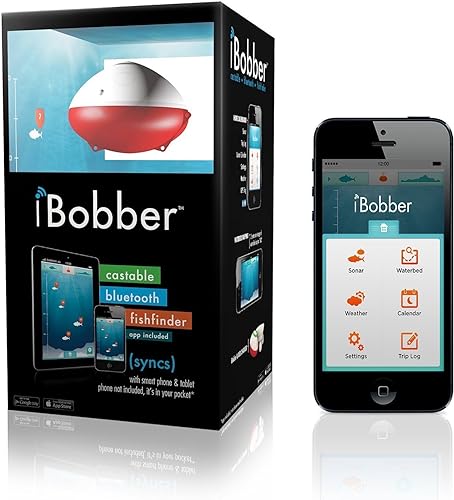 Best for phone-based fishing
Reelsonar iBobber portable wireless bluetooth fish finder
9.6/10 our score
See it on Amazon -
2

-
3
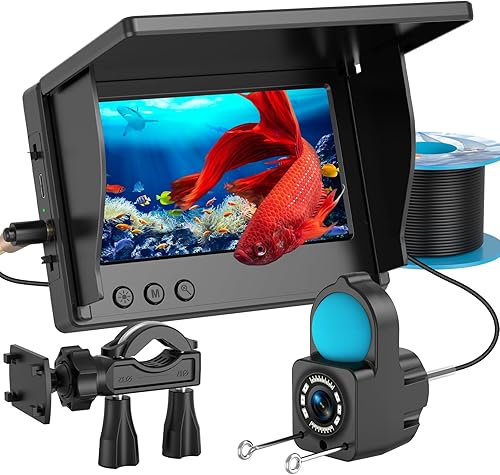 Best for underwater video
Underwater Fishing Camera TMACTIME 1080P HD
8.5/10 our score
See it on Amazon
- 4
 Check it
RICANK Depth Finder with Temperature Portable Ice
Best for deep handheld readings - 5
 Check it
LUCKY Kayak Portable Fish Finder Transducer Wireless
Best for wide wireless range - 6
 Check it
Yoocylii Handheld Fish Finder Portable Fishing Kayak
Best for adjustable basic sonar - 7
 Check it
LUCKY Small Portable Fish Finder Kayak Sonar
Best for ice fishing value - 8
 Check it
LUCKY Portable Fish Finder Handheld Kayak Fish
Best for wired boat mounting - 9
 Check it
LUCKYLAKER Sonar Kayak Fish Finder Portable Water
Best for wireless color readouts
Which handheld fish finder is best for your fishing style?
The best handheld fish finder depends on how you view sonar, how far the sensor needs to travel and whether you need sonar or a real underwater image.
App-based models keep the hardware small, while dedicated LCD models give you a separate screen and physical controls.
Start with the screen because it shapes every trip. A phone app can show detailed history and saved spots, while a built-in LCD keeps you from draining phone battery or exposing the phone to water.
Then think about distance. Shore anglers often need a sensor that casts far from the bank, and kayak anglers may need a sensor they can move without a fixed mount.
Sonar and camera tools solve different problems. Sonar gives depth, fish icons and contour, while a camera shows bait, structure and fish activity as a live image.
Our score weighs stated specs, features and buyer feedback against the needs of someone shopping for a portable handheld fish finder.
We did not treat a larger depth number as the only measure of value. A deep rating is useful only if the sensor can be placed correctly and the screen stays readable in your conditions.
Battery type deserves equal weight in the decision. Long rechargeable runtime helps on long days, while replaceable batteries help when you forget to charge before a trip.
Water protection also varies by part. A waterproof sensor does not always mean the display can get wet, so care instructions matter from the first trip.
Weight and size affect how often you will carry the unit. The lightest option is often the best option for anglers who walk to ponds, piers or ice holes.
Setup time matters for casual trips. A model that pairs fast and stores easily is more likely to be used than a unit with a long routine.
Match the pick to your main fishing style first. Shore, kayak, boat and ice use each put different demands on range, mounting and screen control.
| Product | Best for | Maximum depth | Battery life | Connection | Our score |
|---|---|---|---|---|---|
| Reelsonar iBobber portable wireless bluetooth fish finder | phone-based fishing | 135 ft | 10+ hours | Bluetooth | 9.6 |
| Deeper Start Fish Finder | long casts | 50 m | 6 hours | 9.4 | |
| Underwater Fishing Camera TMACTIME 1080P HD | underwater video | 8.5 | |||
| RICANK Depth Finder with Temperature Portable Ice | deep handheld readings | 300 ft | 8.4 | ||
| LUCKY Kayak Portable Fish Finder Transducer Wireless | wide wireless range | 147 ft | 8.2 | ||
| Yoocylii Handheld Fish Finder Portable Fishing Kayak | adjustable basic sonar | 328 ft | 8.1 | ||
| LUCKY Small Portable Fish Finder Kayak Sonar | ice fishing value | 328 ft | 8.0 | ||
| LUCKY Portable Fish Finder Handheld Kayak Fish | wired boat mounting | 328 ft | 7.9 | ||
| LUCKYLAKER Sonar Kayak Fish Finder Portable Water | wireless color readouts | 147 ft | 7.9 |
Reelsonar iBobber portable wireless bluetooth fish finder: Best for phone-based fishing
- 135-foot maximum depth
- More than 10 hours of battery life
- iOS and Android apps
- Fish and strike alarms
The iBobber sends sonar information to iOS and Android apps and fits anglers who want a small wireless unit for shore, dock, kayak or ice fishing.
Pros
- Small 2 x 2 x 1 in body
- Fish icons show depth and size
- More than 10 hours of battery life
Cons
- Uses a phone or tablet for app viewing
- Maximum depth is lower than several wired picks
Reelsonar iBobber is the best fit for anglers who want a small wireless fish finder that works with a phone or tablet.
Its 2 x 2 x 1-inch body is easy to carry to a dock, bank, canoe, kayak or ice hole.
The unit has a stated maximum depth of 135 feet and more than 10 hours of rechargeable battery life.
Its iOS and Android apps show sonar information, including fish icons that are color coded by size and tagged with depth.
Fish and strike alarms can help when you are watching a rod instead of the screen.
The app also supports waterbed mapping, spot marking, water temperature logs and trip records.
That saved information can help you return to a productive area instead of starting fresh each trip.
The Bluetooth connection keeps the sensor separate from the phone, which suits shore fishing where the sensor may sit away from you.
Freshwater and saltwater use are both described for this model, along with shore and ice fishing.
Choose iBobber when low weight and phone-based viewing matter most.
Its trade-off is that you need a compatible mobile device, and its stated depth range is lower than the deepest dedicated-screen models.
Deeper Start Fish Finder: Best for long casts
- 165-foot casting distance
- 165-foot maximum depth
- 40-degree sonar beam
- iOS and Android app
Deeper Start suits shore anglers who want app-based sonar, automatic scan saving and a longer casting range for checking water beyond the bank.
Pros
- No external battery
- Night fishing mode
- Scans save with time and location
Cons
- 6-hour battery life
- Requires a compatible mobile device for viewing
Deeper Start is the strongest pick for shore anglers who need to cast farther from the bank.
It has a stated 165-foot casting distance and reaches a stated depth of 165 feet, with a 40-degree sonar beam.
The unit creates its own Wi-Fi connection, so the app does not use your mobile data for the sonar connection.
Scans save with time and location, which can help you revisit a productive area later.
The Fish Deeper app works with iOS and Android devices and can show fish location and size, depth, bottom contour and vegetation.
A night fishing mode adds a specific viewing option for low-light trips.
The lightweight design suits family trips and shore anglers who want a simple setup without external batteries.
Its battery reaches full charge in 2.5 hours and lasts 6 hours.
Pick it when casting distance and saved scan data matter more than maximum battery time.
The main trade-off is the shorter runtime compared with the longest-running rechargeable pick here.
Underwater Fishing Camera TMACTIME 1080P HD: Best for underwater video
- 1080p video
- 4.3-inch LCD screen
- 6 infrared lights
- 15 m cable and IP68 waterproofing
TMACTIME is for anglers who want to see bait, fish activity and underwater structure directly instead of relying only on sonar icons.
Pros
- 1080p real-time viewing
- Infrared night vision
- Monitor, camera, stand, cable and manual included
Cons
- Real-time viewing only
- Camera is not a traditional sonar depth finder
TMACTIME is the best choice here if seeing the underwater scene matters more than interpreting sonar symbols.
Its 1080p camera sends real-time video to a 4.3-inch LCD screen.
Six infrared lights support viewing in dark or murky conditions.
The camera and cable are IP68 waterproof, and the 15 m cable has a stated 100 kg load capacity.
A 5000mAh battery provides up to 10 hours of runtime.
The package includes the monitor, underwater camera, 15 m cable, stand, charging cable and manual.
This is useful for checking bait, fish activity and structure in ice holes, lakes, boats or kayaks.
Real-time viewing only is the key limit to keep in mind before you buy.
Choose a sonar model if you need depth and bottom readings as your main information.
RICANK Depth Finder with Temperature Portable Ice: Best for deep handheld readings
- 2.5 to 300-foot depth range
- Water temperature readout
- Fish and contour display
- 100-foot waterproof rating
RICANK fits anglers who want a self-contained handheld display with depth, temperature, fish size and contour information for ice, lake, river or boat fishing.
Pros
- Deepest stated range here
- Updates depth data 4 times per second
- Compact handheld design
Cons
- Not a phone-connected system
- Water-resistant display care still matters around splashes
RICANK is the best handheld depth finder for anglers who want a deep stated range and a simple LCD readout.
It measures from 2.5 to 300 feet and updates depth data 4 times per second.
The display can show water depth, fish groups, fish size, temperature and contour information.
Its 2.1 x 2.1 x 7.7-inch body includes a neck strap, which suits mobile fishing where you need both hands for other gear.
RICANK is described for shore, kayak, ice, lake, sea and river fishing.
It is also described as waterproof to 100 feet, but the display still deserves careful handling around splashes and immersion.
A two-color lure lamp is included and can be switched on or off with a quick double slide.
Choose this model when depth and temperature matter more than a color screen or phone app.
Its handheld format is less convenient for anglers who prefer a wireless sensor and a larger remote viewing distance.
LUCKY Kayak Portable Fish Finder Transducer Wireless: Best for wide wireless range
- 853-foot operation distance
- 3 to 147-foot depth area
- 90-degree sonar beam
- 3.5-inch horizontal LCD
This LUCKY model suits anglers who want a dedicated handheld screen and a wireless transducer for shore, kayak, boat, canoe or ice fishing.
Pros
- Large stated operating distance
- Fish icons include depth numbers
- Horizontal scrolling history
Cons
- Heavier than several compact picks
- Uses a dedicated screen instead of a phone app
This LUCKY model is the best fit for anglers who want a dedicated screen and a wide stated wireless operating distance.
The brand gives it an 853-foot operation distance, while the sonar covers a stated 3 to 147 feet.
The 3.5-inch horizontal LCD shows fish icons with depth numbers and scrolls from right to left.
That history can help you review what passed beneath the sensor as you move over structure.
The floating sensor can be tied to fishing line or used with the included safety tether.
The portable and castable design is aimed at shore, kayak, canoe, boat, pontoon and ice fishing.
No drilling or bracket mounting is needed, which keeps setup simple on small boats and banks.
Choose it when you want a separate screen instead of a phone app.
The trade-off is its 0.7 kg weight, which is higher than some smaller handheld options.
Yoocylii Handheld Fish Finder Portable Fishing Kayak: Best for adjustable basic sonar
- 3 to 328-foot depth range
- 45-degree beam angle
- 5 sensitivity levels
- 4 to 5 hours with new AAA batteries
Yoocylii works for anglers who want a simple LCD unit with adjustable sensitivity, fish alarms and a long stated depth range.
Pros
- Deep stated detection range
- Battery save and backlight modes
- Works in fresh and salt water
Cons
- AAA batteries are not included
- Shorter runtime than the leading rechargeable picks
Yoocylii is the best basic handheld fish finder for anglers who want adjustable sensitivity and a broad stated depth range.
Its sonar uses a 45-degree beam and detects from 3 to 328 feet below the transducer.
Five sensitivity levels, a battery save mode, a backlight and a fish alarm give you more control than a single fixed readout.
The LCD can show water depth, approximate fish location, fish size, weeds, sand and rocks.
The unit uses 4 AAA batteries and runs for 4 to 5 hours with new batteries in continuous use.
The package includes the display, transducer with 25-foot cable, float, side-scan adapter, stainless hardware, neck strap and manual.
Freshwater and saltwater use are both described, and the transducer floats for surface use.
Choose Yoocylii when a simple screen and replaceable batteries fit your routine.
Its deeper stated range is useful on paper, but the shorter runtime requires spare batteries for longer trips.
LUCKY Small Portable Fish Finder Kayak Sonar: Best for ice fishing value
- Ice-fishing transducer housing
- 3 to 328-foot depth range
- 2-inch LCD
- 4 to 5 hours in power-saving mode
The 1108C-ICE is aimed at ice anglers but also works for shore and kayak fishing when you want a small castable sonar with depth and fish alarms.
Pros
- Housing designed for ice use
- Sensitivity adjustment
- Backlight for night viewing
Cons
- Display is not waterproof
- The maker warns it is not accurate in small water areas
The LUCKY 1108C-ICE is the best pick for anglers who expect to fish through ice but also want a castable handheld unit for open water.
Its transducer housing is designed for ice fishing, and the stated depth range is 3 to 328 feet.
The 2-inch LCD shows depth, fish location and bottom objects such as rocks and seaweed.
Sensitivity adjustment helps you adapt the display to clear or turbid water, and a fish alarm can alert you to fish or schools.
Power-saving mode provides 4 to 5 hours of continuous use.
A blue backlight supports night viewing, but the display is not waterproof and should stay away from water and rain.
The brand also warns that the unit does not work accurately in small water areas.
Choose it for open lakes, rivers and ice holes where the ice-focused housing is useful.
Units can be switched between meters and feet by holding the Enter button for a few seconds.
LUCKY Portable Fish Finder Handheld Kayak Fish: Best for wired boat mounting
- 328-foot depth detection
- 26-foot wired operating distance
- 2.4-inch TFT color LCD
- About 5 hours per charge
This LUCKY model fits boat and kayak anglers who prefer a wired transducer, rechargeable power and more detailed controls for depth, contour and alarms.
Pros
- Rechargeable battery
- Adjustable brightness
- Bracket supports boat or kayak attachment
Cons
- Wired operating distance is limited
- More setup than a wireless castable unit
This wired LUCKY model is the best match for boat or kayak anglers who want more screen controls.
Its 2.4-inch TFT color LCD can show underwater contour, water depth, temperature, fish size and fish depth.
The transducer has a stated 26-foot wired operating distance and a 328-foot depth detection range.
A bracket lets you attach the sensor to a boat or kayak, while the rechargeable battery runs for about 5 hours on a full charge.
Brightness, sensitivity, depth range, zoom, depth alarms, fish alarms, fish icons, units and language can be adjusted.
Simulation mode lets you try the functions before using transducer mode on the water.
The 45-degree beam and 200kHz detection suit deeper boat or kayak use where a fixed sensor position helps.
Choose it when a wired connection and detailed settings are acceptable.
A wireless castable model is easier when you move between shore spots or need to place the sensor far from you.
LUCKYLAKER Sonar Kayak Fish Finder Portable Water: Best for wireless color readouts
- 196-foot wireless operating range
- 147-foot maximum depth
- 2.4-inch TFT color LCD
- 4 to 5 hours per charge
LUCKYLAKER suits kayak, canoe, boat and shore anglers who want wireless sonar, color bottom contours and a rechargeable handheld display.
Pros
- Simulation and wireless modes
- Water temperature display
- Freshwater and saltwater use
Cons
- Shorter depth range than the deepest wired picks
- Battery life is 4 to 5 hours
LUCKYLAKER is the best choice for wireless color contour readouts in a compact dedicated display.
Its wireless sonar works up to a stated 196 feet, and its maximum measuring depth is 147 feet.
The 2.4-inch TFT color LCD uses 3 colors for bottom contour information.
It can also show fish size, fish location, water depth and temperature, while the sonar sensor includes an attractive lamp.
The rechargeable battery lasts 4 to 5 hours under full charge.
Simulation mode lets you review functions, while wireless mode is used for real detecting.
The sensor can be tied to a line or attached to a boat hull with the mounting tag.
Freshwater and saltwater use are both described for this wireless setup.
Choose it for kayak, canoe, shore or boat trips where you want wireless operation without using a phone.
Its stated depth and battery life are more limited than the deepest or longest-running picks.
What should you check before buying a handheld fish finder?
Choose the screen or app first, then check depth range, sensor connection, battery type and the way you fish. A portable unit is only useful if you can read it, power it and place its transducer where you need information.
Do you want a phone app or a dedicated LCD?
Phone-based fish finders keep the hardware small and can save scan information in an app. The iBobber and Deeper Start use mobile apps, while the other sonar models here use dedicated LCD screens.
A dedicated screen avoids sharing viewing with other phone tasks. It may also be easier to use with gloves or when your phone needs to stay protected from water.
How much depth range do you need?
Depth range should match the lakes, rivers, coastal areas or ice holes you visit. The iBobber reaches 135 feet, while RICANK, Yoocylii, the LUCKY 1108C-ICE and the wired LUCKY model state ranges up to 300 or 328 feet.
A larger number does not remove the need to position the transducer correctly. Follow the unit's instructions, keep the sensor in the water as intended and give the display time to update.
Is wireless better than wired for portable fishing?
Wireless is usually easier when the transducer needs to travel away from you, especially from shore. Wired systems can make sense on a boat or kayak when a bracket keeps the sensor in a fixed position.
Compare the stated operating distance rather than assuming every wireless model reaches the same range. The LUCKY YMT-202 gives an 853-foot operation distance, while LUCKYLAKER gives 196 feet and the wired LUCKY model gives 26 feet.
What battery setup fits your trips?
Rechargeable models reduce the need to carry replacement cells, but you need to charge them before leaving. Replaceable AAA batteries are easy to swap, though Yoocylii's stated runtime is 4 to 5 hours with new batteries.
Keep the display and charging connections dry, especially on models that do not have a waterproof display. Rinse parts used in salt water with fresh water and let them dry before storage.
How are handheld fish finders different from other portable models?
A handheld fish finder usually describes a compact system you carry, hold or cast rather than a permanently installed boat unit.
Some use a float-mounted wireless sensor, some use a wired transducer and some use a camera cable.
That difference matters because placement changes what you can scan. A castable sensor reaches water away from the bank, while a bracket-mounted transducer stays in one spot on the boat.
Cable and wireless limits also change daily use. Short wired runs suit a small boat, and wireless models suit shore fishing where the sensor needs distance.
Screen choice is the next filter. Phone apps can save scans and trip logs, while dedicated LCDs keep the phone dry and give you direct controls.
Depth range should match your usual water rather than the deepest lake you may visit once. A 135-foot rating and a 328-foot rating can both be sensible depending on where you fish.
Battery type affects how you prepare. Rechargeable units need a charge before departure, and AAA units need spares for long days.
Care also differs by model. Rinse salt water from parts, dry charging points and check each manual for water limits on the display.
For more context, read How Does a Castable Fish Finder Work? What to Know.
If you're unsure how much sonar can help your fishing, see Do Fish Finders Really Work? What to Know.
Those guides can help you decide whether a portable sensor fits your style before you choose a model.
Which handheld fish finder should you choose?
Choose Reelsonar iBobber if you want the smallest phone-connected setup with more than 10 hours of battery life.
Pick Deeper Start if a 165-foot cast and saved app scans matter more.
Choose RICANK or Yoocylii for a dedicated handheld display with a deep stated range.
Pick TMACTIME when real underwater video is more useful than sonar icons.
For boat or kayak mounting, compare the wired LUCKY model with the wireless LUCKY and LUCKYLAKER options.
For ice fishing, the LUCKY 1108C-ICE adds a transducer housing designed for use through ice.
Shore anglers should weigh casting distance and battery life before anything else. A unit that reaches the water you cannot wade to can change how you fish a bank.
Kayak anglers should weigh weight, mounting and screen readability while seated. A neck strap, bracket or float can matter as much as the sonar rating.
Boat anglers may prefer a wired transducer that stays in place. That setup can give steadier readings than casting a sensor each time you move.
Ice anglers should check housing design and display water limits. Through-ice use puts extra stress on both the sensor and the screen.
If you fish in both fresh and salt water, rinse the unit after each salt trip. Drying parts before storage helps protect seals, screens and charging points.
Match battery habits to your trip length. Long rechargeable runtime helps on full days, while AAA power helps when charging is not practical.
In the end, the best handheld fish finder is the one that fits your screen preference and your usual water. Carry it often, keep it clean and set it up the same way each trip.
Our top 3 picks at a glance
-
1
Best for phone-based fishing
Reelsonar iBobber portable wireless bluetooth fish finder
9.6/10 our score
See it on Amazon -
2
-
3
Best for underwater video
Underwater Fishing Camera TMACTIME 1080P HD
8.5/10 our score
See it on Amazon
Frequently asked questions
What is the best handheld fish finder for shore fishing?
The Reelsonar iBobber is the strongest fit for many shore anglers because it is compact, wireless and works with iOS and Android apps. Deeper Start is another good choice when a 165-foot casting distance matters.
Choose a dedicated-screen model if you do not want to use a phone while fishing.
Are handheld fish finders worth it?
Handheld fish finders can be useful when you fish from shore, a dock, a kayak or through ice and do not want a permanent boat installation. They show depth and may show fish, bottom contour or temperature.
Their small screens and portable transducers usually require more setup than fixed marine units.
What depth should a portable fish finder reach?
Choose a depth range that covers the water you fish most often. The models here range from 135 feet to 328 feet, while TMACTIME uses a 15 m camera cable instead of a sonar depth rating.
A larger maximum range does not guarantee clearer readings in every condition.
Do handheld fish finders work in salt water?
Several models here are described for saltwater use, including the Reelsonar iBobber, Yoocylii and LUCKYLAKER. Rinse portable parts with fresh water after saltwater trips, keep displays dry when required and follow each model's care instructions.
Do not assume every handheld unit has the same water protection.


