6 Best Transducers for Lowrance Fish Finders (November 2026)
The best Lowrance fish finder transducers include the Lowrance TripleShot Skimmer Transducer for Hook Reveal for SideScan and DownScan, the Lowrance SplitShot Skimmer Transducer for CHIRP and DownScan, and the Garmin 010-01550-00 Striker 4 with Transducer (best complete fish finder setup).
On this page (6 sections)
The best Lowrance fish finder transducer for the widest sonar coverage is the TripleShot Skimmer, while SplitShot is better for CHIRP and DownScan below the boat. Choose the Garmin Striker 4 only if you need a complete package instead of a Lowrance replacement.
A transducer must match your display, your mount, and the sonar view you will use most. Think about your boat first, since a transom fit may not suit a kayak, inside hull install, trolling motor, or scupper hole.
Think about your display next. These Lowrance models are not interchangeable.
One fits HOOK² 5, 7, 9 and 12 models, another fits HOOK² 4 and 4X, and one is made for ice use with HOOK² 4X.
Sonar views matter just as much. CHIRP helps with fish arches and target separation, DownScan helps with structure below the boat, and SideScan helps you look beside the boat.
If you need CHIRP, SideScan and DownScan together, TripleShot is the broadest option here. If your fishing is mostly downward, SplitShot keeps things focused without SideScan.
If you already own a working Lowrance display, a replacement is usually the sensible route. If you need display and transducer together, a complete package saves you matching parts from separate boxes.
Compatibility is worth double checking before you order. Write down the exact model on your display, compare it with the stated fit, and take time with placement before you launch.
If you are still comparing basic sonar equipment, start with our guide to the best transducer for depth finder. For a broader explanation of sonar results, see [Do Fish Finders Really Work?
What to Know](/do-fish-finders-really-work/).
Our picks at a glance
-
1
 Best for SideScan and DownScan
Lowrance TripleShot Skimmer Transducer for Hook Reveal
9.4/10 our score
See it on Amazon -
2

-
3
 Best complete fish finder setup
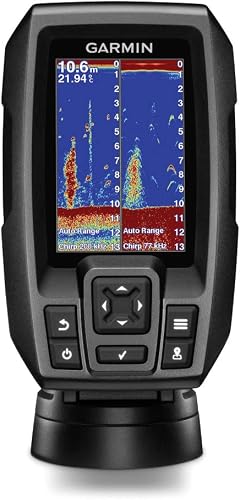
Garmin 010-01550-00 Striker 4 with Transducer
9.6/10 our score
See it on Amazon
- 4
 Check it
Lowrance HOOK2 Bullet Skimmer Transducer for HOOK2
Best for small boats and kayaks - 5
 Check it
Lowrance HOOK Reveal 5 SplitShot
Best for a new Lowrance setup - 6
 Check it
Lowrance Ice Fishing Transducer for all Lowrance
Best for HOOK² 4X ice fishing
Which Lowrance fish finder transducers are the best?
The best Lowrance fish finder transducer depends on the sonar view you need. TripleShot is the strongest match for CHIRP, SideScan and DownScan, while SplitShot keeps the focus on CHIRP and downward imaging.
Our score weighs specs, features and buyer feedback against what you are shopping for. We also checked each product's stated compatibility because a transducer that does not match your display is not a useful upgrade.
Lowrance TripleShot Skimmer Transducer for Hook Reveal: Best for SideScan and DownScan
- High CHIRP
- SideScan and DownScan Imaging
- 455/800 kHz imaging
- Built-in temperature sensor
- Transom-mount design
TripleShot gives Lowrance anglers CHIRP, SideScan and DownScan in one transducer. It is the broadest match here for people who want structure views beside and below the boat.
Pros
- Three sonar technologies
- Built-in temperature sensor
- Includes mounting bracket
Cons
- Limited to compatible Lowrance displays
- Maximum depth is 300 feet
The Lowrance TripleShot Skimmer Transducer is the best fit for anglers who want the most complete sonar view in this group. It combines high CHIRP, SideScan and DownScan Imaging, so you can study fish and structure below the boat and beside it.
That combination suits anglers who search widely before they anchor or cast. SideScan sweeps beside the boat, DownScan shows what sits below, and high CHIRP helps separate fish in the water column.
The SideScan and DownScan frequencies are 455/800 kHz. Lowrance also includes a built in temperature sensor, which helps you follow seasonal patterns and see when a spot is warming or cooling.
Compatibility is specific, as this transducer is designed for HOOK² 5, 7, 9 and 12 TripleShot displays. Check your exact display before you buy, since TripleShot is not a general fit for every Lowrance unit.
It has a transom mount design, includes a mounting bracket, and has a stated maximum measuring depth of 300 feet. Mount it square, keep the face clear, and keep air bubbles and hull turbulence from crossing the beam.
Choose TripleShot when side looking coverage is central to your fishing style. If you only need CHIRP and DownScan, SplitShot can provide the core views without SideScan.
Lowrance SplitShot Skimmer Transducer: Best for CHIRP and DownScan
- DownScan sonar
- CHIRP sonar
- Wider sonar cone
- Built-in temperature sensor
- Multiple mounting options
SplitShot is a strong choice when you want downward structure detail and CHIRP fish arches without SideScan. Its mounting options also suit several boat layouts.
Pros
- CHIRP and DownScan together
- Built-in temperature sensor
- Flexible mounting choices
Cons
- Does not provide SideScan
- Compatibility is limited to listed HOOK² models
The Lowrance SplitShot Skimmer Transducer suits anglers who want CHIRP and DownScan sonar from one unit. CHIRP helps create fish arches and target separation, while DownScan shows structure directly below the boat.
That pairing fits anglers who fish vertically, troll slowly, or sit over structure. You get a clear fish arch view from CHIRP and a picture like view of what is on the bottom from DownScan.
Its wider sonar cone gives more coverage than a traditional fish finder. A built in temperature sensor adds another useful reading for tracking changing water conditions through the day.
SplitShot fits Lowrance HOOK² 5, 7, 9 and 12 fish finder models. It can be mounted on the transom, inside the hull, on a trolling motor or through a scupper hole, so it works with more than one boat layout.
That range of mounts is a real plus for small boats and kayaks, where a transom bracket would not fit. Check alignment and clearance on a transom, and keep the face in clean water on other mounts.
It does not provide the SideScan view listed for TripleShot. Pick it when downward sonar is enough, and confirm your exact HOOK² model before buying.
Garmin 010-01550-00 Striker 4 with Transducer: Best complete fish finder setup
- 3.5-inch display
- ClearVü scanning sonar
- CHIRP sonar
- Built-in flasher
- Waypoint map
The Striker 4 is a complete fish finder and transducer package rather than a replacement transducer. It suits anglers who need a small display, CHIRP, ClearVü and waypoint marking together.
Pros
- Complete package
- Built-in flasher for ice fishing or vertical jigging
- Waypoint map
Cons
- Not a Lowrance-compatible replacement
- Small 3.5-inch display
The Garmin Striker 4 with Transducer is the best complete setup here, but it is not a Lowrance replacement transducer. It includes a 3.5-inch fish finder, transducer, power/data cable, tilt/swivel mount, transom and motor mounts, and documentation.
That box suits a first time buyer or small boat that needs one matched system. You do not need to hunt for a separate display, cable, or mount.
CHIRP sonar sends a continuous sweep of frequencies for clearer fish arches and target separation. ClearVü scanning sonar adds detailed, near photographic views of objects, structure and fish around the boat.
The unit also includes a waypoint map, a built-in flasher, and an IPX7 water rating. The waypoint map helps you mark brush piles, stumps and docks, then find your way back.
The flasher view suits ice fishing or vertical jigging when a classic round display is easier to read. Its stated maximum depth is 1,600 feet in freshwater and 750 feet in saltwater.
The small 3.5 inch display keeps cost and size down, but larger screens are easier to read at speed or in bright sun. It draws 0.23 amp at 12 volt, a light load on a boat battery.
Choose the Striker 4 if you are starting a new system and want display and transducer together. It will not connect to a Lowrance fish finder, so Lowrance owners should stay with a compatible Lowrance model.
Install with the tilt or swivel mount where you can see it clearly and reach the keyed buttons with gloves on. Keep the transducer in clean water and check the mount after rough runs.
Lowrance HOOK2 Bullet Skimmer Transducer for HOOK2: Best for small boats and kayaks
- Wider sonar coverage
- Built-in temperature sensor
- Compact design
- Transom, hull, trolling motor or scupper mounting
The Bullet Skimmer is aimed at HOOK² 4 and HOOK² 4X owners who need a compact replacement or upgrade. Its wider sonar cone and temperature sensor add useful basic coverage.
Pros
- Compact option
- 500-foot maximum measuring depth
- Several mounting choices
Cons
- Fits only HOOK² 4 and 4X models
- No SideScan or DownScan listed
The Lowrance HOOK2 Bullet Skimmer Transducer is a compact choice for small boats and kayaks using HOOK² 4 or HOOK² 4X fish finders. Its wider sonar cone gives more coverage than a traditional fish finder.
A compact transducer is easier to place on a kayak, jon boat, or small transom where space is tight. The built-in temperature sensor adds water temperature without a separate sensor.
The transducer is designed for transom mounting, with options that can also include inside-hull, trolling-motor or scupper-hole placement. Its stated maximum measuring depth is 500 feet.
It does not have the SideScan or DownScan features listed for TripleShot or SplitShot, so it suits basic sonar needs. If you want fish arches and depth with a wider cone, this covers the core job for a HOOK² 4 series display.
Choose it as a replacement or upgrade for a compatible HOOK² 4-series display. For a larger display and more sonar views, compare it with the best humminbird fish finder transducer guide before deciding between brands.
Mounting choice will shape how well it reads. A transom mount is direct and easy to check, while inside hull, motor, or scupper mounts need a clean path and firm hold.
Keep the face free of mud and weeds, especially in shallow water where a kayak drags through growth. Check the bracket and cable before each launch, as a bump can shift a small transducer out of line.
Lowrance HOOK Reveal 5 SplitShot: Best for a new Lowrance setup
- 5-inch SolarMAX display
- SplitShot transducer
- FishReveal
- Autotuning sonar
- Preloaded C-MAP US Inland Mapping
The HOOK Reveal 5 SplitShot combines a 5-inch display with the transducer, so it fits anglers building a new Lowrance fish finder setup. FishReveal and autotuning reduce the need for repeated sonar adjustments.
Pros
- Complete Lowrance package
- FishReveal and autotuning sonar
- Preloaded US inland maps
Cons
- SplitShot does not include SideScan
- A complete unit is unnecessary if you only need a replacement transducer
The Lowrance HOOK Reveal 5 SplitShot is the best option here when you need a new Lowrance fish finder with transducer. It combines a 5-inch SolarMAX display, SplitShot transducer, mounting bracket, power cable, fuse and fuse holder, and corner clips.
That complete package suits anglers starting fresh. You get display, transducer, and mounting hardware in one matched set.
Its SplitShot system provides wide-angle high CHIRP and DownScan Imaging. FishReveal combines CHIRP target separation with DownScan structure detail, while autotuning sonar adjusts settings as conditions change.
Autotuning helps new users spend more time fishing and less time changing settings. As you move from shallow to deep or still water to chop, the unit adjusts the image for you.
The unit includes preloaded C-MAP US Inland Mapping for almost 4,000 US inland lakes. Genesis Live can create custom contour maps over a map or GPS plotter to build more detail on water you fish often.
This is a better match for a new setup than for someone who only needs a replacement transducer. If you already own a compatible Lowrance display, compare its connector and model requirements first.
The 5 inch SolarMAX display is built for clear daylight viewing. Mount the display where you can see it without leaning, route the power cable with the fuse in place, and keep the transducer face in clean water.
Lowrance Ice Fishing Transducer for all Lowrance: Best for HOOK² 4X ice fishing
- Flasher mode
- Traditional 2D fish arch mode
- Wider sonar coverage
- Built-in temperature sensor
This ice transducer suits HOOK² 4X anglers who switch between flasher and traditional 2D fish arch views. It is a focused winter option, not a general replacement for every Lowrance display.
Pros
- Flasher and 2D modes
- Built-in temperature sensor
- 500-foot maximum measuring depth
Cons
- Compatibility is limited to HOOK² 4X models
- Ice mounting does not suit ordinary transom installations
The Lowrance Ice Fishing Transducer is designed for Lowrance HOOK² 4X fish finder models. It supports flasher mode and traditional 2D fish arch mode, giving ice anglers two ways to read below the hole.
Flasher mode suits vertical jigging when you want a fast round view of bait and nearby fish. Traditional 2D mode suits careful reading of fish arches when you want more detail.
Its wider sonar cone provides more coverage than a traditional fish finder, and the built-in temperature sensor adds water temperature. The stated maximum measuring depth is 500 feet.
A wider cone helps you see fish just off to the side of the hole. Temperature can show a layer change that pulls fish up or down.
The mounting type is ice, so this is a focused winter accessory rather than a general transom replacement. Confirm that your display is a HOOK² 4X model before ordering.
Keep the transducer centered under the hole, keep the cable clear of the ice edge, and lift it out with care when you move. Practice the mode switch at home so you can change views without a long pause on the ice.
Choose it for vertical jigging and ice fishing with a compatible HOOK² 4X. For a different brand, see our guide to the best furuno fish finders transducers.
Do not try to force this into a boat mount. It is built for ice work, and boat use calls for a transom or hull model instead.
Clean the face after each trip and store the cable without sharp bends. For HOOK² 4X ice anglers, this is the right tool.
How should you match a Lowrance transducer to your fish finder?
Match the transducer to the exact display family before comparing sonar features. The products here are not universal.
SplitShot fits listed HOOK² 5, 7, 9 and 12 models, Bullet fits HOOK² 4 and 4X, and the ice model fits HOOK² 4X.
Start with the name on your display. Write down the full model and size, since that one step prevents most wrong orders.
Next, match the sonar view to how you fish. CHIRP suits fish arches and target separation, DownScan suits structure below the boat, and SideScan suits structure beside the boat.
The HOOK Reveal 5 SplitShot is a complete unit. It includes the fish finder and SplitShot transducer, so it is the practical choice when you need both parts.
A complete unit makes sense for a first Lowrance system. A replacement makes sense when your display still works well.
Compare the model number on the display with the compatibility wording for the transducer. Do not rely on shape alone, since two transducers can look alike and still fit different displays.
Mounting should shape your short list too. SplitShot and Bullet list transom, inside hull, trolling motor, and scupper options.
TripleShot is a transom mount design, and the ice model is for ice fishing.
If you plan a trolling motor mount, check clearance and cable routing before you order. A mount that works on one boat may foul on another.
Garmin is in a different lane. The Striker 4 is a complete Garmin package and will not connect to a Lowrance display.
When in doubt, match three things in order. Display model first, sonar view second, mount third.
Which sonar views matter most?
Choose CHIRP when you want fish arches and target separation. CHIRP sends a sweep of frequencies, which gives the sonar more information to work with.
CHIRP suits anglers who need to tell fish apart when they bunch together. It also helps when fish hang near bait or near the bottom.
Choose DownScan when you want a detailed view of structure directly below the boat. SplitShot combines DownScan and CHIRP, making it a balanced choice for anglers who do not need side looking coverage.
DownScan shines on brush piles, stumps, docks, and rock. You see the shape of the cover and where fish sit on or near it.
Choose SideScan when you want to search for structure beside the boat. TripleShot is the only product in this group with SideScan listed alongside high CHIRP and DownScan.
SideScan suits wide water where you want to scan a flat or a channel edge without passing right over it. You can mark a spot, then move in with CHIRP and DownScan.
FishReveal pairs CHIRP and DownScan on one screen for the HOOK Reveal 5 SplitShot. That helps you spot fish that hide in structure instead of reading them as part of the bottom.
Flasher mode is a different tool for ice or vertical jigging. It gives a fast round view that many anglers prefer when bait sits close under the boat.
Temperature is a quiet helper across all views. A built in sensor shows warming or cooling water that can move fish during the day.
For a castable setup rather than a mounted Lowrance unit, read How Does a Castable Fish Finder Work? What to Know.
Match the view to the job, not the longest feature list, since the best view is the one you will use on most trips.
Where should you mount a Lowrance transducer?
Mounting depends on the transducer design and your boat. The SplitShot and Bullet models list transom, inside-hull, trolling-motor and scupper-hole options, while TripleShot is a transom-mount design and the ice model is made for ice fishing.
The transducer needs a clear path through the water for reliable sonar readings. Follow the installation instructions for your model, keep the sensing face clear, and avoid placing it where turbulence can interfere with the signal.
A trolling motor can provide a convenient mounting location for compatible models. If that is your plan, compare the options in our guide to the best Lowrance trolling motor transducer mount.
A transducer arm can also help position equipment on some small boats and kayaks. See the best fish finder transducer arm guide when a permanent mount is not practical.
How do you care for a fish finder transducer?
Keep the transducer face free from mud, plant matter and heavy buildup. Clean it with care after use, especially when moving between fresh and salt water.
A dirty face can dull the beam and blur the image. A soft cloth and fresh water are enough for most trips.
Check the cable route and mounting hardware as part of your normal boat setup. A loose mount or damaged cable can affect performance even when the display itself works properly.
Check the bracket before you launch, not after you are in deep water. A small shift can tilt the beam and move fish off the screen.
Do not assume that a similar-looking connector means a transducer is compatible. Model matching matters more than appearance.
Write down your display model and keep it with the boat papers. That note saves time when a cable or transducer needs to be replaced.
Store the transducer out of direct sun and away from sharp edges when the boat is on the trailer. Heat and knocks can wear the face and the cable jacket.
After salt water, rinse more fully and let the unit dry before you cover it. Salt left to sit can leave a film that builds up fast.
For ice use, keep the face clear of frozen slush before you drop it in. A quick check at the hole keeps the first read clean.
A loose mount, a nicked cable, or a dull face will cost you more fishing time than a short check at the ramp. Care takes minutes and keeps sonar honest.
Best Lowrance fish finder transducer: final picks
Choose the TripleShot Skimmer if you want CHIRP, SideScan and DownScan in one compatible transducer. Choose the SplitShot Skimmer if CHIRP and DownScan meet your needs and you want more mounting flexibility.
Pick the HOOK Reveal 5 SplitShot when you need a Lowrance fish finder with transducer, not just a replacement part. For HOOK² 4X ice fishing, the dedicated Lowrance Ice Fishing Transducer is the focused choice.
For HOOK² 4 and 4X small boats, the Bullet Skimmer is the compact pick. It covers basic sonar with a wider cone and a built in temperature sensor.
Do not cross brands by mistake. The Garmin Striker 4 is a complete package, not a Lowrance replacement.
Match display model first, then sonar view, then mount. That order will point you to the right unit for your boat.
Our top 3 picks at a glance
-
1
Best for SideScan and DownScan
Lowrance TripleShot Skimmer Transducer for Hook Reveal
9.4/10 our score
See it on Amazon -
2
-
3
Best complete fish finder setup
Garmin 010-01550-00 Striker 4 with Transducer
9.6/10 our score
See it on Amazon
Frequently asked questions
What is the best Lowrance fish finder transducer?
The Lowrance TripleShot Skimmer is the best choice here for broad sonar coverage because it combines high CHIRP, SideScan and DownScan Imaging. Choose SplitShot instead if you only need CHIRP and DownScan, or choose the HOOK Reveal 5 SplitShot for a complete display and transducer package.
Can I use any Lowrance transducer with my fish finder?
No. Compatibility depends on the Lowrance display family and model.
The SplitShot fits listed HOOK² 5, 7, 9 and 12 models, while the Bullet Skimmer fits HOOK² 4 and 4X models.
Check your exact display model before ordering.
What is the difference between SplitShot and TripleShot?
SplitShot provides CHIRP and DownScan sonar. TripleShot adds SideScan, so it can show structure and fish beside the boat as well as below it.
Choose SplitShot for downward views and TripleShot when side-looking coverage matters.
Which Lowrance transducer is best for ice fishing?
The Lowrance Ice Fishing Transducer is the focused choice for compatible HOOK² 4X fish finders. It supports flasher and traditional 2D fish arch modes, which suit vertical jigging and ice fishing.
Confirm that your display is a HOOK² 4X model before ordering.


