7 Best Through-Hull Transducers (October 2026)
The best through-hull transducers include the Lowrance 000-14489-001 Active Imaging 3-In-1 Transducer for structure imaging, the Lowrance SplitShot Skimmer Transducer for flexible mounting, and the Garmin GT15M Transducer for high-speed depth on fiberglass.
On this page (6 sections)
The best through hull transducer for a hull penetration in this roundup is the Furuno 525T-BSD, a bronze thru-hull model with 50/200 kHz sonar and a temperature sensor. Most other picks here are in-hull or transom options, so match the mounting method to your boat before comparing sonar features.
A transducer choice starts with the hull. A through-hull unit passes through an opening in the hull, while in-hull models sit inside suitable fiberglass and transmit through it.
If you want a broader overview of the best transducer for a fish finder, compare sonar type, display compatibility, and mounting style together.
Our picks at a glance
-
1
 Best for structure imaging
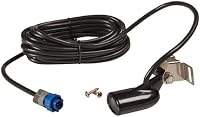
Lowrance 000-14489-001 Active Imaging 3-In-1 Transducer
9.7/10 our score
See it on Amazon -
2

-
3

- 4
 Check it
Faria 13751 Chesapeake Black Depth Sounder
Best for a dedicated depth gauge - 5
 Check it
Furuno 525T-BSD Bronze Thru-Hull Transducer with Temperature
Best for bronze through-hull installation - 6
 Best for high-wide CHIRP in-hullCheck it
- 7
 Check it
HUMMINBIRD XP-9-HW IN-HULL TRANSDUCER
Best for Humminbird 2D CHIRP
How we chose the best through hull transducers
We compared sonar capability, stated mounting method, hull-angle requirements, and the vessel needs each model can serve. This list includes true through-hull and nearby alternatives because a through-hull installation is not the right fit for every boat.
The Furuno 525T-BSD is the only true thru-hull pick in this group. The Lowrance models use other stated mount types, and the Garmin and Humminbird options mount inside the hull.
Check the display connection, hull material, angle, cable routing, and installation instructions before you choose.
A transducer’s name or sonar features do not confirm that it can be installed through the hull. If you are weighing in hull vs through hull transducer options, focus first on the mounting method and the materials of your boat.
Our score weighs specs and features against what you’re shopping for: a transducer that fits the vessel, provides the needed sonar, and can be installed in the required way.
| Product | Best for | Sonar | Frequencies | Mounting | Our score |
|---|---|---|---|---|---|
| Lowrance 000-14489-001 Active Imaging 3-In-1 Transducer | structure imaging | CHIRP, SideScan, DownScan with FishReveal | 83/200 kHz, 455/800 kHz | Transom, flush step, or jackplate | 9.7 |
| Lowrance SplitShot Skimmer Transducer | flexible mounting | DownScan and CHIRP | Transom, inside hull, trolling motor, or scupper hole | 9.6 | |
| Garmin GT15M Transducer | high-speed depth on fiberglass | Mid-band CHIRP, 85–165 kHz | Inside fiberglass hull | 9.2 | |
| Faria 13751 Chesapeake Black Depth Sounder | a dedicated depth gauge | 9.0 | |||
| Furuno 525T-BSD Bronze Thru-Hull Transducer with Temperature | bronze through-hull installation | 50/200 kHz | Bronze thru-hull | 8.7 | |
| Garmin Transducer Gt8Hw-Ih | high-wide CHIRP in-hull | High-wide CHIRP, 145–230 kHz | Inside fiberglass hull | 8.5 | |
| HUMMINBIRD XP-9-HW IN-HULL TRANSDUCER | Humminbird 2D CHIRP | Dual Spectrum CHIRP, 150–220 kHz | In-hull with epoxy | 8.1 |
The best through-hull transducers and alternatives
The Furuno is the direct through-hull choice, while the other models fit readers considering in-hull, transom, or more flexible mounting options. Their scores reflect how well their stated features match this search, including the important difference in mounting type.
Lowrance 000-14489-001 Active Imaging 3-In-1 Transducer: Best for structure imaging
- CHIRP, SideScan, and DownScan with FishReveal
- Medium and High CHIRP at 83/200 kHz
- 455/800 kHz imaging
- Compatible with select Lowrance and Simrad displays
A multi-view option for compatible displays when structure imaging matters. Its stated mounting types do not include through-hull installation.
Pros
- Three sonar views with FishReveal
- Supports Medium and High CHIRP
- Several stated mounting types
Cons
- Not a through-hull mount
- Requires a compatible display
Lowrance Active Imaging is the feature-rich pick for compatible displays when you want CHIRP, SideScan, and DownScan with FishReveal. The 83/200 kHz CHIRP support pairs with 455/800 kHz imaging frequencies, giving you several sonar views in one transducer.
The stated mounting options are transom, flush step, and jackplate. That means it is not a through-hull pick, but it can suit a boat owner who wants structure imaging and has a compatible Lowrance HDS LIVE or Elite FS display, or a compatible Simrad NSS evo3s or GO unit.
FishReveal combines CHIRP and DownScan on one screen to help distinguish fish from structure in detailed DownScan images. Lowrance also describes refined target separation around cover such as rockpiles, timber, weedbeds, ditches, and drop-offs.
Choose this model for compatible structure imaging, not for a hull-penetrating installation. If your main goal is locating cover from a transom or jackplate, compare it with our best transom mount transducer options.
Lowrance SplitShot Skimmer Transducer: Best for flexible mounting
- DownScan and CHIRP sonar
- Wider sonar cone
- Transom, inside-hull, trolling-motor, or scupper-hole mounting
- Built-in temperature sensor
Its multiple stated mounting choices make it a flexible alternative for compatible HOOK² units. It is not identified as a through-hull model.
Pros
- Several mounting options
- Includes temperature sensing
- Combines DownScan and CHIRP
Cons
- Fits specified HOOK² models
- Not a true through-hull mount
The SplitShot Skimmer suits compatible Lowrance HOOK² 5, 7, 9, and 12 in fish finders when you want DownScan and CHIRP from one transducer. Lowrance describes its sonar cone as wider than traditional fish finders, and the unit includes a built-in temperature sensor.
Its mounting flexibility is the main reason to consider it: the transducer can be mounted on the transom, inside the hull, on a trolling motor, or through a scupper hole. Those options give some small-boat owners more ways to fit it, but it is not identified as a true through-hull model.
The inside-hull option does not mean it works with every hull. Confirm the installation instructions, hull construction, and display compatibility before choosing that setup.
Pick it when you want several mounting choices and the specified HOOK² compatibility. For a dedicated best trolling motor transducer setup, compare your mounting location and cable route with the options your boat can support.
Garmin GT15M Transducer: Best for high-speed depth on fiberglass
- Mid-band CHIRP at 85–165 kHz
- 600 W power rating
- For fiberglass in-hull installation
- Suitable for 0–25 degree deadrise
This in-hull unit is aimed at boats that want depth readings without a transom mount. Its installation is inside the fiberglass hull, not through the hull.
Pros
- Broad stated deadrise range
- Mid-band CHIRP
- 600 W power rating
Cons
- For fiberglass in-hull installation
- Not a true through-hull mount
Garmin’s GT15M-IH is intended for inside installation in a fiberglass hull, especially where a transom mount could face cavitation issues. It uses mid-band CHIRP at 85–165 kHz and has a 600 W power rating.
The stated deadrise range is 0–25 degrees, a broader allowance than the GT8HW-IH’s requirement for a nearly flat section. Garmin describes it as suitable for boats traveling at high speeds that need to maintain accurate depth readings.
This is an in-hull model, not a through-hull transducer. Its appeal is avoiding a transom placement while keeping depth sonar through a suitable fiberglass hull.
Choose it if your hull material and angle fit the stated requirements and your display accepts the connection. Read our guide to what a fish finder transducer does if you want to understand how mounting and sonar type affect the signal.
Faria 13751 Chesapeake Black Depth Sounder: Best for a dedicated depth gauge
- Includes in-hull transducer
- 199 ft depth capability
- Fits a standard 2-1/16 in gauge hole
- 90 mA maximum current drain
A depth sounder with an in-hull transducer for buyers focused on depth readings. It is not a through-hull transducer.
Pros
- Includes an in-hull transducer
- Dedicated depth display
- Gauge hole size is specified
Cons
- Not a through-hull mount
- Depth capability is 199 ft
The Faria Chesapeake is a depth sounder with an in-hull transducer, intended for buyers who want depth readings rather than a multi-view sonar system. It has a stated depth capability of 199 ft and fits a standard 2-1/16 in gauge hole.
Its flush-mounted display uses a 2.4 in LCD, and the supplied transducer is described as in-hull. The maximum current drain is 90 mA with the supplied transducer.
That makes it a poor match if you specifically need a through-hull transducer or imaging sonar. It may fit a boat owner replacing or adding a dedicated depth gauge, provided the gauge opening and system needs match.
Confirm the part will fit your vessel and gauge space before ordering. For a simple depth-reading setup, compare the display requirements and installation steps with your existing equipment.
Furuno 525T-BSD Bronze Thru-Hull Transducer with Temperature: Best for bronze through-hull installation
- Bronze thru-hull housing
- 50/200 kHz
- Temperature sensor
- 30 ft cable with 10-pin plug
A true bronze thru-hull choice with two stated frequencies and temperature sensing. Check your hull and display requirements before selecting it.
Pros
- Bronze thru-hull design
- Includes temperature sensing
- Cable and connector are specified
Cons
- Requires a through-hull opening
- Confirm compatibility with your display
The Furuno 525T-BSD is the true through-hull option in this roundup, with a bronze housing, 50/200 kHz operation, and a temperature sensor. It comes with a 30 ft cable and a 10-pin plug.
The bronze thru-hull design is meant for an installation that penetrates the hull. Its supplied fairing block is part of the package, but check the required orientation and fit for your vessel before installation.
This model is best suited to a boat owner whose hull and fish finder support the transducer’s connector and sonar frequencies. A through-hull installation requires more planning than placing a transducer inside fiberglass, because the unit passes through the hull.
Choose Furuno when you need a bronze through-hull transducer with temperature sensing. Confirm hull construction, hole placement, connector compatibility, and installation requirements with the manufacturer or a qualified marine installer.
Garmin Transducer Gt8Hw-Ih: Best for high-wide CHIRP in-hull
- High-wide CHIRP at 145–230 kHz
- 250 W power rating
- Requires a flat hull section under 6 degrees
- For fiberglass in-hull installation
This in-hull transducer suits a compatible fiberglass hull with a nearly flat installation area. It does not make a hull penetration.
Pros
- High-wide CHIRP
- Clear hull-angle requirement
- In-hull placement avoids a transom mount
Cons
- Requires a flat area under 6 degrees
- Not a true through-hull mount
Garmin’s GT8HW-IH is an in-hull high-wide CHIRP option for compatible fiberglass boats. It operates at 145–230 kHz and has a 250 W power rating.
The installation requirement is specific: it needs a flat section in the hull with an angle under 6 degrees. That makes it less flexible than the GT15M-IH if your boat’s interior surface has more deadrise.
Because it mounts inside the hull, it avoids a transom installation and does not create a through-hull opening. It is intended for boats that want depth readings at high speeds, but the hull surface must meet the angle requirement.
Choose it only after checking the mounting area and display connection. If your hull does not have the required flat section, compare another mounting style instead of trying to adapt the installation.
HUMMINBIRD XP-9-HW IN-HULL TRANSDUCER: Best for Humminbird 2D CHIRP
- Dual Spectrum CHIRP at 150–220 kHz
- For single-layer fiberglass hulls
- Maximum depth of 1,200 ft
- No temperature sensing
A 2D sonar source for select Humminbird units and single-layer fiberglass hulls. It is an in-hull model, not a through-hull transducer.
Pros
- Dual Spectrum CHIRP
- Stated maximum depth of 1,200 ft
- Includes a 15 ft cable
Cons
- 2D sonar only
- No temperature sensing
The Humminbird XP-9-HW is a 2D in-hull sonar source for select HELIX G2, G3, and G4 models. It uses Dual Spectrum CHIRP from 150–220 kHz and is intended for single-layer fiberglass hulls.
Its stated maximum depth is 1,200 ft, and installation uses epoxy inside the hull. It includes a 15 ft cable, but it does not provide temperature sensing.
This is not a through-hull unit, and it does not supply Side Imaging or Down Imaging. Humminbird says it can serve as a 2D sonar source alongside those imaging functions on compatible units.
Choose it if you need 2D CHIRP through a suitable single-layer fiberglass hull and already use a compatible Humminbird display. Confirm that your hull and unit match before installation.
What should you check before choosing a through-hull transducer?
Check hull material, mounting type, transducer angle, and display compatibility before choosing a model. These details determine whether the transducer can be installed and whether your fish finder can use its sonar.
A true through-hull model requires a hull opening, so confirm the installation location and any fairing or orientation needs. The Furuno here is bronze and includes a fairing block; the in-hull picks are for specified fiberglass constructions.
Sonar capability should fit how you fish. Traditional CHIRP provides depth and fish returns, while SideScan and DownScan add views of structure around and below the boat.
The Lowrance Active Imaging combines those views, but its stated mount choices are not through-hull.
Connector and display compatibility matter just as much. Compare the model’s plug and supported fish finder family with your own unit, and follow the manufacturer’s installation instructions.
Is an in-hull transducer a good alternative?
An in-hull transducer can be a good alternative when your boat has a suitable fiberglass hull and you want to avoid making a through-hull opening. Garmin GT15M-IH, Garmin GT8HW-IH, and Humminbird XP-9-HW are examples here, each with different angle or hull requirements.
In-hull sonar must pass through the hull material, so hull type and construction affect whether the setup is suitable. The Humminbird specifies single-layer fiberglass; Garmin’s models also specify fiberglass installation.
For a choice focused on shooting sonar through the hull, compare these with best shoot through hull transducers. A shoot-through setup and a true through-hull unit have different installation methods, even though both put the transducer below the waterline or inside the boat.
What sonar views do you need?
Choose sonar views based on what you need to see: CHIRP for traditional fish and depth returns, DownScan for detail directly below, and SideScan for structure to the sides. A single transducer may support several views, but compatibility and mounting still apply.
Lowrance Active Imaging offers CHIRP, SideScan, and DownScan with FishReveal. SplitShot combines CHIRP and DownScan, while the Garmin and Humminbird in-hull options listed here focus on traditional 2D sonar.
A wider beam can show a larger area beneath the boat, but beam coverage and image detail depend on the sonar system. See what a wide beam transducer is used for to compare coverage with the kind of detail you want.
Which through-hull transducer should you choose?
Choose the Furuno 525T-BSD if you need a true bronze through-hull transducer with 50/200 kHz sonar and temperature sensing. Choose Garmin or Humminbird in-hull models if your fiberglass hull, angle, and display fit their requirements, and choose Lowrance when its sonar views and stated mounting options match your boat.
Before buying, verify the mounting method, hull construction, cable and connector, and fish finder compatibility. For most boats, those fit checks matter more than adding sonar features your display cannot use.
Our top 3 picks at a glance
-
1
Best for structure imaging
Lowrance 000-14489-001 Active Imaging 3-In-1 Transducer
9.7/10 our score
See it on Amazon -
2
-
3
Frequently asked questions
What is the difference between a through-hull and an in-hull transducer?
A through-hull transducer passes through an opening in the hull, while an in-hull transducer sits inside the boat and sends sonar through suitable hull material. The Furuno 525T-BSD is a true bronze thru-hull example here; the Garmin and Humminbird in-hull models are alternatives for specified fiberglass hulls.
Check the mounting method and hull material before buying.
Can an in-hull transducer work through any boat hull?
No. The in-hull choices here specify fiberglass hulls, and the Humminbird XP-9-HW is for single-layer fiberglass.
Hull material, thickness, shape, and installation location affect whether sonar can pass through cleanly.
Follow the transducer maker's installation instructions and confirm your hull suits the model.
Does a bronze through-hull transducer need a fairing block?
The Furuno 525T-BSD includes a fairing block, but confirm the required installation parts and orientation for your hull before fitting it. A thru-hull unit makes an opening below the waterline, so the installation must match the transducer and vessel requirements.
Use a qualified marine installer if you're unsure about the hull work.
Can one transducer provide depth and imaging?
Some transducers combine several sonar views, while others focus on traditional 2D depth sonar. Lowrance Active Imaging combines CHIRP, SideScan, and DownScan, but its stated mounting options are transom, flush step, and jackplate.
Match the sonar views and mounting style to your display and hull.
How do I choose the right mounting angle?
Start with the model's stated hull-angle range and the shape of the installation area. Garmin GT15M-IH allows 0–25 degrees of deadrise, while GT8HW-IH requires a flat section under 6 degrees.
These are in-hull models, so check the exact instructions for your boat before installation.