Trolling Motors: The Complete Buying Guide
Choose a trolling motor by mount, thrust, shaft length and voltage first: bow-mount motors suit bass and multi-species boats, transom-mount motors suit smaller boats, 12V suits light use, 24V or 36V suits bigger boats and longer days. Match the motor to your water, wind and boat weight before you compare features.
On this page (11 sections)
- What types of trolling motors are there?
- How do you choose the right trolling motor for your boat?
- How much thrust do you need?
- What shaft length should you buy?
- Which voltage and battery setup is best?
- How do mounting options affect boat control?
- Which controls and features are worth paying for?
- How do props and weeds affect performance?
- Can a trolling motor work on a kayak or canoe?
- What mistakes should you avoid when you buy?
- Which trolling motor should you buy for your boat?
Choose a trolling motor by mount, thrust, shaft length and voltage first: bow-mount motors suit bass boats and boats that need precise boat control, transom-mount motors suit small boats and kayaks, and 24V or 36V systems suit longer days in wind.
This trolling motor buying guide walks through electric trolling motors for boats in the order that matters. You will learn how to choose the right trolling motor for your hull, water and fishing style, without paying for features you will not use.
We compared motor types, mounting options and electrical needs across the brands and models anglers ask about most. We checked specs for thrust, shaft length, voltage and controls, and we looked at buyer patterns for reliability and ease of use.
If you already know you need a bow-mount motor, start with our bow-mount trolling motor guide. If your boat is small and you mount at the stern, read the transom section below and compare the transom-mount options.
What types of trolling motors are there?
There are two main types: bow-mount and transom-mount. Bow-mount motors give the best boat control because you steer from the front and face into wind and current.
Transom-mount motors cost less and move to another boat easily, but steering from the back feels less precise.
Bow-mount motors come with a foot pedal, a cable steer, a wireless remote, or GPS autopilot. A foot pedal lets you steer with small movements while you cast.
A remote is handy when you move to the back of the boat. GPS models can hold position and follow a contour, which helps when you fish deep structure.
Transom-mount motors usually use a twist handle for steering and speed. That setup is simple and light, and it suits jon boats, small aluminum boats, pontoon boats and kayaks.
You set the speed with the handle, then steer with the same hand. It works well for slow trolling and for moving between spots.
Hand-control bow-mount motors sit between those two types. They mount at the bow but steer with a handle.
They cost less than foot-pedal and GPS models. They suit buyers who want bow-mount power without the cost of advanced controls.
Electric trolling motors for boats use batteries instead of fuel. That makes them quiet, so you can fish shallow flats without spooking fish.
It also means run time depends on battery size, motor draw and how hard you run the motor.
What is a bow-mount trolling motor?
A bow-mount trolling motor mounts on the front deck and steers from the bow. That position lets you see the depth and structure ahead of the boat.
It also keeps the prop in cleaner water when you move forward.
Bow-mount motors suit bass boats, walleye boats, bay boats and flats boats. They help you hold on a point in wind, back down a shoreline, and work a dock line without turning the boat.
If you fish mostly in open water, the added control is worth the cost.
What is a transom-mount trolling motor?
A transom-mount trolling motor mounts on the stern and steers with a handle. It is the simplest setup and the easiest to remove.
Many owners move it between a small boat and a larger boat, or store it indoors after each trip.
Transom-mount motors suit small lakes, ponds and slow rivers. They also suit kayaks and canoes when the motor is small enough for the hull.
Check weight limits and transom strength before you add a motor to a small craft.
How do you choose the right trolling motor for your boat?
Start with boat weight, water depth and wind exposure. A heavy boat in open water needs more thrust and a longer shaft than a light boat in a sheltered pond.
Your fishing style matters too, because slow trolling and spot-locking use power in different ways.
List your boat weight with gear, ice, fuel and people. Use that number, not the dry hull weight, when you compare thrust.
Add some margin if you fish in wind, current or waves. A motor that feels strong on a calm morning can struggle on a windy afternoon.
Think about where you fish most often. Shallow creeks need a shorter shaft and a prop that can clear weeds.
Deep lakes need a longer shaft so the prop stays below chop. Saltwater needs corrosion-resistant parts.
Weedy lakes need a prop and lower unit that shed vegetation.
Think about how you fish. If you cast lures all day, you need precise steering and frequent speed changes.
If you troll, you need steady speed and enough run time. If you fish deep structure, GPS spot-lock can save a lot of battery compared with constant manual corrections.
Use the shortlist below to narrow the field before you compare brands. It keeps you from chasing features that do not match your boat.
- Bow-mount for bass, walleye and bay boats that need precise control.
- Transom-mount for small boats, jon boats and simple setups.
- Freshwater models for lakes and rivers.
- Saltwater models for coastal and brackish water.
- 12V for light boats and short days.
- 24V for midsize boats and longer days.
- 36V for large boats, strong current and long days.
If you fish mostly in fresh water, narrow your search with the freshwater trolling motor guide. If you fish the coast, compare saltwater electric trolling motors instead.
How much thrust do you need?
Use boat weight and conditions to set a thrust target. A common starting point is about 1 lb of thrust for each 100 lb of total boat weight.
That rule helps on calm water, but wind and current can push the real need higher.
Thrust tells you how much push the motor can make at full power. It does not tell you how long the motor will run.
A high-thrust motor run at full power will drain a battery fast. A motor with enough thrust to run at 50 to 70 percent power will usually last longer and steer better.
Small boats often do well with 40 to 55 lb of thrust. Midsize bass and walleye boats often need 70 to 80 lb.
Large boats, pontoon boats and boats that fish in strong wind may need 100 lb or more. Check the maker's weight guidance for each model, then add margin for your crew and gear.
Beware of buying thrust you do not need. Extra thrust adds weight, cost and battery draw.
It can also make slow-speed control harder on a light boat. Match thrust to the boat you own, not the boat you hope to own someday.
For light setups, our 12V trolling motor guide shows what smaller systems can do. For midsize boats, the 24V guide covers the next step up in power and run time.
For large boats and long days, read the 36V guide.
Some buyers choose a brushless motor for efficiency and quieter operation. Compare those designs in our brushless trolling motor guide.
Brushless motors often use less power for the same thrust, but they can cost more up front.
What shaft length should you buy?
Pick a shaft that keeps the prop submerged in chop without dragging bottom. Most anglers aim for the prop about 12 to 18 inches below the waterline at the bow.
That depth stops the prop from blowing out in waves and keeps thrust steady.
Measure from the mounting surface down to the water with the boat floating at normal load. Add the depth you want for the prop.
Then check the shallowest water you fish, because a long shaft can hit bottom or catch weeds there.
Short shafts suit shallow ponds, small boats and creeks. Medium shafts suit most bass and walleye boats.
Long shafts suit deep lakes, large boats and rough water. If you fish both shallow and deep water, choose the length for the deep water and learn to tilt the motor up in the shallows.
A shaft that is too short will cavitate in wind. You will hear the prop churn air, and the boat will surge instead of moving smoothly.
A shaft that is too long will hit stumps and rocks more often. It can also make the motor harder to stow.
Which voltage and battery setup is best?
Match voltage to boat size, run time and motor draw. 12V systems use one battery and suit small boats and short trips.
24V systems use two batteries in series and suit midsize boats.
36V systems use three batteries and suit large boats and long days.
Higher voltage gives the motor more potential power. It does not guarantee more thrust by itself.
Compare thrust, amp draw and battery amp-hours together. A 24V motor with a large battery can outlast a 36V motor with a small battery.
Battery capacity matters as much as voltage. Amp-hours tell you how much charge the battery holds.
Lithium batteries hold more usable charge for their weight and can run longer than lead-acid batteries of the same size. They cost more, but they also reduce weight in the boat.
Decide how long you fish and how hard you run the motor. Slow trolling uses less power than constant spot-locking in wind.
GPS spot-lock can use a lot of power because the motor makes frequent corrections. Size the battery for your worst normal day, not your best day.
Wiring matters too. Use the wire gauge the maker requires, and mount the plug where you can reach it without climbing over gear.
Our guide on how to wire a trolling motor explains the basic steps and safety checks.
The HKAIMING plug suits buyers who remove the motor often and want a clean connection at the bow. It uses thick 8-gauge wire and marine-grade tinned wires, which help cut resistance and heat.
The female receptacle has a spring closure for all-weather use.
This plug is for 12V systems. Do not use it on a 24V or 36V motor.
Check the voltage on your motor and battery before you wire it.
How do mounting options affect boat control?
Mount type controls how well you can hold the boat on a spot. Bow-mount motors let you face wind and current and make small steering inputs.
Transom-mount motors force you to steer from the back, which can make spot-holding harder.
A quick-release bracket makes a bow-mount motor easier to remove for transport, storage or theft prevention. It also lets you clear the deck when you do not need the motor.
Check fit carefully, because bracket size and motor family must match.
The Sunluway bracket fits Minn Kota 1854021 and MKA-21 applications. It works with Ulterra, Terrova, PowerDrive, PowerDrive V2 and Deckhand 40 motors on standard or scissor bow mounts.
Sunluway says not to use it with shafts 72 inches or longer, or with 112 lb thrust motors.
The bracket uses a composite body that resists rust and corrosion. The locking handle uses stainless steel pins to hold the motor in place.
You can run a padlock, not included, through the pin hole for added theft protection.
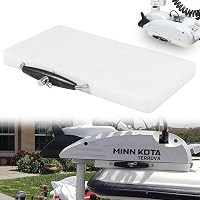
The sixcow bracket fits Minn Kota 1854017 and RTA-17 applications. It works with Terrova, Ulterra, PowerDrive, PowerDrive V2, PowerDrive Pontoon, Deckhand 40, Riptide ST and Riptide SP motors.
It also excludes 112 lb thrust motors and shafts 72 inches and longer.
Both brackets solve the same problem in slightly different ways. The Sunluway bracket is black and weighs 1.78 kg.
The sixcow bracket is white, includes stainless hardware, and has a base that measures 4 by 6 inches. Choose by fit, color and hardware, not by looks alone.
Pontoon boats need extra attention to mount and thrust. Shortlist motors in our pontoon trolling motor guide if you own one of those boats.
Pontoons catch wind, so they often need more thrust than a similar-weight hull.
Which controls and features are worth paying for?
Pay for controls you will use on every trip. A foot pedal helps casting anglers.
A wireless remote helps when you move around the boat.
GPS autopilot helps when you troll or hold on structure. A simple speed dial helps when you want low cost and low complexity.
Spot-lock is the feature most buyers notice first. It uses GPS to hold the boat in one place.
That saves you from constant corrections with the pedal. It also uses battery power, so size your battery with spot-lock in mind.
Autopilot and contour-follow features help when you troll. They can follow a depth line or a straight course while you work rods.
They suit walleye and saltwater trollers more than bass anglers who cast and move quickly.
Forward-facing sonar changes how you use a motor. If you plan to mount a transducer on the shaft, read our guide on which trolling motors work with forward facing sonar.
Shaft diameter, cable routing and transducer mounts differ by model.
Brand loyalty matters less than fit and support. Minn Kota, Garmin and Lowrance all make strong motors, but the right choice depends on your mount, shaft and controls.
Compare specific models in our Minn Kota trolling motor guide.
Read model-specific reviews before you narrow to one motor. Our Minn Kota Terrova review covers that family in detail.
The Garmin Force review covers a brushless, high-thrust option. The Lowrance Ghost review covers a quiet, GPS-focused option.
Accessories can make a good motor easier to use. A quick-release bracket, better wiring and a spare prop are common upgrades.
See our electric trolling motor accessories guide for the items buyers add most often.
How do props and weeds affect performance?
Prop design matters in weeds, shallow water and slow-speed fishing. A weedless prop sheds vegetation so the motor keeps thrust at low speed.
A higher-pitch prop can give more speed but may bog down in weeds.
A lower-pitch prop can give more low-end push for trolling.
The Minn Kota Weedless Wedge 2 uses swept-back and flared blades that wedge weeds away from the prop and lower unit. Minn Kota says it fits 4-inch motor diameters and is made from impact-resistant composite material.
The prop includes the prop nut, pin and washer, so you do not need extra hardware for the swap. It suits transom-mount and bow-mount motors in that size range.
Check your current prop size before you order.
Weeds also affect shaft and lower unit shape. Some motors have a slimmer lower unit that slides through grass more easily.
Others have a wider drive housing that catches more vegetation. If you fish weedy lakes, ask about that detail before you buy.
Carry a spare prop and the tools to change it. A damaged prop can end a trip fast.
A spare lets you swap on the water and keep fishing. Check the nut and pin after each trip, because loose hardware can cause vibration.
Can a trolling motor work on a kayak or canoe?
Yes, small electric motors work well on kayaks and canoes for slow travel. They help you move between spots, troll at low speed and hold position in light wind.
Weight and stability limit how large a motor you can use.
Kayaks need a motor that is light, quiet and easy to steer. Transom-mount motors often fit best, but some kayak-specific mounts work well too.
Check the hull rating and the mount strength before you drill or clamp anything to the boat.
Canoes need even more care with weight and balance. A small motor can help on calm lakes, but a heavy motor can make the boat hard to handle.
Paddle power may still be simpler for short moves.
If you fish from a kayak, compare options in our kayak trolling motor guide. If you fish from a canoe, read our electric trolling motors for canoes guide.
Both guides focus on weight, mount and low-speed control.
An electric trolling boat motor on a small craft still needs a battery plan. Put the battery where it balances the boat.
Secure it so it cannot shift in waves. Keep the motor and battery dry when you are not on the water.
What mistakes should you avoid when you buy?
The biggest mistake is buying by thrust alone. Thrust, shaft length, voltage, mount and battery capacity all work together.
A motor with plenty of thrust can still fail if the shaft is too short or the battery is too small.
Another common mistake is ignoring boat weight with gear. Coolers, ice, tackle, fuel and people add hundreds of pounds.
Use the loaded weight when you compare models. Add margin if you fish in wind or current.
Do not skip the shaft measurement. A short shaft will blow out in chop.
A long shaft will hit bottom in shallow water. Measure from the mount to the waterline, then check the shallowest depth you fish.
Do not assume a freshwater motor works in saltwater. Salt speeds corrosion on metal parts and electrical connections.
Choose a saltwater model for coastal use, and rinse and dry it after each trip.
Do not forget the bracket, wiring and battery. A motor needs a solid mount, correct wire gauge and enough battery capacity for your longest day.
Budget for those parts when you compare total cost.
Check return terms and warranty before you buy. Some motors have model-specific mounts and brackets that limit returns.
Make sure the motor fits your boat, your mount and your battery setup before the first trip.
Which trolling motor should you buy for your boat?
Pick the motor that matches your mount, weight, depth and run time. Bow-mount motors suit bass, walleye and bay boats that need precise control.
Transom-mount motors suit small boats, jon boats and simple setups.
Pontoon boats need extra thrust for wind.
For a small boat on calm water, start with 12V and a transom or simple bow-mount setup. For a midsize bass or walleye boat, start with 24V, a bow mount and a shaft that fits your depth.
For a large boat or long days, start with 36V, GPS features and a large battery bank.
For weedy lakes, choose a weedless prop and a shaft that clears vegetation. For deep lakes, choose a longer shaft and a motor that holds position with GPS.
For coastal water, choose saltwater materials and a motor built for that use.
Use this trolling motor buying guide to build a shortlist of two or three models. Compare thrust, shaft length, voltage, mount, controls and battery size side by side.
Skip features you will not use, and spend the savings on the right shaft, bracket and battery.
Our score weighs specs, features and buyer feedback against what you are shopping for. That approach helps you see why one motor fits your boat better than another, even when the price is close.
If you want the next step, read the voltage guide that matches your boat size. Start with the 12V guide for small boats, the 24V guide for midsize boats, or the 36V guide for large boats.
Then check the mount guide for your boat type and compare the final models head to head.
Frequently asked questions
How do I choose the right trolling motor?
Start with mount type, then match thrust to boat weight and wind, shaft length to depth, and voltage to run time. Freshwater and saltwater designs differ in materials and corrosion protection.
Check prop clearance, foot pedal or remote control, GPS features and battery size before you buy.
How much thrust does a trolling motor need?
A common starting rule is about 1 lb of thrust per 100 lb of boat weight, but wind, current and hull shape change the real need. Heavier boats and open water need more thrust and a longer shaft.
Too little thrust leaves you fighting wind, while too much thrust can drain the battery faster.
What shaft length should my trolling motor be?
The shaft should keep the prop about 12 to 18 inches below the waterline in chop, without being so long that it hits bottom in shallow water. Measure from the mounting surface to the depth you fish most.
If you fish both shallow creeks and deep lakes, choose the length for the deeper water.
Is 12V, 24V or 36V better for a trolling motor?
12V motors are simpler and suit small boats and short trips. 24V motors give more power and run time for midsize boats.
36V motors suit large boats, strong current and long days.
Higher voltage does not automatically mean more thrust, so compare thrust, amp draw and battery capacity together.
Can I use a freshwater trolling motor in saltwater?
Most makers do not recommend it, because saltwater speeds corrosion on shafts, mounts and electrical parts. Choose a model built for saltwater if you fish the coast or brackish water.
Rinse the motor with fresh water after use and dry it before storage.