9 Best Anchor Roller for Boat (November 2026)
The best boat anchor rollers include the SHENGHUISS 316 Stainless Steel Hinged Self Launching for larger hinged bow setups, the Attwood 13710-4 Anchor Lift System Heavy-Duty Steel for rope-handling convenience, and the JT-HLM Bow Boat Anchor Roller 160mm Boat for compact boats with medium anchors.
On this page (5 sections)
The best anchor roller for boat owners is the SHENGHUISS 316 stainless steel hinged roller for compatible 22 to 44 lb anchors. Choose the Attwood if you want an anchor lift system with rope management, or the JT-HLM if you need a compact roller for an anchor up to 35 lb.
A roller is only useful when its shape and mounting pattern work with your bow. Compare the anchor style, available deck length, roller width, fastener spacing, and rode diameter before you choose.
The right match also depends on how you anchor most often. A hinged roller suits a bow where the anchor launches and stows over the stem, while a lift system suits a boat where line control matters as much as the guide itself.
If you anchor in river current, compare river anchors for boats.
For a wider look at anchors, rode, and deployment hardware, start with this boat anchor guide. You can also compare related best boat anchor accessories for shackles, storage, and other parts of the setup.
Take your time with the measurements before ordering. A roller that is a fraction too narrow, too short, or set at the wrong angle can turn a simple job into a daily annoyance.
Our picks at a glance
-
1
 Best for larger hinged bow setups
SHENGHUISS 316 Stainless Steel Hinged Self Launching
9.5/10 our score
See it on Amazon -
2
 Best for rope-handling convenience
Attwood 13710-4 Anchor Lift System Heavy-Duty Steel
9.3/10 our score
See it on Amazon -
3
 Best for compact boats with medium anchors
JT-HLM Bow Boat Anchor Roller 160mm Boat
9.1/10 our score
See it on Amazon
- 4
 Check it
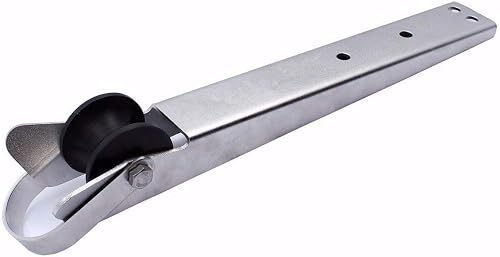
Hoffen 316 Stainless Steel Boat Anchor Roller
Best for long self-launching rollers - 5
 Check it
Akozon Bow Anchor Roller Bracket Self Launching
Best for flared mounting tips - 6
 Check it
Lewmar Galvanized Steel Claw Anchor 2.2 lbs.
Best for a matching claw anchor - 7
 Check it
ISURE MARINE Stainless Steel Bow Boat Anchor Roller
Best for dual-roller bow hardware - 8
 Check it
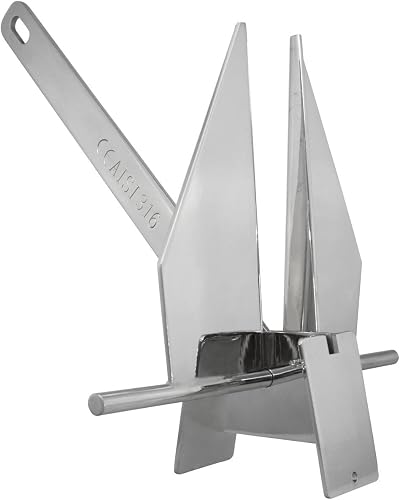
Norestar Stainless Steel Fluke Boat Anchor
Best for fluke-anchor storage - 9
 Check it
Sea-Dog 328040-1 Anchor Lift & Lock Bow
Best for 3/8 in rope setups
The best anchor rollers for boats
The best anchor rollers for boats fall into two groups: hinged bow rollers that guide an anchor over the bow, and lift systems that also manage rope and retrieval. The top choices here are ordered by score, with fit and stated use taking priority over appearance.
Our score weighs specs, features, and buyer feedback against what you're shopping for. We compared the stated materials, dimensions, anchor or rope limits, roller designs, and likely use cases.
SHENGHUISS 316 Stainless Steel Hinged Self Launching: Best for larger hinged bow setups
- 24 in length
- 316 stainless steel
- 22 to 44 lb anchor range
- Dual rollers and installation accessories
A long hinged bow roller with a pivoting head and dual rollers for compatible anchors. Its 316 stainless steel construction suits saltwater use.
Pros
- Wide stated anchor range
- Dual rollers
- Includes installation roller accessories
Cons
- Long 24 in body needs bow space
- Compatibility still depends on bow shape and anchor fit
The SHENGHUISS is the best overall choice when your boat has room for a 24 in hinged bow roller. Its 316 stainless steel body is suited to saltwater, and the pivoting head is designed to help the anchor start moving from the bow.
The stated range is for 22 to 44 lb anchors, which makes this a better match for larger anchor setups than compact rollers with no comparable range. It is described as compatible with Delta, DTX, Danforth, Fortress, CQR, Plow, and Claw or Bruce anchors.
The package includes one bow anchor roller, one large roller, one small roller, and one set of installation roller accessories. Check the bow length and mounting area first because a 24 in body needs more room than a short fixed roller.
Choose it when your anchor falls within the stated range and you want a hinged, dual-roller layout. If your bow is short, compare the 7.7 in ISURE MARINE or 6.5 in JT-HLM instead.
Attwood 13710-4 Anchor Lift System Heavy-Duty Steel: Best for rope-handling convenience
- Heavy-duty powder-coated steel
- Self-lubricating nylon rollers
- Bow or stern corner mounting
- Supports up to 100 ft of 3/16 in anchor line
This is an anchor lift system rather than a simple bow roller. Its reel, pulleys, and nylon rollers are designed to make anchor deployment, retrieval, and stowage easier.
Pros
- Includes reel and pulley parts
- Bow or stern mounting
- Rope capacity is clearly stated
Cons
- Not a direct match for every bow roller layout
- Designed around 3/16 in anchor line
The Attwood is the best choice when you want more than a guide wheel. Its anchor lift system includes an anchor mount, reel pulley, anchor rope reel assembly, rear pulley axle, and 2 push nuts.
The powder-coated steel components are paired with self-lubricating nylon rollers. That combination is aimed at smoother anchor movement while the reel helps keep the deck more organized.
Attwood states that the system supports up to 100 ft of 3/16 in anchor line. It can mount on bow or stern corners of many fishing, pontoon, and recreational boats, so it suits a different kind of installation from a long hinged bow roller.
This design suits boaters who anchor often and want the rode kept in one place. It also suits a smaller deck where loose line can quickly become a trip hazard or a tangle around cleats and fittings.
Choose it if you want a system for deploying, retrieving, and stowing an anchor with managed line. Confirm that your boat has a suitable corner mounting position and that your line matches the stated diameter.
Rinse the rollers after use and check that they still turn freely. A quick check of the reel and pulleys will help keep the system working smoothly through the season.
JT-HLM Bow Boat Anchor Roller 160mm Boat: Best for compact boats with medium anchors
- 6.5 in length
- 2 in width
- 304 stainless steel
- For boats 20 to 30 in with anchors up to 35 lb
A compact roller with 3 predrilled mounting holes and a rubber lift roller. It suits boats in the stated 20 to 30 in range and anchors up to 35 lb.
Pros
- Compact dimensions
- Predrilled mounting holes
- Works with several anchor styles
Cons
- Screws are excluded
- The stated boat range and anchor limit must fit your setup
The JT-HLM is the best compact choice for a boat in the stated 20 to 30 in range with an anchor up to 35 lb. Its 6.5 in length and 2 in width make it easier to consider when a long bow roller would crowd the mounting area.
This roller uses stainless steel with a polished finish and has 3 predrilled holes. The design is described for Fortress, fluke or Danforth, Wing or Delta, and CQR or Plow anchors.
The roller raises and lowers the anchor while helping keep it away from the topsides. Screws are excluded, so plan the fasteners around your mounting surface rather than assuming the needed hardware is included.
Choose it when the 6.5 in body fits your bow and the anchor stays at or below 35 lb. If your anchor is a claw or Bruce style, check the fit carefully before choosing this compact design.
Hoffen 316 Stainless Steel Boat Anchor Roller: Best for long self-launching rollers
- 15-1/4 in length
- 1-3/4 in width
- 2-1/2 in roller
- Electro-polished stainless steel
The long body and 2-1/2 in roller give this self-launching design a larger footprint than compact bow rollers. Electro-polished stainless steel is suited to saltwater environments.
Pros
- Long 15-1/4 in body
- Large 2-1/2 in roller
- Self-launching design
Cons
- Needs more bow space than compact designs
- Mounting fit still needs to be checked
The Hoffen suits boaters who want a long 15-1/4 in self-launching roller with a 2-1/2 in roller. Its electro-polished stainless steel surface is designed for corrosion resistance in saltwater environments.
The roller is 1-3/4 in wide, and the complete body is intended to fit most bows. A longer body can give an anchor a gradual path over the bow, but it also needs more clear deck space.
For a boat that is worked from the bow, that gradual path can make deployment feel more controlled. The anchor is less likely to drop straight down and scrape the hull as it leaves the roller.
Hoffen describes optional chain stoppers or tensioners as a way to help reduce scratches from the anchor chain. Those parts are not the same as the roller, so include them in your planning if chain movement is a concern.
Choose the Hoffen when your bow can accept its length and you want a substantial self-launching layout. Pick the JT-HLM if the available mounting area is much shorter.
Measure the pulpit, rails, and any deck fittings before you commit. Clearance at the tip matters just as much as the flat area where the roller itself will sit.
Akozon Bow Anchor Roller Bracket Self Launching: Best for flared mounting tips
- 304 stainless steel
- 14.57 in roller length
- 2 in roller width
- Black nylon roller
This self-launching bracket uses flared installation tips and a black nylon roller. Its dimensions suit buyers who want a longer deck-mounted roller for compatible anchor shapes.
Pros
- Flared mounting tips
- Nylon roller
- Deck-mount design
Cons
- Mounting holes are about 4 x 3/8 in
- Compatibility is focused on Danforth, light, and triangle plough anchors
The Akozon is a good fit for a deck-mounted setup that benefits from flared mounting tips. The tips are designed to reduce wear, while the black nylon roller helps protect against scratches during anchor movement.
Its 304 stainless steel body measures about 14.57 in long and 2 in wide. The mounting holes are about 4 x 3/8 in, and the roller is about 2.4 x 1.73 in.
Akozon describes this roller for Danforth, light, and triangle plough anchors. That narrower anchor focus matters because a roller that fits the deck may still fail to guide the anchor correctly.
For a boat that already uses one of those anchor shapes, the fit is more straightforward. For a different shape, you may need to check how the anchor sits, pivots, and clears the bow at rest.
Choose it when those anchor shapes match your setup and the deck-mount dimensions line up. For a wider stated list of anchor styles, the SHENGHUISS offers more flexibility on paper.
After fitting, rinse the nylon roller and check the mounting holes for grit. Keeping the contact area clean helps prevent the wear the design is meant to reduce.
Lewmar Galvanized Steel Claw Anchor 2.2 lbs.: Best for a matching claw anchor
- Galvanized steel
- 2.2 lb anchor
- For boats 13 to 20 ft
- Bruce-style claw
This is a Bruce-style claw anchor rather than a roller assembly. It belongs here for boaters matching a claw anchor to a compatible bow roller.
Pros
- Quick-setting claw shape
- Bow roller compatible
- Galvanized finish
Cons
- It is an anchor, not a roller
- 2.2 lb size is aimed at 13 to 20 ft boats
The Lewmar is different from the other main picks because it is a 2.2 lb galvanized steel claw anchor, not a roller. It is included for boaters who need an anchor that can work with a compatible bow roller.
The Bruce-style claw is designed for quick setting and resetting after veering. Lewmar gives this size for boats from 13 to 20 ft, and the anchor uses a one-piece, high-tensile, heat-treated steel construction with a galvanized finish.
Its compact dimensions and 2.3 lb item weight make storage easier than with a much larger anchor. The key decision is whether a 2.2 lb claw is appropriate for your boat and anchoring conditions.
Choose it as a companion to a compatible roller when you want a claw shape. If you need the roller itself, compare the bow hardware picks above rather than treating this anchor as a replacement for one.
ISURE MARINE Stainless Steel Bow Boat Anchor Roller: Best for dual-roller bow hardware
- 316 stainless steel
- Pivoting dual-roller design
- 7.7 in overall length
- Black nylon roller
A compact pivoting dual-roller design with a black nylon roller to reduce rode chafe. Its 316 stainless steel body suits saltwater bow hardware.
Pros
- 316 stainless steel
- Dual-roller layout
- Compact overall length
Cons
- Bolt width is 3-3/4 in
- Fastener details need to match your mounting plan
The ISURE MARINE is the best compact dual-roller option for a bow that needs 316 stainless steel and a pivoting design. Its overall length is 7.7 in, with a 2-1/4 in width and 3 in height.
The black nylon roller is designed to reduce rode chafe. Its bolt width is 3-3/4 in, so measure from the mounting points rather than comparing only the outside length.
This roller has a mirror-polished finish and is described for common combinations of anchor, mounting style, and boat. That broad wording still requires a physical fit check because bows vary in angle and available clearance.
The compact size suits a bow where a 15 in or 24 in roller would crowd the deck. It also suits a boat where the anchor is smaller and does not need a long run to launch cleanly.
Choose it when a short dual-roller unit fits your mounting area. If you need a much longer run for a larger anchor, compare the SHENGHUISS or Hoffen.
Check the fastener size and spacing during a dry fit. A short roller only works well when the anchor, rode, and bow angle all line up without forcing.
Norestar Stainless Steel Fluke Boat Anchor: Best for fluke-anchor storage
- 316 marine-grade stainless steel
- 4 lb size
- Tapered shank
- Bow roller compatible
This polished fluke anchor is a companion product for a compatible roller. Its tapered shank and fluke shape are intended for sand, mud, and gravel.
Pros
- Bow roller friendly profile
- Marine-grade stainless steel
- Useful as a primary or backup anchor
Cons
- It is not an anchor roller
- The 4 lb size may not fit every boat
The Norestar is a companion anchor for buyers choosing a roller for a fluke-style design. This 4 lb anchor uses polished stainless steel, a tapered shank, and fluke edges intended to penetrate sand, mud, and gravel.
Its profile is described as bow roller and locker friendly. That makes it useful when you want an anchor that can move from the roller into storage without taking up the space of a bulkier shape.
Norestar also positions this anchor for primary or secondary use. The important check is the size: a 4 lb anchor may suit one boat and be too small for another, so compare it with your boat and anchoring plan.
For the right boat, a fluke shape can be a practical choice for soft bottoms. It is also handy as a backup anchor when you want something light to carry or store.
Choose it when a fluke anchor matches your bottom conditions and the roller supports its shape. For more roller-specific choices, see our guide to the best fluke anchor roller.
Rinse the polished steel after use and inspect the fluke edges for damage. Keeping the anchor clean also makes it easier to handle on deck.
Sea-Dog 328040-1 Anchor Lift & Lock Bow: Best for 3/8 in rope setups
- Electrogalvanized steel
- Anchor lift and lock bow roller
- 3/8 in maximum rope diameter
- Model 328040-1
A lift and lock bow roller for setups using rope up to 3/8 in diameter. Its electrogalvanized steel construction offers a straightforward alternative to stainless steel hardware.
Pros
- Clear rope limit
- Lift and lock design
- Electrogalvanized steel
Cons
- Rope must stay within 3/8 in
- The short data set leaves more fit checks to the buyer
The Sea-Dog is a straightforward lift and lock bow roller for a setup using rope up to 3/8 in diameter. Its electrogalvanized steel construction gives it a different material choice from the stainless steel rollers above.
The model is 328040-1, and the stated fastener is #10 RH. Those details are useful when replacing an existing roller or planning a mounting job around known hardware.
This pick is best for buyers who already know their rope size and want a lift and lock design. It has less published fit information than the larger stainless steel choices, so measure the existing roller and bow before ordering.
For a simple replacement job, the clear rope limit helps you decide quickly. If your rode is larger than 3/8 in, this is not the right match.
Choose it when your rope stays within 3/8 in and the fastener specification suits your installation. If you need a broader anchor range or dual rollers, compare the SHENGHUISS or ISURE MARINE.
Inspect the steel for wear where the rope runs. Regular rinsing and a check for chafe will help the roller last longer in marine use.
How do you choose the best anchor roller for boat use?
The best anchor roller for boat use starts with fit, not material. Match the roller to your anchor shape, anchor weight, bow space, mounting holes, and rode before you compare finishes or extra rollers.
Which anchor shape does the roller need to guide?
Choose a roller with stated compatibility for your anchor style. The SHENGHUISS names Delta, DTX, Danforth, Fortress, CQR, Plow, and Claw or Bruce anchors, while the Akozon focuses on Danforth, light, and triangle plough anchors.
A fluke anchor often needs a different support path from a claw or plow anchor. If you use a fluke design, compare the options in our best fluke anchor rollers guide.
How much bow space should you measure?
Measure the flat mounting area, the bow angle, the distance to the pulpit or rail, and the space needed for the anchor to swing clear. A 24 in SHENGHUISS and a 15-1/4 in Hoffen need more room than a 6.5 in JT-HLM.
Also check the roller width and height. The ISURE MARINE is 2-1/4 in wide and 3 in high, while the JT-HLM is 2 in wide and 2.95 in high.
Do you need a roller or an anchor lift system?
Choose a standard bow roller when your main need is guiding and storing the anchor. Choose an anchor lift system when you also want a reel and pulley arrangement for handling the rode.
The Attwood supports up to 100 ft of 3/16 in line and can mount on bow or stern corners. That makes it a better match for managed rope handling than a simple fixed roller.
How do materials affect marine use?
316 stainless steel is the strongest saltwater-focused material choice in this group. The SHENGHUISS and ISURE MARINE use 316 stainless steel, while the JT-HLM and Akozon use 304 stainless steel.
Galvanized or electrogalvanized steel can still make sense when the design and fit are right. The Lewmar uses galvanized steel, the Attwood uses powder-coated alloy steel, and the Sea-Dog uses electrogalvanized steel.
How should you install and care for boat anchor rollers?
Install the roller only after confirming the anchor clears the bow and the mounting surface can support the chosen hardware. Dry-fit the anchor, roller, and rode through their full movement before tightening the final fasteners.
Start by marking the mounting pattern on the deck and checking it against the roller body. Make sure the anchor can swing clear of the pulpit, rails, and any fittings as it launches and as it comes back aboard.
Use the mounting holes and fastener details stated for your model. The JT-HLM has 3 predrilled holes but excludes screws, while the Sea-Dog specifies a #10 RH fastener and a maximum rope diameter of 3/8 in.
Do not assume that every roller in this roundup uses the same fastener size or spacing. The ISURE MARINE lists a 3-3/4 in bolt width, and the Akozon lists mounting holes of about 4 x 3/8 in, so compare each model on its own numbers.
When you dry-fit, run the rode through the full path from the locker or reel to the anchor. Watch for tight bends, contact with sharp edges, and any point where the rode rubs the bow instead of the roller.
Pay attention to the angle of the bow as well as the flat deck area. A roller that looks level on the bench may sit at a poor angle once it is mounted on a curved or raked bow.
After use, rinse salt and grit from the roller and rode path with fresh water. Check that rollers turn freely, look for sharp edges or chafe, and secure the anchor before moving the boat.
If the roller uses a separate chain stopper or tensioner, inspect that part too. A roller guides the anchor, but the anchor must still be held securely while underway.
Look closely at nylon rollers for grooves or flat spots. Small damage early can become a rough surface that wears the rode during the next trip.
Check stainless steel and galvanized steel for trapped grit around the mounting holes. Cleaning those areas helps keep the hardware seated properly and makes future removal easier.
Secure the anchor with a line or strap that keeps it from bouncing on the roller. Even a short run across the harbor can cause damage if the anchor is only resting loose.
Store the rode so it feeds cleanly into the roller on the next deployment. A neat coil or reel will reduce tangles and keep the job simple.
What other anchor hardware might you need?
A roller is one part of a safe and tidy anchoring setup. You may also need a connector, chain or rope storage, and a way to secure the anchor when it is not deployed.
Think about the full path from the anchor to the storage point. The roller guides the anchor at the bow, but the rode still has to be paid out, retrieved, and kept clear of traffic on deck.
Use a compatible best anchor chain shackle when connecting anchor parts. For storage planning, compare best anchor rope storage ideas before the rode begins taking over the deck.
A good connector keeps the anchor, chain, and rope working as one system. Check that each part matches the size and type of the one next to it before you rely on it.
If you need a separate mount instead of a bow roller, review the best boat anchor holders. For a lifting arrangement that keeps the anchor off the deck, compare the best boat anchor davits.
A holder can suit a boat where the bow has no room for a roller. A davit can suit a setup where you want the anchor lifted clear for storage.
Also plan for how you will secure the anchor while underway. A roller gives the anchor a place to rest, but a separate tie down keeps it from moving in rough water.
Keep spare line, a knife, and cleaning supplies near the bow area. Small items in the right place make anchor work faster and safer for everyone on board.
Check the whole setup at the start of the season and after any change. A new anchor, a new roller, or a new rode may need a different connector or storage plan.
Which anchor roller should you choose?
Choose the SHENGHUISS if your bow has room for 24 in and your anchor is within the 22 to 44 lb range. Choose the Attwood if rope handling and an anchor lift system matter more than a simple bow guide.
For compact bows, choose the JT-HLM when its 6.5 in length and 35 lb anchor limit fit. Choose the Hoffen or Akozon for longer stainless steel roller bodies, the ISURE MARINE for a short dual-roller layout, and the Sea-Dog for a 3/8 in rope setup.
If you already know your anchor style, let that narrow the list first. The SHENGHUISS lists the widest range of anchor styles, while the Akozon focuses on Danforth, light, and triangle plough designs.
If your boat is a smaller fishing or pontoon boat, the Attwood corner mounting may suit your layout better than a long bow roller. If your bow is open and flat, a hinged roller may be the simpler fit.
Consider the material for where you boat. The 316 stainless steel picks suit saltwater use well, while the galvanized and electrogalvanized options can work when fit and maintenance are right.
The right best anchor roller for boat use is the one that matches your anchor, bow, mounting holes, and rode without forcing the hardware into a poor angle. Measure first, then use the stated limits to narrow the choice.
Dry-fit the anchor on the roller before you drill or tighten anything. That one check can save you from a roller that fits the deck but fails to guide the anchor.
Our top 3 picks at a glance
-
1
Best for larger hinged bow setups
SHENGHUISS 316 Stainless Steel Hinged Self Launching
9.5/10 our score
See it on Amazon -
2
Best for rope-handling convenience
Attwood 13710-4 Anchor Lift System Heavy-Duty Steel
9.3/10 our score
See it on Amazon -
3
Best for compact boats with medium anchors
JT-HLM Bow Boat Anchor Roller 160mm Boat
9.1/10 our score
See it on Amazon
Frequently asked questions
What is the best anchor roller for a boat?
The SHENGHUISS 316 stainless steel hinged roller is the strongest overall match here for compatible 22 to 44 lb anchors. It has a 24 in length, dual rollers, and a stated fit for several common anchor styles.
Choose a shorter JT-HLM or ISURE MARINE roller when your bow has less room.
What does a boat anchor roller do?
A boat anchor roller guides the anchor and rode over the bow during deployment and retrieval. It also gives the anchor a place to rest when stowed.
The correct roller reduces contact with the bow, but the roller still needs to match your anchor shape, bow angle, mounting holes, and rode.
How do I choose anchor rollers for boats?
Start with the anchor style, anchor weight, bow space, and mounting pattern. Then compare roller length, width, material, pivot movement, and any stated rope or anchor limits.
Measure the bow before ordering.
A long roller may work well in an open bow but leave no room on a compact mounting surface.
Are stainless steel boat anchor rollers better?
Stainless steel boat anchor rollers are often a practical choice for saltwater because 316 stainless steel is used in several picks here for corrosion resistance. 304 stainless steel can also suit many marine setups.
Material is only one part of the decision.
Fit, roller shape, mounting holes, and anchor compatibility matter just as much.
Can a bow roller fit any anchor?
No. A bow roller may work with several anchor styles, but the anchor still needs to sit correctly on the roller and clear the bow during launch and retrieval.
Check the stated compatibility, measure the anchor and roller area, and confirm that the anchor can be secured while underway.


