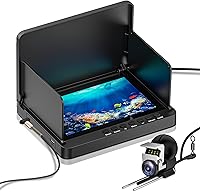
5 Best Big Screen Fish Finders (November 2026)
The best big screen fish finders include the Humminbird 411670-1 Helix 5 Chirp DI GPS for compact consoles, the Humminbird XPLORE Series GPS Fish Finder MEGA for side imaging, and the Simrad GO Chartplotter and Fish Finder for chartplotter navigation.
On this page (11 sections)
- The best big screen fish finders for larger displays
- Side by side comparison of big screen fish finders
- How we compared these big screen fish finders
- What display size should you choose for a big screen fish finder?
- Which controls work best on a big screen fish finder?
- What sonar views benefit most from a large display?
- How much mapping and GPS coverage do you need?
- Do big screens help you read sonar better?
- What is included and what should you check in the box?
- How should you set up and care for a big screen fish finder?
- Which big screen fish finder should you buy?
The best big screen fish finder for most anglers is the Humminbird XPLORE Series GPS Fish Finder MEGA, with a 10 inch display that shows charts and sonar together. A big screen fish finder helps you read fish arches, structure and depth contours without switching views as often.
It also helps when you run side imaging, down imaging and a chart map on one unit.
We compared display size, sonar type, controls, mapping and included parts across these five models. We looked at what each maker states for its screen, transducer and chart coverage.
Our score weighs specs, features and buyer feedback against what you are shopping for.
A larger screen does not make sonar stronger by itself. It makes the information easier to use while you fish.
That matters when you split the screen, zoom in on a contour or check a waypoint while you move.
Start with what to know about fish finders if this is your first unit. That guide covers basic terms before you compare big displays.
Then use the picks below to match screen size to your boat and fishing style.
Our picks at a glance
-
1
 Best for compact consoles
Humminbird 411670-1 Helix 5 Chirp DI GPS
9.6/10 our score
See it on Amazon -
2
 Best for side imaging
Humminbird XPLORE Series GPS Fish Finder MEGA
9.5/10 our score
See it on Amazon -
3
 Best for chartplotter navigation
Simrad GO Chartplotter and Fish Finder
9.2/10 our score
See it on Amazon
- 4
 Check it
Lowrance HOOK Reveal 5 SplitShot
Best for simple autotuning - 5
 Best for inland lakesCheck it
The best big screen fish finders for larger displays
The XPLORE is the clearest pick for a true big screen setup, with a 10 inch display and MEGA imaging. The Simrad GO9 is close behind for chartplotter use, with a 9 inch display and included C-MAP Discover charts.
The Lowrance Eagle sits in the middle at 7 inches, while the two 5 inch models suit smaller consoles.
Humminbird 411670-1 Helix 5 Chirp DI GPS: Best for compact consoles
- 5 inch color TFT display
- CHIRP Down Imaging
- Dual Spectrum CHIRP sonar
- Internal GPS with Humminbird Basemap
- AutoChart Live with eight hours built in
A compact 5 inch unit with CHIRP Down Imaging and mapping for anglers who want strong sonar without a large console cutout.
Pros
- CHIRP Down Imaging for clear views under the boat
- Dual Spectrum CHIRP with Wide and Narrow modes
- Keypad control for use in any weather
Cons
- 5 inch display is small for split views
- Transducer and mounting hardware are included, so check your dash space
The Humminbird 411670-1 Helix 5 Chirp DI GPS suits anglers who want strong sonar in a compact console. Its 5 inch widescreen color display is easy to fit, but it is not a true big screen for split views.
CHIRP Down Imaging filters visual noise and clutter for a clear view beneath the boat. Dual Spectrum CHIRP sonar gives Wide Mode for maximum coverage and Narrow Mode for detailed scanning.
Internal GPS comes with Humminbird Basemap for more than 10,000 lakes and continental U.S. coastlines. AutoChart Live creates depth contour maps with eight hours of built in recording time.
Keypad control works in any weather. The trade off is screen space, since a 5 inch display leaves less room for charts and sonar together.
Humminbird XPLORE Series GPS Fish Finder MEGA: Best for side imaging
- 10 inch touchscreen and keypad interface
- MEGA Side Imaging+ with 200 foot range on each side
- MEGA Down Imaging+ with 200 foot depth coverage
- Dual Spectrum CHIRP sonar
- AutoChart Live with eight hours built in
A 10 inch touchscreen unit with MEGA Side Imaging+ and Down Imaging+ for anglers who want wide underwater coverage on one screen.
Pros
- 10 inch display for detailed charts and simultaneous sonar views
- Touchscreen plus keypad operation
- Bluetooth for wireless anchor control and smartphone notifications
Cons
- Control head only model without transducer
- Large 10 inch unit needs clear dash space
The Humminbird XPLORE Series suits anglers who want the widest view in this group. Its 10 inch touchscreen and keypad interface gives charts, sonar and imaging more room at once.
MEGA Side Imaging+ offers 200 foot range on each side, while MEGA Down Imaging+ offers 200 foot depth coverage. Dual Spectrum CHIRP sonar helps with fish detection and structure clarity.
Built in GPS uses an enhanced Humminbird Basemap with more than 10,000 lakes and coastal waters. AutoChart Live creates real time maps of depth contours, bottom hardness and vegetation.
Bluetooth supports wireless anchor control and smartphone notifications. One Boat Network integration works with Minn Kota trolling motors and Cannon products.
The trade off is size, since this control head only model has no transducer and needs a large dash opening.
Simrad GO Chartplotter and Fish Finder: Best for chartplotter navigation
- 9 inch multifunction display
- 83/200 kHz HDI transducer support
- CHIRP sonar and DownScan Imaging
- C-MAP Discover card included
- Built in GPS with Wi-Fi and NMEA 2000 support
A 9 inch chartplotter and fish finder with included C-MAP Discover charts and HDI sonar for navigation focused boats.
Pros
- 9 inch touchscreen with large, clearly captioned icons
- C-MAP Discover card with Vector Charts and Custom Depth Shading
- Can mirror display to a smartphone or tablet
Cons
- Radar options are separate from the included package
- 9 inch unit needs more dash space than 5 inch models
The Simrad GO Chartplotter and Fish Finder suits sportboats, center consoles and smaller cruisers that need navigation first. Its 9 inch multifunction display adds GPS navigation, sonar support and radar capability in one unit.
The included C-MAP Discover card provides Vector Charts, Custom Depth Shading, Tides and Currents and high resolution bathymetric contours for the U.S. and Canada. HDI transducer support at 83/200 kHz provides CHIRP sonar and DownScan Imaging for bottom structure and fish targets.
Built in GPS comes with Wi-Fi and NMEA 2000 support for system integration. You can mirror the display to a smartphone or tablet for charts and radar.
The trade off is that radar systems are options rather than included parts, so confirm total cost before you choose this route.
Lowrance HOOK Reveal 5 SplitShot: Best for simple autotuning
- 5 inch SolarMAX display
- SplitShot transducer
- FishReveal
- Autotuning sonar
- Preloaded C-MAP US Inland mapping
A 5 inch unit with FishReveal and autotuning sonar for anglers who want DownScan detail without manual setup.
Pros
- FishReveal combines CHIRP target separation with DownScan structure
- Autotuning sonar adjusts as conditions change
- SolarMAX display for daylight visibility
Cons
- 5 inch display limits split screen detail
- High detail maps cover almost 4,000 US inland lakes
The Lowrance HOOK Reveal 5 SplitShot suits anglers who want simple sonar setup on a small screen. Its 5 inch SolarMAX display is built for daylight visibility, even in direct sunlight.
FishReveal combines CHIRP sonar target separation with DownScan Imaging structure, so fish targets appear on the DownScan image. The SplitShot transducer pairs wide angle high CHIRP sonar with high resolution DownScan images.
Autotuning sonar adjusts settings as fishing conditions change, so you spend less time reworking settings. Preloaded C-MAP US Inland mapping covers almost 4,000 U.S. inland lakes.
Genesis Live creates custom contour maps with greater detail. The trade off is screen size, since a 5 inch display makes split views and detailed charts harder to read than a 7 to 10 inch unit.
Lowrance Eagle Fish Finder: Best for inland lakes
- 7 inch IPS display
- SplitShot HD with CHIRP sonar and DownScan Imaging
- FishReveal
- C-MAP charts for more than 17,000 American lakes
- Auto-Tuning Sonar
A 7 inch unit with SplitShot HD and US inland charts for anglers who want a larger view than a 5 inch model.
Pros
- 7 inch display gives sonar and charts more room
- IPS screen stays visible in sunlight
- Twist-lock connector simplifies use
Cons
- 7 inch unit is larger than compact 5 inch models
- Maximum measuring depth is 500 feet
The Lowrance Eagle Fish Finder suits anglers who want a middle size screen for inland lakes. Its 7 inch display gives CHIRP sonar, DownScan detail and charts more room than compact models.
SplitShot HD combines CHIRP sonar and DownScan Imaging to show fish, structure and bottom changes. FishReveal places fish targets on the DownScan image to help separate fish from weeds and structure.
C-MAP charts provide high resolution coverage of more than 17,000 American lakes. The IPS screen stays visible in sunlight.
Auto-Tuning Sonar adjusts settings for you, and a twist-lock connector simplifies use. Maximum measuring depth is 500 feet.
The trade off is that 7 inches is smaller than the 9 and 10 inch options here, so split views will be tighter at a distance.
Side by side comparison of big screen fish finders
The table below shows display size, sonar and mapping at a glance. Use it to narrow your list before you read the buying advice.
The XPLORE has the largest screen at 10 inches, followed by the Simrad at 9 inches and the Lowrance Eagle at 7 inches. The two 5 inch models are the most compact choices.
| Product | Best for | Display size | Display | Model number | Our score |
|---|---|---|---|---|---|
| Humminbird 411670-1 Helix 5 Chirp DI GPS | compact consoles | 5 inches | Color TFT | 411670-1 | 9.6 |
| Humminbird XPLORE Series GPS Fish Finder MEGA | side imaging | 10 inches | Color TFT | 9.5 | |
| Simrad GO Chartplotter and Fish Finder | chartplotter navigation | 000-16293-001 | 9.2 | ||
| Lowrance HOOK Reveal 5 SplitShot | simple autotuning | 5 inches | LCD | 000-15500-001 | 8.9 |
| Lowrance Eagle Fish Finder | inland lakes | 7 inches | LCD | 8.7 |
How we compared these big screen fish finders
We compared screen size first, since that is the main reason to shop for a big screen fish finder. We checked whether each unit shows sonar and charts together without crowding the image.
We also checked controls, because a large screen is less useful if menus are hard to use with wet hands.
We checked sonar type next. CHIRP sonar, DownScan Imaging and Side Imaging each show different detail.
We noted transducer inclusion, since some units are control head only. We checked mapping and GPS coverage, including lake and coastal charts.
We did not test these units on the water. We researched specs and features from the product data.
Buyers often mention screen readability in sunlight, so we weighed display type and daylight visibility where stated.
What display size should you choose for a big screen fish finder?
A 10 inch display suits split views with side imaging, down imaging and charts. You can see structure on one side and a map on the other without constant switching.
This size needs a wide dash and a mounting spot you can read from your seat.
A 9 inch display is a strong middle ground for chartplotter use. It leaves room for radar, sonar and charts, while still fitting many center consoles.
Check the unit dimensions and bracket clearance before you order.
A 7 inch display works well for sonar plus charts on smaller boats. It is easier to fit than 9 or 10 inch units, but split views will feel tighter.
Consider how far you sit from the screen when you fish.
A 5 inch display suits single views and simple use. It is the easiest to mount, but it is not a big screen for simultaneous views.
If you plan to run imaging and mapping together, choose 7 inches or more.
How to measure your dash for a larger screen
Measure the flat area where you plan to mount the unit. Add room for the bracket, knobs and cable bends.
Leave space to reach the power cable and any network cables.
Check viewing distance from the helm seat. A screen that fits the dash may still be hard to read if you sit far back.
Sit in your normal fishing position and check the angle.
Also check glare from the sun at different times of day. A screen that faces direct sun may need a different mount position.
Our guide on What Is a Fish Finder Screen Made Of? What to Know explains screen materials and glare factors.
Which controls work best on a big screen fish finder?
Touchscreen controls are fast for charts, waypoints and zooming. You can tap to create a waypoint, pinch to zoom or drag to pan across a chart.
This is helpful when you mark spots often and need quick changes.
Keypad controls can be easier with wet hands or gloves. Physical buttons give a clear feel when you look odd.
Some units combine touchscreen and keypad, so you can switch by conditions.
Hybrid controls are useful on big screens that run many views. You can use touch for maps and buttons for sonar settings.
The XPLORE offers touchscreen and keypad operation for this reason.
Check menu layout before you buy. Large icons with clear captions are easier to use at speed.
A simple home screen helps you switch views without digging through menus.
Touchscreen or keypad for wet hands and gloves
Touchscreen screens can be harder to use with water on your fingers. Test how the screen responds with wet hands if you can.
Gloves may also reduce accuracy on some touchscreens.
Keypad controls do not depend on touch accuracy. They can be safer when you move fast or wear gloves in cold weather.
Softkey controls also work well in any weather, as on the Helix 5.
Consider your normal fishing style. If you often change settings while driving, buttons may suit you better.
If you mainly adjust settings while stopped, touch may be fine.
What sonar views benefit most from a large display?
Side imaging benefits most from a large screen. It shows a wide area on each side of the boat, so detail needs room to read.
A 10 inch display helps you spot docks, brush piles and channel edges without zooming as much.
Down imaging also benefits from extra space. It shows structure directly below the boat in high detail.
A larger screen helps you compare that structure with a chart view at the same time.
CHIRP sonar shows fish arches and target separation. A big screen makes it easier to tell fish from weeds or bottom clutter.
Narrow Mode gives more detail for scanning, while Wide Mode covers more water.
Split views are where screen size matters most. You can run sonar on one side and charts on the other.
On a 5 inch screen, both views become small and hard to read.
If you are new to sonar terms, start with fish finder types. That guide explains how different units show underwater detail.
It also helps you choose between basic sonar and imaging models.
How much mapping and GPS coverage do you need?
Lake anglers should check inland lake coverage first. The Lowrance Eagle includes C-MAP charts for more than 17,000 American lakes.
The HOOK Reveal 5 includes high detail maps for almost 4,000 U.S. inland lakes.
Coastal anglers need different coverage. The XPLORE Basemap covers more than 10,000 lakes and coastal waters, with terrain, markers, hazards and marina locations.
The Simrad GO includes C-MAP Discover with ultra wide coverage in the U.S. and Canada.
Real time mapping helps on uncharted water. AutoChart Live creates maps of depth contours, bottom hardness and vegetation while you boat.
Genesis Live creates custom contour maps over any map or GPS plotter.
Check whether premium charts are included or optional. Some units support LakeMaster, CoastMaster or Navionics charts as separate purchases.
Confirm chart compatibility before you rely on a specific map set.
Touchscreen models in our best touch screen fish finder guide show more options for chart control. Compare those models if touch is a top priority for you.
Screen size and chart quality should be weighed together.
Do big screens help you read sonar better?
Yes, a larger display makes sonar detail easier to read at a glance. You can see fish arches, bottom changes and structure without leaning in.
This helps when you run split views or mark waypoints while you move.
Screen size does not change sonar power or range. It changes how much detail you can see and compare at once.
A clear 7 inch screen may be easier to read than a crowded 10 inch screen with too many windows open.
Sunlight readability matters as much as size. IPS and SolarMAX displays are stated to stay visible in sunlight.
Check display type if you fish in bright conditions without shade.
Our article on Do Fish Finders Really Work? What to Know explains what sonar can and cannot show.
Read it if you want to set realistic expectations. A big screen helps with reading, but good settings and transducer placement still matter.
What is included and what should you check in the box?
Check whether a transducer is included before you buy. The XPLORE is a control head only model without a transducer.
The Helix 5 includes a transom mount transducer, power cable and mounting hardware.
The Simrad GO package includes a transducer, Suncover, C-MAP Discover card, gimbal bracket and power cable. The HOOK Reveal 5 includes a SplitShot skimmer transducer, mounting bracket, power cable, fuse and fuse holder.
The Lowrance Eagle includes a transducer, bracket, power cable, locking collars, fuse and fuse holder.
Check mounting type for your boat. Options include gimbal bracket, bail mount, panel mount and flush mount.
Make sure the bracket fits your dash and leaves room for cables.
Check power needs and connectors. Some units use 12 volt DC power, while others list battery powered operation.
Confirm you have the right cable and fuse for your boat wiring.
How should you set up and care for a big screen fish finder?
Mount the screen where you can read it without turning your body. Keep the angle free from direct glare when possible.
Tighten the bracket so vibration does not shift the view while you run.
Install the transducer according to the maker instructions for your hull type. A poor transducer position can reduce image quality on any screen size.
Keep the transducer clean and check the mount after rough water.
Clean the screen with a soft, damp cloth and mild soap. Avoid harsh chemicals that can damage coatings.
Rinse salt water off the unit after use and dry it before storage.
Check cables and connectors each season. Look for cracks, loose pins or corrosion at power and transducer plugs.
A twist-lock connector can help keep connections secure if your unit has one.
Update charts and software as the maker directs. New charts can add detail for lakes and coastal areas you fish.
Keep your waypoint data backed up before you update or reset the unit.
Which big screen fish finder should you buy?
Pick the XPLORE if you want the largest screen and MEGA Side Imaging+. Its 10 inch display suits split views and wide underwater coverage.
Budget for a transducer, since this is a control head only model.
Pick the Simrad GO if navigation and charts matter most. Its 9 inch display and included C-MAP Discover card suit chartplotter use.
Add radar only if you need it for your boating style.
Pick the Lowrance Eagle if you fish inland lakes and want a 7 inch screen. Its SplitShot HD sonar and FishReveal help separate fish from structure.
Its IPS screen helps in sunlight.
Pick the Helix 5 or HOOK Reveal 5 if dash space is tight. Both have 5 inch displays, so they suit single views better than split views.
The Helix 5 offers keypad control, while the HOOK Reveal 5 offers autotuning sonar and FishReveal.
For a smaller screen option, compare our best 5 inch fish finder picks in more detail. Use that guide if a 5 inch unit fits your console better than a big screen.
Measure first, then choose the largest display you can read and mount with ease.
Our top 3 picks at a glance
-
1
Best for compact consoles
Humminbird 411670-1 Helix 5 Chirp DI GPS
9.6/10 our score
See it on Amazon -
2
Best for side imaging
Humminbird XPLORE Series GPS Fish Finder MEGA
9.5/10 our score
See it on Amazon -
3
Best for chartplotter navigation
Simrad GO Chartplotter and Fish Finder
9.2/10 our score
See it on Amazon
Frequently asked questions
What size screen should a fish finder have?
Choose 7 to 10 inches if you run split sonar and chart views at the same time. A 5 inch screen can work for single views or simple use.
Measure your dash and check viewing distance before you choose a larger unit.
Do fish finders really work on a big screen?
Yes, the screen size does not change sonar range, but it makes the image easier to read. A larger display helps you separate fish arches, weeds and bottom structure.
Our guide on whether fish finders work explains the sonar basics.
Is a touchscreen better than a keypad?
Touchscreen controls are fast for charts and waypoints, while a keypad can be easier with wet hands. Some units offer both options.
Think about gloves, sunlight and how often you change settings while moving.
What should I check before buying a big screen fish finder?
Check display size, transducer type, included charts and mounting options first. Confirm whether a transducer is included in the box.
Also check power needs and whether the unit fits your console.