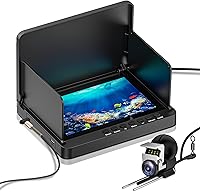
What to Look for When Buying a Fish Finder
What to know about fish finders before you buy is simple: match display size, sonar type, mapping and installation to the water you fish and the boat you use. A small portable unit suits a kayak or shore trip. A mounted unit with GPS and mapping suits a boat you use often.
On this page (12 sections)
- What types of fish finders should you consider first?
- How does a fish finder work on the water?
- What display size do you need?
- What sonar features matter most?
- Do you need GPS and mapping?
- What installation and mounting options should you plan for?
- What battery and power limits should you expect?
- How do controls and screens affect daily use?
- Which products fit which fishing style?
- What mistakes should you avoid when buying a fish finder?
- More guides on this topic
- A final checklist for what to know about fish finders
What to know about fish finders starts with matching the unit to your boat, your water and your fishing style. A castable unit you throw from a dock does a different job from a mounted unit on a boat.
We compared specs and features across portable, kayak and mounted models to show which choice fits each case.
A fish finder sends sonar waves into the water and shows what comes back on a screen. It can show depth, bottom shape, fish location and sometimes structure.
It does not guarantee fish, and it works best when you learn to read it.
Our score weighs specs, features and buyer feedback against what you are shopping for. Our score weighs specs, features and buyer feedback against what you are shopping for.
What types of fish finders should you consider first?
The type you choose depends on where you launch and how you carry the gear. Portable and castable units suit shore, kayak and ice fishing.
Mounted units suit a boat with a console or a flat surface for a bracket.
Our fish finder types guide breaks down each format in more detail. Read it before you compare screens and sonar, because format limits what features you can use.
A handheld unit can move from boat to boat. It needs a battery and a transducer you can place in the water.
A castable unit pairs with a phone and needs no cable. A mounted unit needs power, a bracket and a transducer mount.
If you are new to this gear, our best fish finder for beginners guide narrows the field. It focuses on simple setup and clear screens.
Rule: pick portable or castable for shore and kayak trips, and pick a mounted unit for regular boat use.
How does a fish finder work on the water?
A fish finder works by sending a sound pulse down and reading the echo back. The time the echo takes tells the unit the depth.
The strength and shape of the return help it draw fish, weeds, sand and rocks on the screen.
The LUCKY handheld shows water depth from 3 ft to 328 ft when its transducer is fully in the water. It also shows fish depth, short and tall weeds, and sand and rocks on the bottom.
The depth unit can switch between feet and meters.
The Deeper START casts to 165 ft and scans down to 165 ft with a 40 degree sonar beam. It shows fish location and size, depth, bottom contour and vegetation in the Fish Deeper app.
It creates its own Wi-Fi, so it does not use your mobile data.
The Humminbird Helix 5 uses Dual Spectrum CHIRP sonar. Wide Mode gives more coverage.
Narrow Mode gives more detail for scanning. A Low-Q transducer gives precise 2D target separation.
Our post on Do Fish Finders Really Work? What to Know explains limits you should know.
Our post on How Does a Castable Fish Finder Work? What to Know explains the castable format step by step.
Rule: a fish finder shows echoes, and you still need to learn what those echoes mean.
What display size do you need?
Display size should match how far you sit from the screen and how much you split it. A small screen saves space and power.
A large screen makes icons, maps and sonar easier to read in sun and chop.
A 2 inch LCD display suits a one hand handheld. The LUCKY unit is 2.68 by 1.18 by 4.8 inches and weighs 0.58 kg.
Its backlight helps you read it in sun or darkness. Its display is not waterproof, so keep it away from splashing water.
A 5 inch display suits a small boat. The Humminbird Helix 5 has a 5 inch Color TFT display.
It is 4.64 by 3.3 by 7.55 inches and weighs 2.1 pounds. You can view sonar and maps without a cable blocking the console.
If you want a compact mounted screen, see our best 5 inch fish finder guide. If you want more room for split screens, see our best 7 inch fish finder guide and our best 9 inch fish finder guide.
For the largest screens, see our best big screen fish finder guide.
Touch screens are easy to use with wet hands, but keypads work in gloves and rough water. Our best touch screen fish finder guide covers that trade-off.
Rule: buy the smallest screen you can read at your seat, then size up if you split the screen often.
What sonar features matter most?
Sonar features matter because they decide how you separate fish from bottom and structure. Basic sonar marks depth and fish.
CHIRP sonar and imaging sonar add detail at a higher cost.
The Humminbird Helix 5 lists Dual Spectrum CHIRP sonar with Wide Mode and Narrow Mode. Wide Mode searches more water.
Narrow Mode scans in more detail. Humminbird says the Low-Q transducer gives precise 2D target separation.
The Deeper START uses a 40 degree beam and a night fishing mode. A wider beam covers more bottom.
A narrower beam gives more detail in a smaller area. You trade coverage for detail with beam width.
The LUCKY unit has 5 levels of sensitivity adjustment. Higher sensitivity can help in clear or turbid water.
Too much sensitivity can also show noise. Start in the middle and change one setting at a time.
Frequency, beam width and power are not listed for every model here. Do not assume a feature from the name alone.
Check the exact model number before you compare depth claims.
If you want a simple depth view first, our best fishing depth finder guide focuses on that job.
Rule: choose CHIRP if you want clearer separation, and choose basic sonar if you mainly need depth and fish location.
Do you need GPS and mapping?
GPS and mapping matter if you fish the same water often and want to return to a spot. GPS marks your position and speed.
Mapping shows lake outlines, depth contours and shorelines.
The Humminbird Helix 5 has enhanced GPS navigation with the Humminbird Basemap. Humminbird says the basemap covers 10,000 plus lakes and continental U.S. coastlines.
It is compatible with premium LakeMaster, CoastMaster and Navionics charts.
It also has Real-Time Mapping with AutoChart Live. AutoChart Live creates maps of depth contours, bottom hardness and vegetation while you boat.
It has eight hours of built-in recording time. It is compatible with AutoChart Zero Line SD cards for more capacity.
Portable and castable units here do not list the same GPS mapping. The Deeper START saves scans with time and location in the app for easy revisits.
That helps, but it is not the same as a full chart on a mounted screen.
Mapping costs more and needs updates and compatible cards. If you fish new lakes each trip, mapping helps more.
If you fish one pond from shore, it helps less.
Rule: buy GPS and mapping for boat fishing on large or unfamiliar lakes, and skip it for simple shore trips.
What installation and mounting options should you plan for?
Installation should match your boat hull, your power source and where you can mount the screen. A unit that fits a kayak may not fit a boat console.
A unit that needs a cable may not suit a quick shore trip.
The LUCKY unit lists Thru-Hull Mount for its transducer. The transducer can attach to a kayak or boat hull.
It is battery powered. It can work for at least 4 to 5 hours on a new battery, and longer in battery save mode.
The handheld display itself is not waterproof.
The Humminbird Helix 5 lists Transom Mount. Its box includes a fish finder control head, power cable, XNT 9 HW T transom mount transducer, mounting hardware and gimbal mounting bracket.
It is corded electric. It needs boat power and a stern mount.
The Deeper START lists Handheld mounting. It is battery powered.
It needs no messy wires or external batteries for the cast. It recharges in 2.5 hours and runs for 6 hours.
Plan cable runs before you drill. Keep the transducer level and fully immersed.
Avoid mounting near bubbles from the motor or aerated water. Test the screen position while you sit or stand where you will fish.
Rule: match the mount and power source to your boat first, and do not buy a mounted unit if you have no good mount point.
What battery and power limits should you expect?
Battery life decides how long you can stay on the water without a cable. Portable units use internal or replaceable batteries.
Mounted units use boat power and can run as long as the boat power lasts.
The LUCKY unit runs for at least 4 to 5 hours on a new battery. Battery save mode can extend that time.
It is battery powered, so you can carry it between boats.
The Deeper START runs for 6 hours. It reaches full charge in 2.5 hours.
Humminbird says it is a good fit for a casual angler. It is also battery powered with no external battery for the cast.
The Humminbird Helix 5 is corded electric. It does not list a battery life in the data here.
It depends on your boat power and wiring. That is fine for a boat, but it is not a shore unit.
Cold weather, screen brightness and backlight use can shorten run time. Carry a backup battery or a way to recharge if you fish all day.
Turn off alarms, backlight or demo features you do not need.
Rule: choose battery life for the length of your longest trip, not for a short test at the dock.
How do controls and screens affect daily use?
Controls matter because you will change settings while you fish, often with wet hands. A simple menu helps you adjust sensitivity, depth units and alarms fast.
A complex menu can slow you down.
The Humminbird Helix 5 uses reliable keypad control. It has a user friendly menu system operated by softkey controls.
Humminbird says it allows reliable operation in any weather conditions. You can access pre loaded views and settings through the button interface.
The LUCKY unit uses a handheld LCD with a neck strap. It has 5 levels of sensitivity adjustment.
The depth unit switches between feet and meters. The backlight helps in sun or darkness.
The Deeper START uses the Fish Deeper app on iOS and Android. A phone screen is easy to read and share.
It also means you need a charged phone, a secure mount and a dry case in rain.
Alarms can help you notice fish schools. The LUCKY unit has a fish and fish schools alarm.
It also has a demo mode. Press the power button for 3 seconds and it enters demo mode.
Restart it to get into normal mode for accurate data.
Rule: pick controls you can use with wet hands, gloves and bright sun, not just controls that look simple in a photo.
Which products fit which fishing style?
The right product depends on how you fish, not on brand alone. A kayak angler needs a small unit that can move.
A shore angler needs a castable unit. A boat angler needs a mounted unit with GPS.
The LUCKY Kayak Portable Fish Depth Finder Water suits kayak, boat, ice and shore fishing. It shows depth, fish location, weeds and rocks.
It has a 2 inch LCD display and a neck strap. It suits beginners and gift buyers who want simple depth data.
The Humminbird 411660-1 Helix 5 Chirp GPS G3 suits boat fishing with a transom mount. It has CHIRP sonar, GPS, basemap coverage and AutoChart Live.
It suits anglers who want maps and structure detail from a 5 inch screen.
The Deeper Start Fish Finder suits dock, shore, bank and kayak fishing. It casts to 165 ft and scans to 165 ft.
It pairs with a free app for iOS and Android. It suits family trips and shore anglers who want to get fishing in minutes.
Trade-offs are clear. The LUCKY unit is simple but its display is not waterproof.
The Deeper unit needs a phone and app. The Humminbird unit needs boat power and installation.
Rule: pick the LUCKY for handheld kayak use, the Deeper for casting from shore, and the Humminbird for mounted boat use.
What mistakes should you avoid when buying a fish finder?
Avoid buying on screen size or sonar name alone. A large screen cannot fix a bad mount.
A sonar name cannot fix a shallow depth limit. A low price cannot fix a unit that does not fit your boat.
Do not buy a mounted unit if you fish mostly from shore. Do not buy a castable unit if you need full maps on a boat.
Do not buy a handheld unit and expect boat GPS mapping.
Do not ignore depth range. The LUCKY unit detects depth from 3 ft to 328 ft.
The Deeper START scans to 165 ft. The Humminbird Helix 5 data here does not list a maximum depth, so check the exact model before you assume it fits deep water.
Do not ignore what is in the box. The Humminbird box includes a transducer, power cable, mounting hardware and gimbal bracket.
The LUCKY unit includes a neck strap. The Deeper START needs a phone and the free app.
Do not use the LUCKY handheld in a swimming pool. The data notes the transducer does not work in a small space because sonar uses a sound pulse.
Keep the display away from splashing water.
Rule: write down your water depth, boat type and mount point before you compare models, and buy only what fits those three facts.
More guides on this topic
A final checklist for what to know about fish finders
Use this checklist before you buy. It covers the main points in this guide and helps you compare models in a fair way.
First, name your fishing style. Choose portable for kayak and ice use.
Choose castable for shore and dock use. Choose mounted for boat use.
Second, choose display size. Choose 2 inches for a handheld.
Choose 5 inches for a small boat. Choose 7 to 9 inches if you split the screen often.
Third, choose sonar. Choose basic sonar for depth and fish location.
Choose CHIRP for clearer separation. Choose imaging or live sonar only if you will use the detail often.
Fourth, decide on GPS and mapping. Choose mapping for large lakes and repeat trips.
Skip it for simple shore trips.
Fifth, plan installation and power. Check transom, thru hull or handheld mounting.
Check battery life for your longest trip. Check that the screen fits your console or bracket.
Pick the LUCKY if you want a handheld depth finder for a kayak. Pick the Deeper START if you want to cast from shore.
Pick the Humminbird Helix 5 if you want a mounted boat unit with GPS and mapping.
Rule: if you can name your boat, your water depth and your screen size, you can choose with confidence.
Frequently asked questions
What should I know about fish finders before buying my first one?
Start with where you will fish and how you will carry the unit. A handheld or castable model suits shore, kayak and ice use.
A transom mounted model suits a boat and gives you GPS, mapping and a larger screen.
Match sonar depth and display size to that use.
What display size do I need on a fish finder?
Choose a 2 to 5 inch display for portable and kayak use where space is tight. Choose 5 to 7 inches for a small boat console.
Choose 7 to 9 inches or larger if you split the screen, view maps and look at sonar at the same time.
Do I need GPS and mapping on a fish finder?
GPS helps you mark spots, return to them and track speed. Mapping shows depth contours and lake outlines.
You need it most if you fish the same lake often from a boat.
Shore and castable fishing can work without it.
How do I install a fish finder transducer?
Follow the mounting type for your boat. A transom mount sits on the stern.
A thru hull mount passes through the hull.
A handheld transducer can hang over the side or attach to a kayak hull.
Keep the transducer level and fully in the water.
Which sonar type should I choose?
Traditional 2D sonar shows fish arches and depth at a lower cost. CHIRP sonar gives clearer target separation.
Imaging and live sonar show more detail but cost more and need more power.
Your water depth and budget decide which type makes sense.