7 Best Depth Finders for Fishing (October 2026)
The best fishing depth finders include the LUCKY Kayak Portable Fish Depth Finder Water for handheld sonar, the Reelsonar iBobber portable wireless bluetooth fish finder for phone-based shore fishing, and the Deeper Start Fish Finder for simple castable sonar.
On this page (6 sections)
The best fishing depth finder for most anglers here is the LUCKY Kayak Portable Fish Depth Finder Water, a handheld sonar unit that displays water depth, approximate fish location and bottom details. Pick Reelsonar or Deeper for castable phone-based sonar, Hawkeye for handheld depth readings, or Copkim if you only need to find the bottom and set a float.
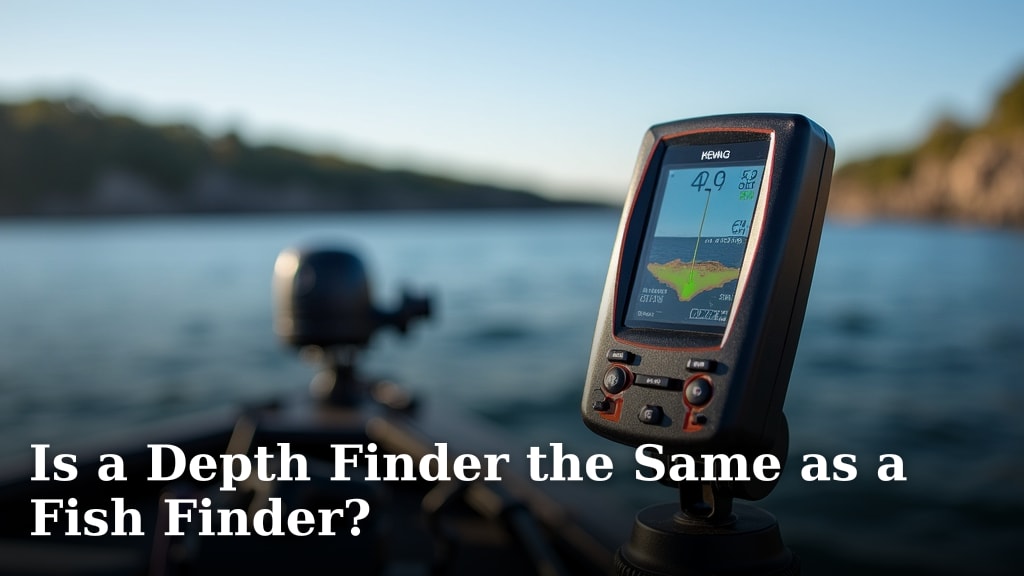
A fish finder and a depth finder can overlap, but they don't always do the same job. Some sonar units show fish and underwater features as well as depth; a basic depth tool can give you a bottom reference without identifying fish.
For a dedicated display, compare our 7-inch fish finder guide.
Before choosing, consider where you'll use it and how you want to read the information. Our guide to what to know about fish finders covers the main buying factors, while fish finder types explains the broad options.
Our picks at a glance
-
1
 Best for handheld sonar
LUCKY Kayak Portable Fish Depth Finder Water
9.7/10 our score
See it on Amazon -
2
 Best for phone-based shore fishing
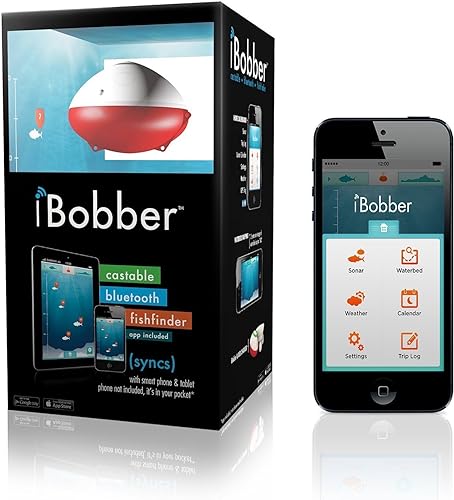
Reelsonar iBobber portable wireless bluetooth fish finder
9.6/10 our score
See it on Amazon -
3

- 4
 Check it
Deeper PRO+ 2 Sonar Fish Finder
Best for mapping from shore - 5
 Check it
Hawkeye DT1H Handheld Depth Finder with Temperature
Best for handheld depth readings - 6
 Check it
Copkim 4 Pcs Clip-on Fishing Depth Finder
Best for setting float depth - 7
 Check it
LUCKY Portable Fish Finder Handheld Kayak Fish
Best for a color screen
Which fishing depth finder fits your fishing style?
The right fishing depth finder depends on whether you want fish detection, a separate handheld screen, phone-based sonar or a simple way to set float depth. These picks cover those different jobs, and the score reflects how well each fits its intended use.
We compared the listed features and depth ranges with the needs of anglers shopping for a fishing depth finder. Our score weighs specs, features and buyer feedback against what you're shopping for.
| Product | Best for | Depth range | Display | Power | Our score |
|---|---|---|---|---|---|
| LUCKY Kayak Portable Fish Depth Finder Water | handheld sonar | 3 to 328 ft | 2 in LCD | Battery powered | 9.7 |
| Reelsonar iBobber portable wireless bluetooth fish finder | phone-based shore fishing | Up to 135 ft | Rechargeable | 9.6 | |
| Deeper Start Fish Finder | simple castable sonar | Up to 165 ft | 9.4 | ||
| Deeper PRO+ 2 Sonar Fish Finder | mapping from shore | Up to 330 ft | Battery powered | 9.2 | |
| Hawkeye DT1H Handheld Depth Finder with Temperature | handheld depth readings | Up to 300 ft | 3.5 in LCD | 8.6 | |
| Copkim 4 Pcs Clip-on Fishing Depth Finder | setting float depth | 8.4 | |||
| LUCKY Portable Fish Finder Handheld Kayak Fish | a color screen | Up to 328 ft | 2.4 in color LCD | 7.9 |
The best fishing depth finders for different uses
The LUCKY handheld sonar leads for anglers who want depth and fish information on a separate screen. The other options suit phone-based sonar, mapping, basic depth readings or float setup.
LUCKY Kayak Portable Fish Depth Finder Water: Best for handheld sonar
- Handheld display
- Depth range from 3 to 328 ft
- Approximate fish location and bottom details
- Fish and school alarms
A handheld display shows water depth, approximate fish location, weeds and bottom type. Its transducer can attach to a kayak or boat hull.
Pros
- Displays depth and approximate fish location
- Shows weeds, sand and rocks
- Sensitivity has 5 levels
Cons
- Display is not waterproof
- Requires the transducer to be immersed
The LUCKY Kayak Portable Fish Depth Finder Water is the most versatile choice here for a kayak or small boat. For more kayak-specific sonar options, see fish finders for kayak fishing.
Its transducer can attach to a hull, and the handheld screen shows water depth, approximate fish location, weeds, sand and rocks.
The stated detection range is 3 to 328 ft when the transducer is fully immersed. You can switch between feet and meters, adjust sensitivity across 5 levels and turn on the backlight for low-light use.
Fish and school alarms add a cue when fish pass the transducer. The product information gives at least 4 to 5 hours of continuous operation with a new battery, and says battery-save mode can extend use.
Keep the display away from splashing water because it is not waterproof. Choose this model if you want sonar information on a separate handheld screen rather than on your phone.
Reelsonar iBobber portable wireless bluetooth fish finder: Best for phone-based shore fishing
- Pairs with iOS and Android apps
- Depth range up to 135 ft
- Fish and strike alarms
- Rechargeable battery life of 10+ hours
This castable sonar pairs with a phone app and can show depth-tagged fish icons. It's suited to anglers who want a portable option for shore or dock fishing.
Pros
- Works with iOS and Android apps
- Fish and strike alarms
- Rechargeable battery life of 10+ hours
Cons
- Uses a phone or tablet display
- Depth range is lower than several other picks
The Reelsonar iBobber portable wireless bluetooth fish finder suits shore anglers who want a compact sonar unit paired with a phone or tablet. Its app works with iOS and Android, and the depth range is up to 135 ft.
The app displays depth-tagged fish icons, and the fish alarm can alert you when fish gather under docks or piers. A strike alert can notify you when fish are biting, according to the product details.
Its rechargeable battery life is listed as 10+ hours. That makes it worth considering for longer sessions when you want app-based sonar and alarms, though the depth range is shorter than several other picks here.
Choose iBobber if a phone display fits your setup and you fish from shore, docks or other places where a castable device is useful. For a separate screen, consider one of the handheld units instead.
Deeper Start Fish Finder: Best for simple castable sonar
- Casts up to 165 ft
- Depth range up to 165 ft
- 40° sonar beam
- App saves scans with time and location
The Deeper START pairs with a phone app to show fish location and size, depth, bottom contour and vegetation. It generates its own Wi-Fi connection.
Pros
- App saves scans with time and location
- No external batteries or wires
- Night fishing mode
Cons
- Uses a mobile device for the display
- Battery life is up to 6 hours
The Deeper Start Fish Finder is a simple castable option for recreational fishing from shore, a bank, a dock or a kayak. Its app shows fish location and size, depth, bottom contour and vegetation.
It can cast up to 165 ft and scan to a depth of up to 165 ft. The 40° sonar beam offers a stated coverage angle, and the app saves scans with time and location for revisiting a spot.
The Deeper START generates its own Wi-Fi, so it doesn't use your mobile data for the connection. The product details give up to 6 hours of battery life and a full charge time of 2.5 hours.
Pick it if you want a straightforward way to read sonar on a phone. For GPS-enabled bathymetric mapping and more beam choices, look at the Deeper PRO+ 2.
Deeper PRO+ 2 Sonar Fish Finder: Best for mapping from shore
- Built-in GPS for bathymetric mapping
- Depth range up to 330 ft
- Wide, mid and narrow beams
- Own Wi-Fi connection
Built-in GPS supports bathymetric mapping from shore, a dock or a bank. Multiple beam options suit anglers who want to scan broadly or focus on an area.
Pros
- Maps from shore, dock or bank
- Three beam options
- Depth range up to 330 ft
Cons
- Uses a mobile app
- More features may be unnecessary for basic depth checks
The Deeper PRO+ 2 Sonar Fish Finder stands out for anglers who want to make bathymetric maps from shore, a dock or a bank. Its built-in GPS saves maps to the Fish Deeper app.
It offers wide, mid and narrow beams, which let you choose broad coverage or focus on a specific spot. The stated depth range is up to 330 ft, and the unit uses its own Wi-Fi connection.
The product details also describe target separation of 0.4 in for the narrow beam and 1 in for the wide and mid beams. Those figures may matter to anglers tracking small targets or a lure, but many casual trips won't need the extra beam choices.
Choose PRO+ 2 if mapping and beam selection matter to you. If you want a simpler castable unit, the Deeper START covers the basic sonar information with fewer decisions.
Hawkeye DT1H Handheld Depth Finder with Temperature: Best for handheld depth readings
- Handheld depth finder
- Temperature in product name
- Depth range up to 300 ft
- 3.5 in LCD
This handheld unit is a straightforward choice for anglers focused on water depth, with temperature in its name and a stated range up to 300 ft.
Pros
- Dedicated handheld format
- Depth range up to 300 ft
- 3.5 in LCD
Cons
- Product details give few feature descriptions
- Not described as a fish locating sonar
The Hawkeye DT1H Handheld Depth Finder with Temperature is a focused option for anglers who mainly want depth readings from a handheld unit. Its stated measuring depth reaches 300 ft, and it has a 3.5 in LCD.
The product name includes temperature, but the available feature details are limited. Compare the exact functions you need before choosing it, especially if fish location, alarms or bottom structure are important to your fishing.
This is a better fit for someone seeking a dedicated depth tool than for an angler who expects a full fish-finding display. Its handheld format also avoids relying on a phone app.
Pick Hawkeye if depth is your main concern and you prefer a separate screen. For more clearly described fish and bottom features, compare the LUCKY handheld sonar options above.
Copkim 4 Pcs Clip-on Fishing Depth Finder: Best for setting float depth
- Set of 4 clip-on tools
- Clip to fishing line
- Use contact with bottom to find depth
- Fluorescent coating
These clip-on tools help find the bottom so you can set a float at a chosen depth. They are a simple alternative to sonar when you need a depth reference.
Pros
- Four pieces in the set
- Simple clip-on use
- Fluorescent coating for visibility
Cons
- Does not locate fish electronically
- Requires lowering the line to the bottom
The Copkim 4 Pcs Clip-on Fishing Depth Finder is the simplest pick here for setting a float at a chosen depth. Clip one to your line, lower it until it touches the bottom, then use that depth as a guide for adjusting the float.
This is a physical depth-finding method, not electronic sonar. It won't display fish or map underwater contours, but it can help when you only need to find bottom depth and place bait at a set level.
The set includes 4 clip-on tools with fluorescent coating. The described uses include ice fishing and fishing in oceans, lakes, rivers and coastal waters.
Choose Copkim if you want a basic depth reference without a screen, app or sonar transducer. If you want approximate fish location too, choose an electronic fish finder instead.
LUCKY Portable Fish Finder Handheld Kayak Fish: Best for a color screen
- 2.4 in color LCD
- Depth range up to 328 ft
- Displays contour, fish depth and temperature
- Rechargeable battery
This wired handheld fish finder displays depth, underwater contour, temperature and fish size. A bracket lets you attach its transducer to a kayak or boat.
Pros
- Color LCD with adjustable brightness
- Transducer can attach to a boat or kayak
- Rechargeable battery
Cons
- Wired operating distance is 26 ft
- Battery life is about 5 hours
The LUCKY Portable Fish Finder Handheld Kayak Fish is a fit for anglers who want a color display and a wired transducer. It shows water depth, underwater contour, water temperature, fish size and fish depth on a 2.4 in color LCD.
Its stated detection range reaches 328 ft, with a 26 ft wired operating distance. The display brightness, sensitivity, depth range, zoom, alarms and measurement units can be adjusted.
A bracket lets you attach the transducer to a boat or kayak. The rechargeable battery runs for about 5 hours on a full charge, according to the product details.
Pick it if a color display and several settings matter more than a wireless castable design. For advice on screen size, see our guide to the best 5 inch fish finder.
How do fish finders and depth finders differ?
A fish finder uses sonar to help show fish and underwater features, while a basic depth finder may focus on measuring water depth. Some devices do both, which is why the terms are often used together.
The LUCKY and Deeper options in this guide show fish-related information as well as depth. The Copkim clip-ons work by reaching the bottom, so they're better for setting a float than searching for fish.
For a closer explanation of the overlap, read Is a Depth Finder the Same as a Fish Finder?. If you want to know whether sonar information can help your trip, our article on whether fish finders really work explains what to expect.
Should you choose a handheld screen or a phone app?
Choose a handheld screen if you want to read depth without using a phone. The LUCKY and Hawkeye units have their own displays, while the Reelsonar and Deeper castable options send information to an app.
A phone app can be a convenient fit when you already bring a phone on the water. Check the connection method and battery needs, and consider how you'll keep your phone accessible and protected during the trip.
The LUCKY handheld sonar also works with a transducer attached to a kayak or boat hull. If you're considering castable sonar, our guide to how a castable fish finder works explains that setup.
What should you compare before choosing a depth finder?
Compare the device's job, depth range, display and setup before you decide. A larger number for depth range doesn't automatically make a unit the best fit if you only need to set a float or fish shallow water.
- Job: Decide whether you need fish detection, a depth reading, mapping or float-depth setup.
- Display: Choose between a dedicated handheld screen and a phone app.
- Depth range: Match the stated range to the water you fish.
- Mounting: Check whether the transducer is castable, handheld or designed to attach to a hull.
- Power: Compare rechargeable battery life with your expected time on the water.
If you're equipping a boat, also consider where the display and other gear will sit. Our guide to best fishing rod holders covers one way to organize fishing gear, while the guide to the best Simrad fish finder is for anglers comparing another fish-finder brand.
Which fishing depth finder should you choose?
Choose the LUCKY Kayak Portable Fish Depth Finder Water if you want a handheld sonar unit that shows depth, approximate fish location and bottom details. Pick Reelsonar or Deeper if you prefer castable sonar with a phone app, and choose Copkim if a simple bottom reference for setting a float is enough.
For deeper stated ranges, compare the LUCKY and Deeper PRO+ 2 options with your fishing needs. A fish finder can add fish and bottom information, while a basic depth tool keeps the task simple.
Our top 3 picks at a glance
-
1
Best for handheld sonar
LUCKY Kayak Portable Fish Depth Finder Water
9.7/10 our score
See it on Amazon -
2
Best for phone-based shore fishing
Reelsonar iBobber portable wireless bluetooth fish finder
9.6/10 our score
See it on Amazon -
3
Frequently asked questions
What is the best fishing depth finder for a kayak?
The LUCKY Kayak Portable Fish Depth Finder Water is a strong kayak choice if you want a handheld screen and a transducer that can attach to a kayak hull. It displays water depth, approximate fish location and bottom details.
For phone-based castable sonar, compare the Deeper START and Deeper PRO+ 2.
Can a depth finder show fish?
Some depth finders are fish finders that use sonar to show approximate fish location as well as water depth. The LUCKY handheld picks and the castable Reelsonar and Deeper options include fish-finding features.
A clip-on tool, such as the Copkim set, helps you find the bottom but does not locate fish electronically.
Do castable fish finders need a phone?
The Reelsonar iBobber and Deeper options in this guide use a phone app to display sonar information. The Deeper START creates its own Wi-Fi connection, while the iBobber pairs through Bluetooth.
If you prefer a separate handheld screen, consider one of the LUCKY or Hawkeye units.
What should I compare before choosing a fishing depth finder?
Start with how you fish, then compare display type, depth range, power and transducer setup. A handheld screen suits anglers who want a separate display, while a castable unit sends information to a phone app.
For setting a float without fish detection, a simple clip-on depth tool may be enough.