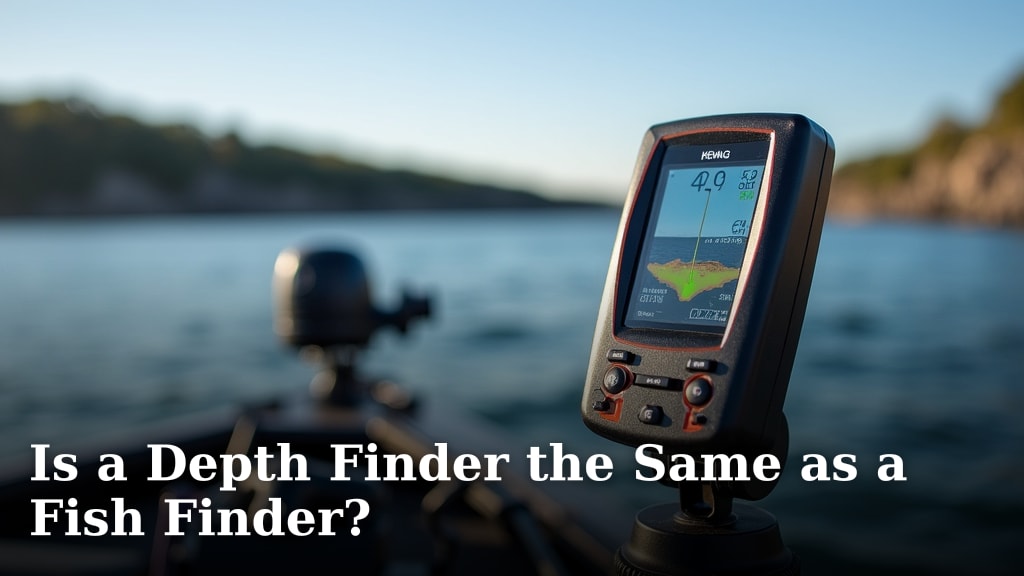
Is a Depth Finder the Same as a Fish Finder?
While they sound similar, a depth finder and a fish finder are not exactly the same thing. A depth finder’s main job is simply to tell you how deep the water is, while a fish finder does that and uses sonar to show you fish and the bottom structure. So, a fish finder includes depth finding capabilities, but a basic depth finder won’t show you fish.
Many boaters wonder about this distinction. You might have heard the terms used interchangeably, which can be confusing. We found that understanding the difference helps you choose the right tool for your fishing or boating needs. Knowing what each device does can prevent you from buying the wrong equipment for your boat.
- A depth finder tells you water depth only.
- A fish finder shows depth, fish, and bottom details.
- Fish finders are more advanced and have more features.
- Think of a depth finder as a basic tool and a fish finder as a more advanced one.
Let’s break down what each device offers so you can get a clear picture.
Understanding Your Boat’s Electronics: Depth Finder vs. Fish Finder
You might be wondering if a depth finder and a fish finder are the same thing. We’ve looked into this, and while they share some similarities, they aren’t identical. Think of it this way: a depth finder is like a basic ruler for the water, and a fish finder is a whole toolbox that includes that ruler plus much more.
Many boaters use the terms interchangeably, which can cause confusion. Knowing the difference ensures you get the right tool for your needs on the water. Let’s clear up any confusion so you can make an informed decision.
What Exactly Does a Depth Finder Do?
A depth finder, also called a sounder, is a relatively simple device. Its primary function is to tell you the depth of the water directly below your boat. It does this by sending a sound wave, called a ping, down into the water. When that sound wave hits the bottom, it bounces back up to the transducer on your boat. The device then calculates how long it took for the sound wave to make that round trip.
Using this time measurement, the depth finder can display the distance from your transducer to the bottom. Most depth finders show this in feet or meters. It’s a handy tool for anyone navigating waters where the depth can change suddenly. Knowing the depth helps you avoid running aground, especially in unfamiliar or shallow areas.
How a Depth Finder Works
The core technology behind a depth finder is sonar, but a very basic application of it. A transducer mounted on the hull of your boat emits a sound pulse. This pulse travels through the water and reflects off the seabed. The same transducer then listens for the returning echo. The time it takes for the echo to return tells the unit how far away the bottom is.
Modern depth finders are quite precise. They can often detect changes in the seabed material. For example, some can differentiate between soft mud and hard rock. However, their main focus remains on providing a reliable depth reading. They typically don’t offer much more detail beyond that simple measurement.
Introducing the Fish Finder: More Than Just Depth
A fish finder builds upon the basic functionality of a depth finder and adds much more. It also uses sonar, but it employs more advanced technology and processing power. This allows it to not only tell you the depth but also to display images of what’s below your boat.
This includes showing you fish, schools of fish, bait, and the structure of the bottom. You can see submerged objects like rocks, wrecks, weed beds, and drop-offs. It’s like having an underwater eyes for your boat. This makes them incredibly useful for anglers looking for a good spot to cast a line.
Key Features of a Fish Finder
Fish finders come with a variety of features that distinguish them from basic depth sounders. One of the most important is the display. Fish finders usually have a more sophisticated screen that can show detailed images and graphics. They often use different colors to represent different types of bottom structure or fish returns.
Here are some common features you’ll find:
- Depth and Temperature: Like a depth finder, they always show water depth. Many also include a water temperature sensor.
- Sonar Display: This is where the magic happens. You’ll see representations of fish, bait, and bottom structure.
- Fish Arches: When a fish swims through the sonar beam, it can appear as an arch on the screen. The shape of the arch can sometimes give clues about the fish’s size and speed.
- Bottom Contour: Detailed views of the lakebed or seabed, showing changes in elevation.
- GPS Integration: Many fish finders include GPS capabilities. This allows you to mark waypoints, track your route, and navigate back to productive spots.
- Side Imaging/Down Imaging: Advanced sonar technologies that provide incredibly detailed, almost photographic views of what’s to the sides or directly below your boat.
How Fish Finders “See” Fish
Fish finders use sonar to detect objects in the water column. When a sonar beam hits a fish, it reflects the sound waves back to the transducer. The fish finder’s processor interprets these returning signals. It then displays them on the screen in a way that indicates a fish.
Different types of sonar provide different views. Traditional sonar sends a cone-shaped beam downwards. This is good for general depth and fish detection. Newer technologies like Down Imaging and Side Imaging use narrower, more focused beams. These offer much higher resolution images of the bottom and any objects near it, making it easier to spot fish and details.
Direct Comparison: Depth Finder vs. Fish Finder
To make it crystal clear, let’s compare them side-by-side. The core difference lies in their capabilities and the information they provide.
| Feature | Depth Finder | Fish Finder |
|---|---|---|
| Primary Function | Display water depth. | Display depth, fish, and bottom structure. |
| Sonar Technology | Basic sonar for depth measurement. | Advanced sonar for detailed imaging. |
| Information Displayed | Water depth only. | Depth, fish, bait, bottom contour, water temp (often). |
| Complexity | Simple, easy to use. | More complex, more features. |
| Cost | Generally less expensive. | Generally more expensive. |
| Use Case | Navigation, avoiding shallow water. | Fishing, exploring the underwater environment, navigation. |
When to Choose Which Device
Your choice really depends on what you plan to do on the water. If your main concern is simply knowing how deep the water is for safe navigation, a dedicated depth finder might be sufficient. Many smaller boats or those used primarily for cruising can benefit from a simple, straightforward depth sounder.
However, if you’re an angler, or if you want a more complete picture of what’s beneath your boat, a fish finder is the way to go. The ability to locate fish, identify promising structure, and explore the underwater terrain is invaluable for serious fishing. Many boaters find that the added capabilities of a fish finder justify the extra cost.
Depth Finder for the Navigational Purist
For some, the simplicity of a depth finder is its greatest asset. If you’re not interested in the details of fish or bottom structure, but just need to know if you’ve got enough water under your keel, a basic depth finder is perfect. It performs its core function reliably and without fuss. Think of it as the dependable cousin who always tells you the facts, but not much else.
Fish Finder for the Explorer and Angler
A fish finder opens up a whole new world of information. You’re not just reading a number; you’re seeing a visual representation of the underwater environment. This can significantly improve your fishing success by helping you find where the fish are likely to be. It also adds an element of discovery to your boating trips, allowing you to see shipwrecks or interesting underwater features.
Can a Depth Finder Be Upgraded to a Fish Finder?
In most cases, a basic depth finder cannot be directly “upgraded” to function as a full fish finder. They are fundamentally different pieces of equipment. A depth finder is designed with one purpose: to measure depth. It lacks the processing power, display capabilities, and sonar frequencies needed to interpret and show fish or detailed bottom structure.
If you have a depth finder and want fish-finding capabilities, you’ll generally need to purchase a separate fish finder unit. These units integrate both depth finding and fish finding sonar. Some modern boat installations might have a combined unit that appears as one device but actually houses both functions. However, a standalone depth finder is just that – a depth finder.
Checklist: Do You Need a Depth Finder or a Fish Finder?
Consider these points to help you decide:
- Your Primary Activity: Are you mostly navigating, or are you focused on fishing?
- Budget: Basic depth finders are more affordable than feature-rich fish finders.
- Desired Detail: Do you need to see fish and structure, or just water depth?
- Boat Size and Type: Smaller boats might be fine with just depth, while larger vessels or fishing boats often benefit from a fish finder.
- Water Conditions: Do you often navigate in shallow or variable depths where precise depth is critical?
- Tech Savvy: Are you comfortable with more complex electronics, or do you prefer simplicity?
Conclusion
You’ve learned that while both devices use sonar, a depth finder and a fish finder aren’t the same. A depth finder’s sole purpose is to tell you how deep the water is, acting as a basic navigational aid. A fish finder, on the other hand, is a more advanced tool that includes depth finding but also uses sophisticated sonar to show you fish, bait, and underwater structures. Your choice depends on your main activity on the water. If you’re primarily fishing or exploring, a fish finder offers more information. For simple navigation in known waters, a depth finder may be enough. Consider your budget and what you want to see beneath your boat to make the best choice for your needs.
Frequently Asked Questions
Can I use a depth finder for fishing?
You can use a depth finder to help with fishing, but it has limitations. It will tell you how deep the water is, which is useful for understanding potential fishing spots. However, it won’t show you where the fish are located or what the bottom structure looks like.
Are fish finders difficult to use for beginners?
Modern fish finders have become much more user-friendly. While they have advanced features, the basic functions like reading depth and spotting larger targets are usually straightforward. Many come with tutorials or simple on-screen guides to help you get started.
Does a fish finder always come with GPS?
Not all fish finders include GPS, but many do, especially in newer models. GPS capability allows you to mark fishing spots, track your route, and navigate back to locations. If GPS is important to you, be sure to check the product specifications before buying.
If I only boat in shallow lakes, do I need a fish finder?
If you only boat in shallow lakes and your main concern is avoiding running aground, a simple depth finder might suffice. It will reliably show you the water depth, helping you stay safe. If you’re also interested in finding where fish might be hiding in those shallow areas, a fish finder would be beneficial.
Can I buy a combined depth finder and fish finder unit?
Yes, you can. Many units on the market are sold as combination devices. These devices integrate both depth finding and fish finding sonar capabilities into a single display, offering a convenient all-in-one solution for boaters.