9 Best Fish Finders That Show Actual Fish (November 2026)
The best fish finders that show actual fish include the Reelsonar iBobber portable wireless bluetooth fish finder for shore and dock fishing, the Humminbird 411670-1 Helix 5 Chirp DI GPS for 2D arches and down imaging, and the Humminbird XPLORE Series GPS Fish Finder MEGA for side imaging detail.
On this page (8 sections)
- Best Fish Finders That Show Actual Fish for Every Style
- How We Compared Fish Finders That Show Actual Fish
- What Does a Fish Icon Really Mean on Screen?
- Do Fish Finders Show Actual Fish or Just Arches?
- Choosing Between Live Sonar, Imaging and Castable Icons
- How Do You Read Fish Size and Depth Without Guessing?
- What Are the Limits of Fish Finders That Show Actual Fish?
- Final Verdict on the Best Fish Finders That Show Actual Fish
The best fish finders that show actual fish are the ones that match your fishing method. Live sonar and underwater cameras come closest to showing true fish.
Traditional sonar shows arches and icons that mark fish depth and size.
We compared nine systems by display type, depth range, beam width and how each draws a fish. Our score weighs specs, features and buyer feedback against what you are shopping for.
A sonar never takes a photo. It sends sound, catches echoes and draws what the echoes suggest, as explained in [Do Fish Finders Really Work?
What to Know](/do-fish-finders-really-work/).
A fish finder shows evidence of a fish, not the fish itself. The shape, depth and movement depend on the beam and software, so the same lake can look simple on an icon app and detailed on side imaging.
Expect a clear mark at a clear depth, then present a lure at that depth. That is a better aim than expecting a clear fish picture from every model.
Our picks at a glance
-
1
 Best for shore and dock fishing
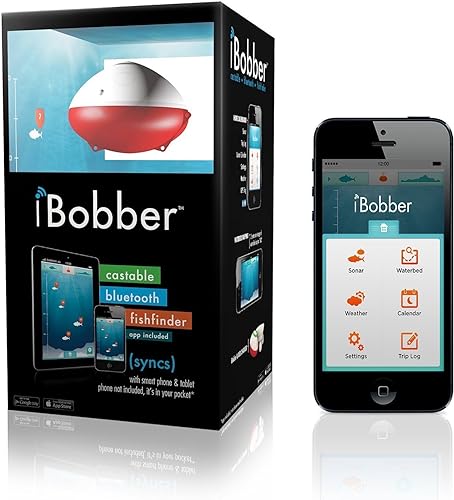
Reelsonar iBobber portable wireless bluetooth fish finder
9.6/10 our score
See it on Amazon -
2
 Best for 2D arches and down imaging
Humminbird 411670-1 Helix 5 Chirp DI GPS
9.6/10 our score
See it on Amazon -
3
 Best for side imaging detail
Humminbird XPLORE Series GPS Fish Finder MEGA
9.5/10 our score
See it on Amazon
- 4
 Best for beginners from shoreCheck it
- 5
 Check it
Deeper PRO+ 2 Sonar Fish Finder
Best for mapping from shore - 6
 Check it
Lowrance Eagle Eye 9 Live Sonar Fish
Best for live fish movement - 7
 Check it
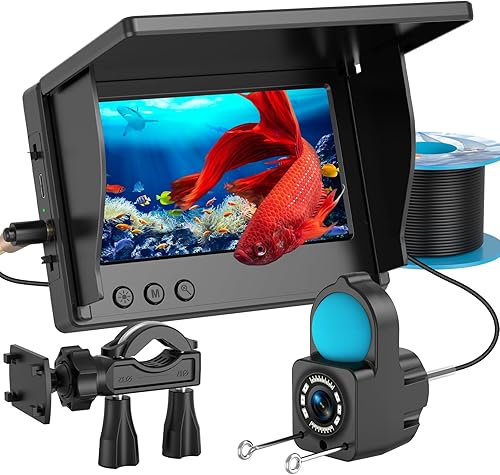
Underwater Fishing Camera TMACTIME 1080P HD
Best for seeing fish directly - 8
 Check it
LUCKY Kayak Portable Fish Finder Transducer Wireless
Best for kayak and bank casting - 9
 Check it
LUCKY Portable Sonar Fish Finder Boat Depth
Best for budget handheld sonar
Best Fish Finders That Show Actual Fish for Every Style
Live sonar shows movement, side imaging shows structure, and castable units show icons from shore. The right pick depends on where you stand and how deep you fish.
Boat units stay mounted and read continuously under the hull. Castable units travel with you and read where you cast them.
A camera hangs on a cable and shows one small view.
Depth range also separates the group. A unit rated to 135 feet suits most lakes.
A unit rated to 500 feet suits deeper boat work. Beam width then decides how much water each ping covers.
Reelsonar iBobber portable wireless bluetooth fish finder: Best for shore and dock fishing
- 135 feet depth range
- 10+ hours battery life
- Depth-tagged fish icons color coded by size
- iOS and Android app
A castable bobber sonar with color coded fish icons for bank, dock and ice use.
Pros
- Portable castable design
- Fish icons show size and depth
- 10+ hours battery life
Cons
- Phone based display
- Limited to 135 feet depth
The Reelsonar iBobber suits anglers who fish from shore, docks and piers without a boat. Its depth-tagged fish icons are color coded by size, so a larger return reads differently from a smaller one at a glance.
The 135 feet depth range covers most lake and dock fishing, including smallmouth and largemouth bass, crappie, perch, salmon, trout, walleye, pike and muskie. Battery life is 10+ hours, which suits a full bank session without a midday recharge.
It pairs by Bluetooth with iOS and Android apps and a watch app, and syncs up to 100 feet away. You get a fish alarm for fish gathering under docks and piers, plus a strike alert at night.
The app also maps waterbeds and logs water temperature, depth, lures, species and photos.
The trade-off is that you read icons on a phone, not raw arches or side structure on a boat screen. The high contrast design and anti-glare setting help in bright light, but a boat unit still gives more detail.
Humminbird 411670-1 Helix 5 Chirp DI GPS: Best for 2D arches and down imaging
- CHIRP Down Imaging
- Dual Spectrum CHIRP Sonar
- 5 inch color display
- Built in GPS
A 5 inch boat unit that shows fish arches and down imaging structure.
Pros
- Clear 2D target separation
- Down imaging detail
- Transducer included
Cons
- 5 inch screen is compact
- Boat mounted only
The Humminbird Helix 5 Chirp DI GPS suits boat anglers who want classic fish arches plus down imaging. Dual Spectrum CHIRP Sonar gives Wide Mode for maximum coverage and Narrow Mode for detailed scanning.
That lets you scan wide, then zoom into precise 2D target separation over structure. CHIRP Down Imaging filters visual noise and clutter for a clearer view beneath the boat.
The 5 inch widescreen color TFT display is compact for a smaller console. Built in GPS with Humminbird Basemap covers 10,000+ lakes and continental U.S. coastlines, and works with premium LakeMaster, CoastMaster and Navionics charts.
AutoChart Live creates maps of depth contours, bottom hardness and vegetation, with eight hours of built-in recording time. A transom mount XNT 9 HW DI T transducer and gimbal bracket are included.
Reliable keypad control works in any weather. The trade-off is screen size, as a 5 inch display shows less detail than a 9 or 10 inch unit.
Humminbird XPLORE Series GPS Fish Finder MEGA: Best for side imaging detail
- MEGA Side Imaging+ with 200-foot range on each side
- MEGA Down Imaging+ with 200-foot depth
- 10 inch touchscreen
- Dual Spectrum CHIRP sonar
A 10 inch control head for side and down imaging without a transducer included.
Pros
- 200 foot side imaging range
- Large 10 inch display
- Touchscreen and keypad
Cons
- Control head only, transducer extra
- Needs boat mounting space
The Humminbird XPLORE suits anglers who hunt structure first, then fish. MEGA Side Imaging+ with 200-foot range on each side paints long stretches of bank, brush and channel edges.
MEGA Down Imaging+ gives 200-foot depth coverage directly below, so you can inspect what holds fish without anchoring first. Dual Spectrum CHIRP sonar handles fish detection and structure clarity in 2D, giving you a conventional view alongside the imaging views.
The 10 inch touchscreen with keypad operation works in chop, glare and with gloves. Built in GPS with enhanced Humminbird Basemap covers more than 10,000 lakes and coastal waters, with terrain, markers, hazards and marina locations.
An included LakeMaster and CoastMaster VX map card covers U.S. and Canada regions. AutoChart Live records eight hours of depth contours, bottom hardness and vegetation while you boat.
This is a control head only model without a transducer, so plan for that extra part and cost. It connects to Minn Kota trolling motors and Cannon products through One-Boat Network, with Ethernet and NMEA 2000 networking.
Reelsonar iBobber portable wireless bluetooth fish finder: Best for shore and dock fishing
- 135 feet depth range
- 10+ hours battery life
- Depth-tagged fish icons color coded by size
- iOS and Android app
A castable bobber sonar with color coded fish icons for bank, dock and ice use.
Pros
- Portable castable design
- Fish icons show size and depth
- 10+ hours battery life
Cons
- Phone based display
- Limited to 135 feet depth
The iBobber is small, at 2 x 2 x 1 inches and listed at 0.05 g, so it rides in a pocket or tackle box. That matters for hiking, camping, canoeing and kayaking trips where a boat mount is impossible.
It is a castable, portable and wireless unit that mounts to a fishing line, so you cast it like a bobber into water you cannot reach from shore. The app syncs via Bluetooth Smart up to 100 feet away, so you can cast far and still read depth.
It maps waterbeds and logs water temps, depth, lures, species and photos in a trip log.
The LED beacon and strike and fish alarms help at night and on ice. It works in freshwater or saltwater, from shore, on a dock, or through ice, regardless of the weather.
The trade-off against boat units is beam control and screen size. You do not get side imaging, down imaging or live forward views, only a simple fish mark that shows size and depth without wiring, drilling or brackets.
Deeper Start Fish Finder: Best for beginners from shore
- Casts to 165 ft
- Depth to 165 ft
- 40 degree sonar beam
- 6 hours battery life
A simple castable sonar that shows fish location and size on a phone app.
Pros
- Simple phone setup
- 165 ft cast and depth
- Lightweight design
Cons
- 6 hours battery life
- Phone display only
The Deeper Start suits beginners who want a castable sonar with almost no setup. It casts to 165 ft and reads to 165 ft with a 40 degree sonar beam.
That beam width balances coverage and accuracy for shore use, covering more water than a narrow beam without spreading the signal too thin. The Fish Deeper app shows fish location and size, depth, bottom contour and vegetation, so you learn the shape of the spot as well as the targets.
It generates its own Wi-Fi, so it does not use mobile data, and it automatically saves every scan with time and location for easy revisits. That saved history helps you return to a productive bank instead of searching blindly.
Full charge takes 2.5 hours and battery life is 6 hours, which suits a casual trip. A night fishing mode helps after dark, and the lightweight sleek design needs no messy wires or external batteries.
It works from a dock, shore, bank or kayak, but long days may suit the Deeper PRO+ 2 better.
Deeper PRO+ 2 Sonar Fish Finder: Best for mapping from shore
- Accuracy at up to 330 ft
- Wide, mid and narrow beams
- Built-in GPS
- Target separation of 0.4 in narrow beam
A castable sonar with GPS mapping and three beam widths for deeper scans.
Pros
- 330 ft depth accuracy
- Three beam options
- GPS bathymetric mapping
Cons
- Phone based viewing
- Small device display
The Deeper PRO+ 2 suits anglers who cast from shore but want mapping and beam choice. Accuracy reaches up to 330 ft, and you get wide, mid and narrow beams in one unit.
Wide beam covers large expanses fast for searching. Mid beam balances coverage and detail for general use.
Narrow beam gives target separation of 0.4 in for tight spots, and 1 in separation on wide and mid beams helps track even a tiny lure when vertical jigging.
Built in GPS lets you create bathymetric maps from shore, dock or bank and save them in the Fish Deeper app. That helps you return to the same drop, weed edge or channel bend with a saved map.
It uses its own dependable Wi-Fi with solid connectivity, so the phone link does not depend on mobile data.
At 3.2 ounces and 2.56 inches, the wireless unit fits a tackle box for kayaks, boats and ice fishing. The trade-off is that you still view results on a phone, unlike the LUCKY models below that include a handheld LCD.
Lowrance Eagle Eye 9 Live Sonar Fish: Best for live fish movement
- Live Forward and Live Down views
- CHIRP sonar
- DownScan Imaging with FishReveal
- 9 inch IPS display
A 9 inch live sonar that shows fish moving in real time ahead of the boat.
Pros
- Live forward view
- Transducer included
- Direct connection, no extra module
Cons
- Boat mounted system
- 9 inch display needs console space
The Lowrance Eagle Eye 9 suits anglers who want to watch fish react to a lure. Live Forward and Live Down views show fish movement in real time.
One included transducer delivers live views, CHIRP sonar and DownScan Imaging with FishReveal. FishReveal combines CHIRP fish targets with DownScan detail so fish stand out around structure.
The 9 inch IPS display connects directly to the transducer, with no separate sonar module needed. C-MAP charts provide high-resolution coverage of more than 17,000 U.S. lakes, plus Genesis Live mapping.
Maximum measuring depth reaches 500 feet, well beyond the castable models here. Panel mount and bracket mount options suit a console installation.
The trade-off is that this is a boat system that needs console space and power. Castable units win on portability and shore use, but live sonar is the closest sonar gets to a true picture of movement.
Underwater Fishing Camera TMACTIME 1080P HD: Best for seeing fish directly
- 1080P HD lens
- 4.3 inch LCD display
- Infrared night vision
- 15M cable
An underwater camera that shows actual fish on screen, not sonar returns.
Pros
- Real fish image on screen
- Night vision lights
- 10 hours battery life
Cons
- 15M cable limits depth
- Real-time viewing only, no recording
The TMACTIME camera suits anglers who want a real image, not a sonar drawing. 1080P HD video on a 4.3 inch LCD shows actual fish, structure and bait strikes.
Six infrared lights help in dark or murky water, so the view works for night fishing, deep use and ice angling. The IP68 waterproof design handles depths to 15M, with a cable rated to a 100kg load.
Battery life is up to 10 hours from a 5000mAh battery, so a long session does not need a midday recharge. It is plug and play, with a monitor, underwater camera on a 15m cable, stand, charging cable and manual included.
Autofocus and a CMOS sensor with 1080p capture help keep the image usable at close range. The trade-off is depth and scope.
A 15M cable will not reach deep structure, and you get real-time viewing only, with no recording. Sonar sees deeper and wider, so use this camera to confirm what sonar marks near docks, brush and ice holes.
LUCKY Kayak Portable Fish Finder Transducer Wireless: Best for kayak and bank casting
- 853FT operation distance
- 3.5 inch LCD display
- 90 degree beam
- 147FT depth area
A handheld castable sonar with fish icons and depth numbers on a 3.5 inch screen.
Pros
- Handheld display, no phone needed
- 853FT wireless range
- Fish depth numbers on screen
Cons
- 3.5 inch screen is small
- Handheld unit only
The LUCKY Kayak model suits kayak and bank anglers who want a handheld screen. Fish icons show exact depth numbers next to each mark on a 3.5 inch horizontal LCD.
The screen scrolls right to left, so you keep a continuous history of what passed under the sensor and can track fish movement and structure you already floated over. A wide 90 degree beam scans schools of fish in a 3FT to 147FT depth area, which covers most lake and river fishing.
Wireless operation reaches 853FT, which is strong for casting far from shore or from a kayak. The handheld display and floating sensor together are lighter than a 1-liter water bottle, with no drilling, brackets or complex wiring.
Simply tie the sensor to your fishing line or the included safety tether and cast it like a bobber over weed beds, near structure or into deep channels.
It works from shore, kayak, canoe, boat, pontoon and through ice. The trade-off is screen size, as a 3.5 inch display shows less detail than boat screens.
LUCKY Portable Sonar Fish Finder Boat Depth: Best for budget handheld sonar
- 656ft wireless operation
- 147ft water depth detection
- 125Khz in 90 degrees beam
- 5 to 6 hours continuous use
A budget castable sonar that shows fish size, location and bottom contour.
Pros
- Waterproof floating design
- Fish size categories on screen
- Long battery saver mode
Cons
- 5 to 6 hours standard use
- Radar style image, not a photo
The LUCKY Portable Sonar suits budget minded anglers who want fish size and depth on a handheld. It displays water depth, fish location, fish size as small, middle or big, water temperature and bottom contour.
The sonar transducer runs at 125Khz in a 90 degree beam angle, which scans a wide area for schools and structure. Wireless operation reaches 656ft and water depth detection reaches 147ft, so you can cast far and still read the return.
The sonar ball is lightweight and compact, with a hole for tethering to a fishing line. It floats if dropped, and a replacement transparent cap glows in the dark for night fishing.
The display alerts when fish or schools are detected, and warns when it detects shallows. You can select a particular underwater area on the display to learn each data point more accurately, and switch units between FT/M and degrees F/C.
Battery runs 5 to 6 hours, or more than 10 hours in saver mode. The trade-off is image style, as you get categories and contours, not fine target separation.
How We Compared Fish Finders That Show Actual Fish
We compared image type, depth, beam width, screen type and portability for each model. Live sonar scored for real time movement.
Side imaging scored for structure detail. Castable units scored for shore use.
We checked specs for depth range, display size and battery life. We did not test units on the water.
Maker claims are labeled as such. Buyer patterns are noted where they help you judge readability.
Depth range matters because a shallow rated unit cannot mark deep fish. Beam width matters because a wide beam merges close targets.
Display size matters because small screens hide separation.
How did depth and beam shape the ranking?
Castable units cluster around 135 to 147 feet, with Deeper models reaching further. Boat units reach 200 to 500 feet.
That gap reflects transducer power and mounting, not just screen size.
A 90 degree beam covers wide water quickly. A 40 degree beam covers less water with cleaner separation.
Narrow beams on the Deeper PRO+ 2 separate targets by 0.4 in, which helps in tight schools.
We weighted how each unit draws a fish. Icons are fast to read.
Arches show more raw shape. Live views show motion.
A camera shows the fish itself.
Battery life shaped shore picks. Ten hours suits a full day.
Six hours suits a shorter trip. A saver mode can extend a handheld unit past ten hours.
What Does a Fish Icon Really Mean on Screen?
A fish icon means software separated a return and drew a fish at that depth. Color or size coding helps you judge relative size, but it does not prove species.
Icons are faster to read than arches. They are also easier to misread, as a school of small fish can merge into one large icon.
Narrow beams separate targets better. Wide beams cover more water but merge fish that swim close.
Icon size can change with depth, as a farther fish returns a weaker echo. Icon depth is usually more reliable than icon size.
Use icons as a prompt to cast, not as a final ID. A mark under a dock, over brush or along a channel edge is a reason to present a lure there.
Do Fish Finders Show Actual Fish or Just Arches?
Most show arches, icons or imaging shadows, not actual fish. Live sonar shows actual movement, and a camera shows an actual fish.
2D sonar draws arches as a fish passes under the beam. The length of an arch relates to how long the fish stayed in the beam.
Down imaging draws a top down shadow of structure and fish. Side imaging draws a sideways shadow over a long range, and neither is a photo.
Live forward sonar draws movement in real time, so you can see a fish turn toward a lure. That motion is closer to seeing the fish, but it is still built from echoes.
For more on how castable units draw targets, see How Does a Castable Fish Finder Work? What to Know.
A camera is the only option here that shows actual fish as an image, but its 15M cable cannot cover deep water or wide structure the way sonar can.
Choosing Between Live Sonar, Imaging and Castable Icons
When should you pick live sonar for actual fish?
Pick live forward sonar if you want to watch fish approach your lure. The Eagle Eye 9 shows that movement in real time.
That helps with finicky fish and suspended fish.
Live sonar also helps you adjust speed and lure depth. You can see if a fish follows, turns away or rises to meet the bait.
When should you pick side or down imaging?
Pick side imaging if you need to find where fish hold before you anchor. The XPLORE paints 200 feet to each side.
Pick down imaging if you fish directly over brush, points and drops.
Structure imaging does not replace a fish mark. It shows where fish are likely to hold, so you can spend more time fishing and less time searching.
When should you pick a castable unit?
Pick a castable if you fish from shore, a dock, a kayak or a rental boat. The iBobber, Deeper models and LUCKY units need no wiring.
You trade screen detail for portability.
Castable units also work through ice and in saltwater or freshwater. That range suits anglers who change spots often and carry light gear.
Pick a camera if a real image matters more than range. It confirms species and behavior at close range, which sonar cannot do on its own.
How Do You Read Fish Size and Depth Without Guessing?
Use depth numbers, not icon size alone. The LUCKY Kayak model puts depth numbers next to each icon, and the iBobber color codes by size and tags depth.
Check beam width before you trust separation. A 90 degree beam covers wide area but merges close fish, while a narrow beam separates better but scans less water.
Slow your boat or retrieve your castable slowly. Speed stretches arches and can make small fish look larger.
Compare marks at the same depth and note bottom depth with every fish depth. A fish two feet off the bottom in ten feet of water behaves differently from one in forty feet.
Watch how a mark moves over time. A mark that rises, falls or follows your lure is more likely to be a fish than a stationary mark over brush.
What Are the Limits of Fish Finders That Show Actual Fish?
Sonar cannot ID species. It cannot tell a big bass from a big carp by shape alone.
It also struggles in shallow water, heavy vegetation and silt.
Fish near the bottom can hide in the bottom echo. Fish in a tight school can merge into one mark.
That is why structure views help you place your lure, even when the fish mark is unclear.
Vegetation can create strong returns that look like fish. Silt and thermoclines can also create marks.
A change in settings can help, but it cannot remove every false return.
Shallow water limits every model here. A castable unit needs enough depth for its beam to work.
A boat unit needs clearance under the hull and transducer.
Use sonar to find zones, then fish those zones with care. Move slowly, mark spots, and return with different presentations.
That approach works better than chasing every icon.
Mapping helps you return to a zone. GPS bathymetric maps from a castable unit and AutoChart Live from a boat unit both save depth and bottom detail for later.
Final Verdict on the Best Fish Finders That Show Actual Fish
Pick the Lowrance Eagle Eye 9 if you want live movement. Pick the Humminbird XPLORE if you want side imaging structure.
Pick the Reelsonar iBobber or Deeper Start if you fish from shore.
For the best fish finders that show actual fish on a budget handheld, the LUCKY models give you icons and depth numbers without a phone. For a true photo of a fish, add the TMACTIME camera.
Start by matching display type to where you fish. Boat, shore and kayak each point to a different winner in this group.
If you fish deep structure from a boat, prioritize imaging range and screen size. If you walk to the water, prioritize weight, battery life and a simple app.
No sonar in this group shows a true photo of a fish. Live sonar shows true motion.
A camera shows a true image. Icons and arches show processed evidence of a fish at a depth.
Choose the evidence you can act on fastest. That choice, more than any single spec, decides which model will put more fish in the net.
Our top 3 picks at a glance
-
1
Best for shore and dock fishing
Reelsonar iBobber portable wireless bluetooth fish finder
9.6/10 our score
See it on Amazon -
2
Best for 2D arches and down imaging
Humminbird 411670-1 Helix 5 Chirp DI GPS
9.6/10 our score
See it on Amazon -
3
Best for side imaging detail
Humminbird XPLORE Series GPS Fish Finder MEGA
9.5/10 our score
See it on Amazon
Frequently asked questions
Do fish finders show actual fish?
No. Most show sonar returns, arches or icons made from echoes.
Live sonar shows movement in real time, and an underwater camera shows a real fish image.
Icons help you spot targets faster, but they are processed images.
What is the difference between fish arches and fish icons?
Fish arches are raw 2D sonar returns that form a curved shape as a fish passes under the beam. Fish icons are software drawings placed at the depth of a separated return.
Arches give you more raw detail, while icons are easier to read at a glance.
Can a fish finder tell you what species a fish is?
No. Sonar shows size, depth and position, not species.
A large arch could be a catfish, a carp or a large bass.
Use location, depth, structure and time of year, then test with your lure, rather than trusting size alone.
Which type is best for showing actual fish?
An underwater camera shows the actual fish. Live forward sonar shows actual movement and lure response in real time.
Traditional 2D sonar shows arches, and castable apps show icons.
Choose by whether you want a photo, live motion or a simple target mark.


