9 Best Fish Finders for Freshwater Fishing (November 2026)
The best freshwater fish finders include the LUCKY Kayak Portable Fish Depth Finder Water for kayak and shore simplicity, the Humminbird 411660-1 Helix 5 Chirp GPS G3 for boat CHIRP and GPS, and the Reelsonar iBobber portable wireless bluetooth fish finder for castable phone sonar.
On this page (8 sections)
- How to choose the best freshwater fish finder for your water
- The best freshwater fish finders, ranked by score
- Which freshwater fish finder depth range do you need?
- What beam width and sonar type matter in freshwater?
- Should you choose a castable, portable or boat-mounted fish finder?
- Which fish finder fits bass, crappie or saltwater trips?
- How should you set up and care for a freshwater fish finder?
- Verdict: which best freshwater fish finder should you buy?
The best freshwater fish finder for most anglers is the LUCKY Kayak Portable Fish Depth Finder Water. It gives depth, fish, weeds, sand and rocks on a simple handheld screen for lakes and reservoirs.
A castable or boat unit may fit your water and boat better, and the picks below cover both.
Freshwater matters because lakes, rivers and reservoirs change fast. A river bend, a creek channel and a reservoir creek arm all hold fish over different bottom and depth.
Your sonar should show the bottom and fish clearly at the depth you actually fish.
If you are new to sonar, read Do Fish Finders Really Work? What to Know before you buy.
It explains what the screen shows and what it cannot show.
That context helps you judge alarms, arches and structure without expecting magic.
If you want a castable option explained first, read How Does a Castable Fish Finder Work? What to Know.
It covers casting range, phone apps and battery life.
Those details decide whether a castable fits your shore or kayak days.
Our picks at a glance
-
1
 Best for kayak and shore simplicity
LUCKY Kayak Portable Fish Depth Finder Water
9.7/10 our score
See it on Amazon -
2
 Best for boat CHIRP and GPS
Humminbird 411660-1 Helix 5 Chirp GPS G3
9.6/10 our score
See it on Amazon -
3
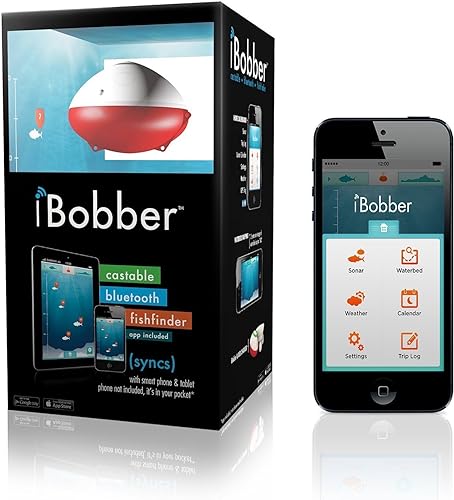 Best for castable phone sonar
Reelsonar iBobber portable wireless bluetooth fish finder
9.6/10 our score
See it on Amazon
- 4
 Check it
Humminbird XPLORE Series GPS Fish Finder MEGA
Best for large-screen imaging - 5
 Best for dock and bank beginnersCheck it
- 6
 Check it
Deeper PRO+ 2 Sonar Fish Finder
Best castable with GPS mapping - 7
 Check it
Humminbird PiranhaMAX 4 Fish Finder
Best for basic down imaging - 8
 Best for kayaks and small boatsCheck it
- 9
 Check it
LUCKY Kayak Portable Fish Finder Transducer Wireless
Best for long-range wireless casting
How to choose the best freshwater fish finder for your water
Choose by where you fish first. A kayak, a bass boat and a dock call for different mounting, power and screen size.
Then match depth range, beam and display to that water.
We compared specs, features and buyer feedback against what freshwater anglers need. Our score weighs specs, features and buyer feedback against what you're shopping for.
We did not test these units.
Depth range sets the ceiling. A 135 ft unit suits many lakes, while 328 ft or 330 ft units suit deep reservoirs.
Beam width sets the trade between coverage and detail. Wide beams cover more water, and narrow beams separate fish better.
Display size and sunlight readability matter on open water. A 2-inch LCD is simple, a 4-inch IPS screen stays clear in sun, and a 10-inch touchscreen shows wide imaging.
Phone-app sonar trades a built-in screen for portability and mapping.
Mounting decides daily use. Castables tie to a line and need no drilling.
Transom mounts need a boat, wiring and power. Portable handheld units attach to a hull or hang from a neck strap.
Pick the mount you will use on most trips.
| Product | Best for | Display | Max depth | Power | Our score |
|---|---|---|---|---|---|
| LUCKY Kayak Portable Fish Depth Finder Water | kayak and shore simplicity | 2-inch LCD | 328 ft | Battery Powered | 9.7 |
| Humminbird 411660-1 Helix 5 Chirp GPS G3 | boat CHIRP and GPS | 5-inch Color TFT | Corded Electric | 9.6 | |
| Reelsonar iBobber portable wireless bluetooth fish finder | castable phone sonar | 135 ft | Battery Powered | 9.6 | |
| Humminbird XPLORE Series GPS Fish Finder MEGA | large-screen imaging | 10-inch Color TFT | 200 ft | Battery Powered | 9.5 |
| Deeper Start Fish Finder | dock and bank beginners | 165 ft | Battery Powered | 9.4 | |
| Deeper PRO+ 2 Sonar Fish Finder | castable with GPS mapping | 330 ft | Battery Powered | 9.2 | |
| Humminbird PiranhaMAX 4 Fish Finder | basic down imaging | 4.3-inch color LCD | Corded Electric | 9.1 | |
| Lowrance Eagle Fish Finder | kayaks and small boats | 4-inch IPS | 500 ft | Battery Powered | 8.8 |
| LUCKY Kayak Portable Fish Finder Transducer Wireless | long-range wireless casting | 3.5-inch LCD | 147 ft | 8.2 |
The best freshwater fish finders, ranked by score
Each pick below has a score, a best-for badge and a short write-up. Read them in order, then use the buying sections to narrow the choice to your lake, river or reservoir.
LUCKY Kayak Portable Fish Depth Finder Water: Best for kayak and shore simplicity
- Depth range 3 ft to 328 ft
- 2-inch LCD display
- Fish and school alarms
- 5-level sensitivity adjustment
- Neck strap
A handheld depth finder that shows fish depth, water depth, weeds, sand and rocks, with alarms when fish pass.
Pros
- Portable one-hand design
- Depth range to 328 ft
- Backlit display
- Works from kayak, boat or shore
Cons
- Display is not waterproof
- Battery life is 4 to 5 hours in normal use
The LUCKY Kayak Portable Fish Depth Finder Water suits anglers who want a simple handheld unit for a kayak, canoe, small boat or shore. It shows approximate fish location and water depth from 3 ft to 328 ft when the transducer is fully immersed.
Its 2-inch LCD also shows short and tall weeds, sand and rocks on the bottom. Depth units switch between feet and meters, and a backlight helps in darkness.
The 2.68 by 1.18 by 4.8 inch body is made for one hand use.
Five sensitivity levels let you adjust for clear or turbid water. A neck strap keeps the display handy when your hands are busy.
Fish and school alarms sound when fish pass.
Battery life runs about 4 to 5 hours on a new battery, with a battery save mode for longer use. The trade-off is the non-waterproof display, so a waterproof bag helps.
Against castables below, this unit gives a dedicated screen and deeper range without a phone.
Humminbird 411660-1 Helix 5 Chirp GPS G3: Best for boat CHIRP and GPS
- Dual Spectrum CHIRP sonar
- GPS with Humminbird Basemap
- 10,000+ lakes coverage
- AutoChart Live with 8 hours recording
- 5-inch Color TFT display
A 5-inch boat fish finder with CHIRP sonar, GPS navigation and real-time mapping for lakes and reservoirs.
Pros
- CHIRP with Wide and Narrow modes
- GPS and mapping for lakes
- Keypad control in any weather
- Transom transducer included
Cons
- Requires boat mounting and wired power
- Premium charts are separate
The Humminbird 411660-1 Helix 5 Chirp GPS G3 suits boat anglers who want CHIRP sonar and GPS on a 5-inch screen. Dual Spectrum CHIRP gives Wide Mode for coverage and Narrow Mode for detail, with a Low-Q transducer for target separation.
Its GPS uses the Humminbird Basemap with coverage of more than 10,000 lakes and continental U.S. coastlines. It also works with premium LakeMaster, CoastMaster and Navionics charts for more detail on familiar water.
AutoChart Live maps depth contours, bottom hardness and vegetation with eight hours of built-in recording. You can expand mapping with AutoChart Zero Line SD cards.
Softkey controls and a keypad menu help in any weather. The transom-mount transducer, power cable, gimbal bracket and mounting hardware are included.
Power is corded electric, so this is a boat install, not a grab-and-go unit.
Against the LUCKY handheld, this Helix adds mapping and CHIRP detail. Against the XPLORE below, it is smaller and includes the transducer, but it lacks wide side imaging.
Reelsonar iBobber portable wireless bluetooth fish finder: Best for castable phone sonar
- Depth range of 135 ft
- Battery life of 10+ hours
- iOS and Android app
- Bluetooth sync to 100 ft
- Fish alarm and strike alert
A small castable sonar that sends depth-tagged fish icons by size to a phone app, with fish and strike alarms.
Pros
- Pocket-sized and castable
- 10+ hours battery life
- Fish icons color coded by size
- App trip log and spot marking
Cons
- Phone screen is the display
- Depth range stops at 135 ft
The Reelsonar iBobber portable wireless bluetooth fish finder suits shore, dock, kayak and ice anglers who want a tiny castable sonar. It has a depth range of 135 ft and more than 10 hours of battery life.
Sonar signals form visual images of static and moving objects below the surface. Depth-tagged fish icons are color coded by size, so you can see which fish are larger.
That helps you focus on bigger fish rather than every mark.
A fish alarm alerts you when fish gather under docks and piers, and a strike alert can signal bites. The LED beacon also helps for ice and night fishing.
The unit syncs by Bluetooth Smart to a free iOS and Android app up to 100 ft away. The app maps the waterbed, marks spots, logs water temperature and depth, and adds lures, species and photos to a trip log.
The trade-off is a phone screen as the display. Sun glare, battery drain and app use become part of the system.
It also tops out at 135 ft, so deep reservoirs need a longer-range pick.
Humminbird XPLORE Series GPS Fish Finder MEGA: Best for large-screen imaging
- 10-inch touchscreen and keypad
- MEGA Side Imaging+ to 200 ft per side
- MEGA Down Imaging+ to 200 ft
- Dual Spectrum CHIRP sonar
- GPS with LakeMaster and CoastMaster VX card
A 10-inch control head with imaging sonar, GPS, AutoChart Live and boat-network connections for serious freshwater scouting.
Pros
- Side and down imaging ranges
- Touchscreen and keypad control
- Included map card for US and Canada
- AutoChart Live mapping
Cons
- Control head only, no transducer
- Large 10-inch footprint
The Humminbird XPLORE Series GPS Fish Finder MEGA suits boat anglers who want a large screen for scouting lakes and reservoirs. It has a 10-inch interface with touchscreen and keypad operation, so you can use it with gloves or wet hands.
MEGA Side Imaging+ reaches 200 ft on each side, and MEGA Down Imaging+ covers 200 ft of depth. Dual Spectrum CHIRP adds fish detection and structure clarity.
That combination helps you scan creek arms, points and cover from a moving boat.
Built-in GPS uses an enhanced Humminbird Basemap for more than 10,000 lakes and coastal waters, with terrain, markers, hazards and marina locations. A LakeMaster and CoastMaster VX map card for U.S. and Canada regions is included.
AutoChart Live creates real-time maps of depth contours, bottom hardness and vegetation with eight hours of built-in recording. Bluetooth, Ethernet and NMEA 2000 connections also add complexity for anglers who want simple setup.
This is a control head only model without a transducer. You must plan the transducer and installation.
It also connects to Minn Kota trolling motors and Cannon products through One-Boat Network.
Deeper Start Fish Finder: Best for dock and bank beginners
- Castable to 165 ft
- Depth to 165 ft
- 40-degree sonar beam
- 6 hours battery life
- Free Fish Deeper app for iOS and Android
A castable sonar for shore, dock and kayak fishing that shows fish location, depth, bottom contour and vegetation in a phone app.
Pros
- No wires or external batteries
- Creates its own Wi-Fi
- Night fishing mode
- Saves scans with time and location
Cons
- Phone is the display
- 6 hours battery life
The Deeper Start Fish Finder suits dock, shore, bank and kayak anglers who want a simple castable sonar. It is lightweight, casts far out to 165 ft and reads down to 165 ft with a 40-degree sonar beam.
You pair it with the free Fish Deeper app on iOS or Android. The app shows fish location and size, depth, bottom contour and vegetation.
That makes it useful for learning a new dock or bank without a boat.
The unit creates its own Wi-Fi, so it does not use mobile data, and it saves every scan with time and location for revisits. That saved history helps you return to a productive casting spot.
Battery life is about 6 hours, with a full charge in about 2.5 hours. A night fishing mode helps after dark, and no messy wires or fiddly external batteries are needed.
The trade-off is phone dependence. You need a charged phone, a readable screen and the app open to see results.
Against the Deeper PRO+ 2 below, this Start model is simpler and lacks GPS mapping and multiple beams.
Deeper PRO+ 2 Sonar Fish Finder: Best castable with GPS mapping
- Accuracy to 330 ft
- Wide, mid and narrow beams
- Target separation 0.4 in narrow beam
- Built-in GPS
- Bathymetric mapping in the app
A castable sonar with three beams, GPS bathymetric mapping and fine target separation for kayaks, boats and ice fishing.
Pros
- Three beam choices
- GPS mapping from shore
- Fine target separation
- Lightweight at 3.2 ounces
Cons
- Phone app is the display
- Small 2.56-inch body
The Deeper PRO+ 2 Sonar Fish Finder suits kayak, boat and ice anglers who want a castable sonar with GPS. It gives accuracy to 330 ft with wide, mid and narrow beams.
The narrow beam separates targets by 0.4 in, while wide and mid beams separate by 1 in. That helps when you track a small lure during vertical jigging or need to tell fish apart in a school.
Three beams let you cover large areas or focus on one spot. Wide beams suit searching, and narrow beams suit close work over structure or a small school.
Built-in GPS lets you create bathymetric maps from shore, dock or bank. Maps save to the Fish Deeper app, so you can build a contour map of a small lake over several visits.
The unit uses its own Wi-Fi for connectivity, and the body is wireless, sleek and lightweight at 3.2 ounces, with a neoprene pouch in the package.
The trade-off is the phone app as the display. Against the Start model, this PRO+ 2 adds GPS, deeper range and beam choice, but it asks more setup and attention.
Humminbird PiranhaMAX 4 Fish Finder: Best for basic down imaging
- Down Imaging sonar
- Dual Beam Sonar with narrow and wide beams
- 4.3-inch color LCD
- Fish ID+, fish alarms and depth alarms
- Zoom
A compact boat fish finder with Down Imaging for timber, brush, pilings and rocks, plus dual beam sonar for fish and contours.
Pros
- Down Imaging detail
- Dual beam choices
- Fish and depth alarms
- Tilt and swivel mount included
Cons
- Wired boat installation
- No GPS in this model
The Humminbird PiranhaMAX 4 Fish Finder suits boat anglers who want basic Down Imaging without a large screen. Down Imaging shows timber, brush, bridge pilings and rocks with sharp detail below the boat.
Dual Beam Sonar gives a narrow beam for detail and a wide beam for coverage. You can identify fish, structure and contours, then switch beams based on depth and speed.
Narrow beams help in deeper water, and wide beams help in shallow water.
A 4.3-inch color LCD shows the results with a redesigned interface. Fish ID+, fish alarms, depth alarms and zoom are included.
Zoom helps you study a fish or a piece of structure without losing the bottom view.
The package has the PiranhaMAX 4 DI fish finder, a tilt and swivel mount and an XNT 9 DI T transom-mount transducer. Power is corded electric.
The trade-off is boat-only use and no GPS. It does not map lakes or save trails like the Helix and XPLORE.
Against the Lowrance Eagle below, this unit adds Down Imaging and alarms, but it needs wired power and a transom mount.
Lowrance Eagle Fish Finder: Best for kayaks and small boats
- 4-inch IPS portrait screen
- Auto-Tuning Sonar
- 200 kHz Bullet Skimmer with 44-degree beam
- Fish icons with depth
- Zoom and twist-lock connector
A compact portrait fish finder with auto-tuning sonar and a wide beam for kayaks and small boats, readable in bright sunlight.
Pros
- Clear in bright sunlight
- Auto-tuning settings
- Compact portrait design
- Simple twist-lock connection
Cons
- No audible fish alarm
- 4-inch screen limits detail
The Lowrance Eagle Fish Finder suits kayak and small boat anglers who want a compact screen that reads in sunlight. Its 4-inch IPS portrait screen stays clear in bright sunlight, from wide viewing angles and through polarized sunglasses.
Auto-Tuning Sonar sets optimized settings automatically, so you focus on fishing. The included 200 kHz Bullet Skimmer gives a broad 44-degree beam for kayaks and small boats.
That wide beam suits shallow lakes and reservoirs where coverage matters more than fine separation.
Fish icons show depth, and zoom gives a closer look. A twist-lock connector makes connecting and removing the display simple.
The compact portrait design fits limited spaces on a kayak or small console.
Surface, panel and flush mount options cover different small craft and consoles. The package also includes a bracket, power cable, transducer, locking collars, fuse and fuse holder.
The trade-off is simplicity. There is no audible fish alarm, and the 4-inch screen shows less detail than larger units.
It also lacks GPS and imaging in this model. Against the PiranhaMAX 4, this Eagle is easier to move and read, but it shows less structure.
LUCKY Kayak Portable Fish Finder Transducer Wireless: Best for long-range wireless casting
- Wireless operation to 853 ft
- Depth range 3 ft to 147 ft
- 3.5-inch horizontal LCD
- 90-degree beam
- Rechargeable handheld design
A castable wireless fish finder with a 3.5-inch display, fish depth numbers and a scrolling history of what passed below the sensor.
Pros
- Long wireless range
- 3.5-inch display
- Castable sensor on a tether
- No drilling or brackets
Cons
- Depth range stops at 147 ft
- Heavier than other castables
The LUCKY Kayak Portable Fish Finder Transducer Wireless suits anglers who want a castable sensor with a dedicated handheld display. It claims wireless operation to 853 ft from a boat, kayak or shore.
The sensor scans schools with a wide 90-degree beam in a 3 ft to 147 ft depth area. It shows fish depth and location relative to structure, not just water depth.
That wide beam helps you cover a cove or weed bed with one cast.
A 3.5-inch horizontal LCD shows fish icons with depth numbers next to them. The screen scrolls from right to left, showing a continuous history of what passed under the sensor.
That helps you track fish movement and structure you have already passed.
The handheld display and floating sensor together are light, with no drilling, brackets or complex wiring. You tie the sensor to a fishing line or the included safety tether and cast it like a bobber.
The trade-off is a 147 ft depth limit and a 0.7 kg total weight. Deep reservoirs need a longer-range unit.
Against the first LUCKY pick, this model adds wireless casting and a larger scrolling display, but it gives up deep range.
Which freshwater fish finder depth range do you need?
Match depth range to your deepest fishing water. Most lake and reservoir anglers do well with 135 ft to 200 ft.
Deep river channels and large reservoirs may need 328 ft or 330 ft.
A castable with 135 ft range suits small lakes and ponds. A 165 ft castable adds margin for larger lakes.
Boat units with 200 ft imaging cover wide scouting at moderate depth. The 328 ft handheld and 330 ft castable cover deeper water.
Do not buy range you will never use at the cost of screen clarity. A deep range with a tiny or phone-only display may frustrate you in sun.
Choose the range for your water, then the display for your eyes.
How depth range works with beam and speed
Depth range is not only a number on a spec sheet. A unit rated to 200 ft or 330 ft still needs a clean transducer signal, a steady mount and a speed that matches the beam.
On a boat, faster movement stretches arches and blurs the bottom at depth. Slowing down gives the sonar more pulses per foot of travel, so fish and structure separate more clearly.
Wide beams help you find fish in shallow water, but they can merge targets at depth. Narrow beams separate fish better, but they cover less water.
That is why mixed beam systems matter. CHIRP Wide and Narrow modes, dual beam sonar and three beam castables let you change coverage as depth changes.
Check the minimum depth as well as the maximum. A unit that starts at 3 ft cannot read the shallows where many freshwater fish hold.
It also matters for ice fishing and dock shooting, where the sensor may sit only a few feet below the surface.
What beam width and sonar type matter in freshwater?
Beam width controls coverage and separation. Wide beams cover more bottom and fish, while narrow beams separate targets better.
CHIRP sonar changes frequency through a sweep, which helps separate fish and structure.
The Helix 5 uses Wide Mode for maximum coverage and Narrow Mode for detailed scanning. The Deeper PRO+ 2 offers wide, mid and narrow beams.
The Lowrance Eagle uses a 44-degree Bullet Skimmer beam for broad coverage below a kayak or small boat.
Down Imaging and Side Imaging show structure in a different way. Down Imaging looks below the boat, and Side Imaging scans to each side.
They help find timber, pilings, rocks and creek channels, but they need boat speed and a proper mount.
Should you choose a castable, portable or boat-mounted fish finder?
Choose castable if you fish from shore, a dock, a bank or a kayak. You cast the sonar, read a phone or handheld display and move on.
This suits small lakes, ponds and reservoirs where you target visible cover.
Choose portable handheld if you want a dedicated screen without boat wiring. The LUCKY handheld units attach a transducer to a hull or cast a sensor, then show results on an LCD.
That suits kayaks, canoes and small boats.
Choose boat-mounted if you scout wide water from a boat. A transom mount tracks bottom and fish as you move.
GPS, mapping and imaging add value when you cover large lakes. If you mostly fish from a boat, read our best fish finder for boat guide next.
Which fish finder fits bass, crappie or saltwater trips?
Species habits change the sonar you want. Bass often hold on structure, so imaging and target separation help.
Crappie often school over cover, so fish alarms and depth tags help. Saltwater needs a unit rated for that use and different bottom reading.
For largemouth and smallmouth bass, the iBobber description names those species, and imaging units help find cover. For panfish, crappie and perch, depth-tagged icons and alarms help you stay over a school.
Compare species picks in our best fish finder for bass and best fish finder for crappie fishing guides.
Freshwater and saltwater are not the same. Some portable units list both uses, but boat mounts, transducers and settings can differ.
If your trips cross over, check the best fish finder for saltwater guide before you rely on one unit for both.
How should you set up and care for a freshwater fish finder?
Start with sensitivity, gain and speed. Raise sensitivity until you see noise, then back off a little.
Slow down if fish arches stretch or bottom returns blur. Match beam and zoom to depth, not to the middle setting by habit.
Keep the transducer clean and fully in the water. A hull-mounted transducer needs solid contact and no air bubbles.
A castable needs a clear cast and a tether so you can retrieve it without tangling line. Store phone-app units with a charged phone and a dry case.
Protect displays from water and sun. The LUCKY handheld display is not waterproof, so a waterproof bag helps.
Wipe screens with a soft cloth, and keep connectors dry. Charge rechargeable units before a trip, and check battery save modes if you need longer runtime.
Verdict: which best freshwater fish finder should you buy?
Buy the LUCKY Kayak Portable Fish Depth Finder Water if you want the best all-around handheld pick. It shows depth, fish, weeds, sand and rocks to 328 ft without a phone or boat wiring.
Its main limit is a non-waterproof display and 4 to 5 hours of battery life.
Buy the Humminbird Helix 5 if you fish from a boat and want CHIRP plus GPS. It adds lake maps and AutoChart Live for scouting reservoirs.
Buy the Deeper PRO+ 2 if you want a castable with GPS mapping. It adds three beams and 330 ft range for shore and kayak days.
Buy the Humminbird XPLORE if you want a 10-inch imaging screen and can add a transducer. It is the largest and most complex pick here.
Buy the Lowrance Eagle if you need a compact sunlight-readable screen for a kayak or small boat. It trades imaging and alarms for simple auto-tuning.
Pick by water, mount and display first. Depth range, beam and mapping come second.
That order keeps you from buying sonar you cannot mount, read or use on your next trip.
Our top 3 picks at a glance
-
1
Best for kayak and shore simplicity
LUCKY Kayak Portable Fish Depth Finder Water
9.7/10 our score
See it on Amazon -
2
Best for boat CHIRP and GPS
Humminbird 411660-1 Helix 5 Chirp GPS G3
9.6/10 our score
See it on Amazon -
3
Best for castable phone sonar
Reelsonar iBobber portable wireless bluetooth fish finder
9.6/10 our score
See it on Amazon
Frequently asked questions
What makes a fish finder suited to freshwater?
A freshwater fish finder should read depth, bottom contour and fish in lakes, rivers and reservoirs without saltwater-only settings. Look for a depth range that fits your water, clear fish separation and a display you can read in sunlight.
Castables suit shore and kayak days, while boat units suit deeper scouting.
Do fish finders really work in lakes?
Yes, fish finders use sonar pulses to show depth, structure and fish arches in lakes. Results depend on depth, speed, sensitivity and beam choice.
If you want the basics before buying, start with our guide on whether fish finders deliver real results.
Is a castable fish finder enough for freshwater?
A castable is enough for shore, dock, kayak and small reservoir fishing where you cast over spots you cannot reach. Boat-mounted units add CASTING distance, GPS trails and wider imaging.
Choose castable for portability and boat-mounted for coverage.
What depth range do I need for a lake?
Match the range to your deepest water plus a margin. Many anglers fish water under 100 ft, so a 135 ft to 200 ft unit covers most lakes.
Think about reservoirs and deep river channels before choosing a shorter-range model.
Can I use one fish finder for ice fishing and summer?
Some castable and portable models list ice fishing use, and the iBobber, Deeper models and LUCKY units describe that use. Confirm the mounting and display setup for an ice hole before you go.
A boat transom mount will not suit ice use.


