8 Best Fish Finders for Boats (October 2026)
The best fish finders for boats include the [FishPRO® 2026 Upgrade] NO.1 HD 1080P Underwater for underwater camera views, the Humminbird 411660-1 Helix 5 Chirp GPS G3 for compact GPS and CHIRP, and the Humminbird XPLORE Series GPS Fish Finder MEGA for large-screen Humminbird mapping.
On this page (5 sections)
The best fish finder for boat use depends on the view you need and the space you can give the display. For a fixed installation with GPS and CHIRP, the Humminbird Helix 5 is a balanced choice; the Lowrance Elite FS offers broader imaging, and the portable Yoocylii suits boats where a permanent mount is not practical.
A boat sonar setup can mean a simple depth reading, a fish finder with GPS, or a larger chartplotter with multiple sonar views. We compared the listed features and how each setup fits common boat needs, including dash space, transducer installation and fishing style.
For anglers using an RC bait boat, see our guide to fish finders for RC bait boats.
If the main decision is the boat itself, compare the best fish finder for a pontoon boat with options for a jon boat or bass boat. Each hull can change the available mounting area and the best place for a transducer.
Our picks at a glance
-
1
 Best for underwater camera views
[FishPRO® 2026 Upgrade] NO.1 HD 1080P Underwater
9.7/10 our score
See it on Amazon -
2
 Best for compact GPS and CHIRP
Humminbird 411660-1 Helix 5 Chirp GPS G3
9.6/10 our score
See it on Amazon -
3
 Best for large-screen Humminbird mapping
Humminbird XPLORE Series GPS Fish Finder MEGA
9.5/10 our score
See it on Amazon
- 4
 Check it
Simrad GO Chartplotter and Fish Finder
Best for chartplotting and boat integration - 5
 Check it
Lowrance Eagle Eye 9 Live Sonar Fish
Best for watching fish react live - 6
 Check it
JOYWEE FF688C 3.5" Phiradar Color LCD Boat
Best for simple depth and bottom readings - 7
 Check it
Yoocylii Handheld Fish Finder Portable Fishing Kayak
Best for portable boat-to-shore use - 8
 Check it
Lowrance Elite FS Fish Finder/Chartplotter
Best for connected imaging
Which fish finder for boats fits your setup?
The Helix 5 suits anglers who want GPS and CHIRP in a compact fixed display, while the Elite FS adds multiple imaging views and the Simrad GO combines chartplotting with sonar support. Start with the screen and transducer, then narrow by the fishing features you will use.
[FishPRO® 2026 Upgrade] NO.1 HD 1080P Underwater: Best for underwater camera views
- 7-inch IPS monitor
- 1080P underwater camera
- 82 ft cable
- IR and LED lighting
This camera shows underwater video on a 7-inch IPS screen and uses an 82 ft cable. It adds a visual view of fish and bait, but it is a camera rather than a sonar chartplotter.
Pros
- 7-inch IPS display
- IR and LED modes
- Camera angle fin adjusts to 45°, 90° or 180°
Cons
- Does not include HDMI
- Does not support video recording
FishPRO is an underwater camera, so it serves a different job from a sonar fish finder. Its 7-inch IPS screen shows the camera’s underwater view, which can help you see bait and fish behavior directly.
The camera uses an 82 ft cable and supports IR or LED lighting for dark water. Its adjustable fin can set the camera angle to 45°, 90° or 180°, giving you options for looking around below the boat.
This is a specialized choice for anglers who want video rather than a sonar display of fish arches and structure. It does not replace GPS charts, depth mapping or a conventional transducer sonar system.
Choose it for underwater video, especially when seeing the fish and bait matters more than chartplotter features. Keep it separate from your boat’s primary navigation and depth-reading equipment.
Humminbird 411660-1 Helix 5 Chirp GPS G3: Best for compact GPS and CHIRP
- 5-inch color display
- Dual Spectrum CHIRP
- GPS Basemap with 10,000+ lakes and U.S. coastlines
- AutoChart Live
The 5-inch Helix combines Dual Spectrum CHIRP with GPS Basemap and AutoChart Live. Its included transom-mount transducer makes it a straightforward fit for many boat setups.
Pros
- Wide and narrow CHIRP modes
- GPS mapping
- AutoChart Live records depth contours, bottom hardness and vegetation
Cons
- Smaller screen than the larger chartplotters here
- Keypad controls instead of touchscreen
The Humminbird Helix 5 brings CHIRP and GPS to a compact 5-inch color display. If you are considering a larger Helix, read HELIX 7 sonar types.
Its Dual Spectrum CHIRP offers wide mode for more coverage and narrow mode for a more focused view.
The included transom-mount transducer makes this model a complete sonar setup for a compatible installation. For compatible replacement hardware, see Humminbird HELIX 5 transducer options.
Humminbird Basemap covers more than 10,000 lakes and continental U.S. coastlines, and AutoChart Live can record depth contours, bottom hardness and vegetation.
Softkey controls operate the menus and views. That can be useful if you prefer physical controls to tapping a screen, though the 5-inch display gives you less room for charts and sonar than the larger units here.
Choose the Helix 5 for everyday depth and fish finding with GPS in a smaller dash footprint. For brand-specific alternatives, see our guides to Humminbird fish finders for boats and Humminbird fish finders for trolling.
Humminbird XPLORE Series GPS Fish Finder MEGA: Best for large-screen Humminbird mapping
- 10-inch touchscreen and keypad
- MEGA Side Imaging+ and Down Imaging+
- GPS Basemap
- One-Boat Network compatibility
XPLORE pairs a 10-inch screen with MEGA imaging, CHIRP and built-in GPS. This control-head-only model needs a compatible transducer before it can provide sonar.
Pros
- Touchscreen and keypad controls
- Side and down imaging
- Built-in NMEA 2000 and Ethernet
Cons
- Transducer is not included
- Larger screen needs more dash space
The Humminbird XPLORE is for anglers who want a larger screen and multiple sonar views. Its 10-inch interface pairs touchscreen and keypad controls with MEGA Side Imaging+, MEGA Down Imaging+ and Dual Spectrum CHIRP.
Built-in GPS Basemap covers more than 10,000 lakes and coastal waters, and the included LakeMaster and CoastMaster VX map card covers U.S. and Canada regions. AutoChart Live can map depth contours, bottom hardness and vegetation, with eight hours of built-in recording time.
This model is a control head only, with no transducer included. Plan for a compatible transducer and enough dash room before choosing it, especially if replacing an existing unit.
Choose XPLORE for a large-screen Humminbird system with charting and imaging options. Its One-Boat Network compatibility can connect with compatible Minn Kota and Cannon equipment.
Simrad GO Chartplotter and Fish Finder: Best for chartplotting and boat integration
- 9-inch multifunction display
- C-MAP Discover card
- 83/200 kHz HDI transducer support
- Wi-Fi and NMEA 2000
The Simrad GO combines chartplotting, GPS and sonar support on a 9-inch touchscreen. Its included C-MAP Discover card covers the U.S. and Canada.
Pros
- C-MAP Discover charts included
- Wi-Fi and NMEA 2000 connectivity
- Touchscreen controls
Cons
- Larger display needs suitable mounting space
- Confirm the included transducer configuration for your chosen setup
The Simrad GO is a multifunction display for boaters who want chartplotting, sonar support and room for system connections. The 9-inch touchscreen works with an included C-MAP Discover card covering the U.S. and Canada.
The supported HDI transducer provides CHIRP sonar and DownScan Imaging for viewing fish targets and bottom structure. Built-in GPS, Wi-Fi and NMEA 2000 support add chartplotter and integration features to the boat setup.
Its larger display may suit a center-console or sportboat better than a crowded small dash. Check the selected configuration and mounting area so the included parts match your installation plan.
Choose the Simrad GO if chartplotting and boat integration matter alongside sonar. For a brand comparison, our Lowrance fish finders for boats guide covers another maker’s chartplotter and sonar options.
Lowrance Eagle Eye 9 Live Sonar Fish: Best for watching fish react live
- 9-inch IPS display
- Live Forward and Live Down views
- CHIRP and DownScan with FishReveal
- C-MAP charts for 17,000+ U.S. lakes
Eagle Eye combines live views with CHIRP and DownScan in one sonar setup. The 9-inch display connects directly to the included transducer without a separate sonar module.
Pros
- Live Forward and Live Down views
- FishReveal combines CHIRP and DownScan
- C-MAP inland charts and Genesis Live mapping
Cons
- Large display may not suit a small dash
- Check chart coverage for your waters
The Lowrance Eagle Eye 9 is the pick for anglers who want to watch fish move in live views. Live Forward and Live Down let you observe fish and their response to a lure in real time.
Its included transducer also supports CHIRP, DownScan Imaging and FishReveal, which combines CHIRP fish targets with DownScan detail. The 9-inch IPS display connects directly to the transducer, so the system does not need a separate sonar module.
C-MAP charts cover more than 17,000 U.S. lakes, and Genesis Live supports mapping. That inland focus makes it important to check coverage if you fish coastal water or a lake outside the chart area.
Choose Eagle Eye for live fish views in a one-transducer setup. If your fishing is mainly in saltwater, compare it with our saltwater fish finder guide.
JOYWEE FF688C 3.5" Phiradar Color LCD Boat: Best for simple depth and bottom readings
- 3.5-inch color display
- 83/200 kHz dual-frequency sonar
- Depth range from 2 to 240 ft
- Bottom contour and water temperature
The FF688C focuses on depth, fish indicators and bottom contour in a compact 3.5-inch display. Its buttons are not waterproof, so install it where spray is less likely to reach the controls.
Pros
- Dual-frequency sonar
- Depth and bottom readings
- Selectable feet or meters
Cons
- Small screen
- Buttons are not waterproof
The JOYWEE FF688C keeps the focus on depth, fish indicators and bottom contour. Our guide to depth finders for fishing compares dedicated depth-reading options.
Its 3.5-inch display is smaller than the chartplotters above, but the dual 83/200 kHz sonar frequencies and depth range from 2 to 240 ft cover basic boat use.
You can choose feet or meters, set depth and fish alarms, and adjust sensitivity across 100 levels. The unit also shows water temperature and bottom contour, while auto zoom can track the bottom.
The buttons are not waterproof, which matters on an open boat where spray or rain can reach the controls. Mount it where you can read the display and protect the buttons from direct water exposure.
Choose the FF688C for straightforward depth and bottom readings when a large chart display is not a priority. Its compact screen makes it easier to consider where dash space is limited.
Yoocylii Handheld Fish Finder Portable Fishing Kayak: Best for portable boat-to-shore use
- Portable handheld display
- Depth range from 3 to 328 ft
- 45-degree sonar beam
- Runs on 4 AAA batteries
The handheld Yoocylii can move between a small boat, dock and kayak. It displays depth and approximate fish location, while its portable design avoids a permanent dash installation.
Pros
- Portable display and transducer
- Suitable for fresh or salt water
- Sensitivity and battery-save settings
Cons
- Not a fixed-mount chartplotter
- Continuous use lasts about 4–5 hours on new batteries
The Yoocylii handheld fish finder suits a small boat owner who wants portable readings without a fixed display install. It can show depth, approximate fish location, fish size and bottom types such as weeds, sand and rocks.
The transducer uses a 45-degree beam and the unit reports depths from 3 to 328 ft. It runs on 4 AAA batteries, with about 4–5 hours of continuous use from new batteries.
This is a simple sonar tool rather than a chartplotter. Its portability is useful when moving between a boat, dock or kayak, but it does not offer the fixed-screen mapping and integration features of the larger systems.
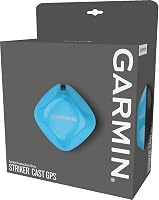
For a castable option, see our Garmin STRIKER Cast review.
Choose it for portability and basic sonar readings. For species-specific decisions, see our guides to fish finders for crappie fishing, bass fishing and freshwater fishing.
Lowrance Elite FS Fish Finder/Chartplotter: Best for connected imaging
- 10-inch touchscreen
- CHIRP, SideScan and DownScan
- FishReveal
- C-MAP Discover OnBoard charts
The Elite FS combines chartplotting with CHIRP, SideScan and DownScan through its included 3-in-1 transducer. It can also connect with compatible equipment through Wi-Fi, Ethernet and NMEA 2000.
Pros
- 3-in-1 transducer included
- FishReveal combines sonar views
- Ready for compatible ActiveTarget live sonar
Cons
- Large touchscreen needs dash space
- Some live sonar and networking options require compatible add-ons
The Lowrance Elite FS combines chartplotting and multiple sonar views on a 10-inch touchscreen. Its included 3-in-1 transducer supports CHIRP, SideScan and DownScan Imaging with FishReveal.
Preloaded C-MAP Discover OnBoard charts cover inland, coastal and Canadian waters. Wi-Fi, Ethernet and NMEA 2000 support connections with compatible displays and equipment, while ActiveTarget 2 or ActiveTarget 2 XL can be added for live sonar.
The 10-inch display needs more dash space than the compact models. It makes sense when you want a broad view of charts and sonar and plan to use the network features.
Choose Elite FS for connected imaging and chartplotting in one fixed display. If you fish deep water, compare stated depth needs with our deep water fish finder guide, and use the shallow water fish finder guide for shallower conditions.
How to choose a fish finder for a boat
The right fish finder for a boat starts with a compatible transducer mount and a screen you can read from your fishing position. For a kayak installation, see our fish finder kayak mount guide.
After those fit, choose the sonar views and GPS features that match the water you fish.
What screen size works on a boat?
A 3.5- or 5-inch screen can suit a compact helm or a simple depth-reading setup. A 9- or 10-inch display gives more room for charts and sonar views, but needs more mounting space.
Measure the dash or bracket area and consider glare, viewing distance and nearby controls. Our guide to fish finder mounts for boats covers support styles for boat installations.
A larger screen helps only if you can mount it securely and see it from where you steer or fish.
Which transducer mount should you choose?
A transom-mount transducer attaches at the stern and is common on many smaller boats. Other installations may need a hull-compatible mount or a bracket position that keeps the transducer in clean water.
Check the transducer type and included parts before buying. The Helix 5 includes a transom-mount transducer, while XPLORE is control head only, so the latter needs a separate compatible transducer.
Do you need CHIRP, imaging or live sonar?
CHIRP sonar is a useful starting point for depth readings and fish targets. Side and Down imaging add views of structure beside and below the boat, while live sonar can show fish movement and response to a lure.
Choose features that fit your fishing habits. A basic depth and fish display can be easier to use if you do not need to interpret several views or manage additional connected equipment.
Is GPS worth adding to a boat fish finder?
GPS helps you view charts, mark locations and return to spots. Mapping features can also record contours and bottom information as you travel, which is useful when you revisit fishing areas.
You do not need GPS for basic depth readings. If chart coverage matters, check that the unit’s included map covers your lakes or coastline and note whether premium chart cards are optional.
How do fishing style and water affect your choice?
A boat fish finder should match where you fish and what you want to locate. Freshwater anglers may value lake charts and contour mapping, while saltwater users should check coastal chart coverage and installation needs.
For shallow water, look for clear near-surface readings and a transducer mounted where it stays in the water. For deeper spots, compare the unit’s stated depth capability with your actual fishing depth and conditions.
Trolling changes where you may want your display and sonar view. A trolling motor or anchor system can also affect how you arrange equipment, so check compatibility before relying on connected control features.
For storing gear between trips, this anchor rope bag guide explains one way to keep anchor line organized.
How we compared boat sonar options
Our score weighs specs, features and buyer feedback against what you’re shopping for. We compared display size, sonar views, charting, included transducer parts and portability across these options.
A fish finder camera is included because it offers a different underwater view, but it is not a replacement for a sonar chartplotter. Installation details and chart coverage can vary by boat and region, so verify that the mount, transducer and maps suit your setup.
Which boat fish finder should you choose?
Choose the Humminbird Helix 5 for compact CHIRP sonar with GPS, or the Lowrance Elite FS if you want a larger screen with CHIRP, SideScan and DownScan. Pick the Simrad GO for chartplotting and boat connections, and the Yoocylii when portability matters most.
For a focused comparison by hull size, start with the best fish finder for a small boat. If a basic depth reading is all you need, a simpler unit may be easier to fit and use than a large display with live sonar and charting.
Our top 3 picks at a glance
-
1
Best for underwater camera views
[FishPRO® 2026 Upgrade] NO.1 HD 1080P Underwater
9.7/10 our score
See it on Amazon -
2
Best for compact GPS and CHIRP
Humminbird 411660-1 Helix 5 Chirp GPS G3
9.6/10 our score
See it on Amazon -
3
Best for large-screen Humminbird mapping
Humminbird XPLORE Series GPS Fish Finder MEGA
9.5/10 our score
See it on Amazon
Frequently asked questions
What should you look for in a fish finder for a boat?
Match the fish finder to your boat’s dash space, hull and fishing needs. Check the display size, transducer mounting style, sonar views, depth needs and whether you want GPS charts or mapping.
A portable handheld model can suit occasional trips, while a fixed display is better for a permanent boat setup.
Can you use a fish finder on any boat?
Many fish finders can work on different boats if the transducer and display can be mounted and powered safely. Confirm whether the transducer is included, how it mounts, and whether the screen fits your dash or bracket.
For a compact hull, compare options in our small boat fish finder guide.
Is a fish finder the same as a depth finder?
A fish finder uses sonar to show depth and may also show fish targets, bottom detail or structure. A basic depth finder is mainly built to report water depth.
See how a depth finder differs from a fish finder if depth is your main need.
Do boat fish finders need GPS?
No. GPS is useful when you want to mark locations, follow charts or build maps, but it is not required for basic depth and sonar readings.
The Helix 5 adds GPS Basemap and AutoChart Live, while portable models focus on sonar readings without chartplotter functions.
What does sonar sensitivity do?
Sensitivity changes how strongly the display shows sonar returns. Higher sensitivity can reveal weaker targets, but it can also add clutter; lower sensitivity can make a view cleaner while hiding some detail.
Our guide to sonar sensitivity on a fish finder explains how to adjust it for conditions.