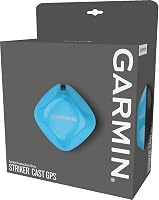
Garmin STRIKER Cast GPS Review: Worth It? (October 2026)
The Garmin STRIKER Cast GPS suits shore anglers who want to make custom fishing maps while viewing sonar on a phone or tablet. Its castable design keeps the sonar away from the bank, but you need a compatible mobile device to see the results.

On this page (7 sections)
- What does the Garmin STRIKER Cast GPS do?
- Is the GPS version useful for fishing from shore?
- How does the STRIKER Cast GPS sonar and mapping work?
- What are the main trade-offs?
- Which Garmin alternative fits a different setup?
- Can you use Garmin STRIKER Cast GPS for ice fishing?
- Is Garmin STRIKER Cast GPS the right choice?
The Garmin STRIKER Cast GPS is a good fit for shore anglers who want sonar and custom mapping without mounting a fish finder on a boat. It pairs with a phone or tablet, streams sonar wirelessly, and uses built-in GPS with Quickdraw Contours to create maps with 1 ft contours.
Its main trade-off is the screen: you view sonar on your mobile device, so you need that device with you and accessible while fishing. For a broader look at the castable model without focusing on GPS mapping, see our Garmin STRIKER Cast review.
What does the Garmin STRIKER Cast GPS do?
The Garmin STRIKER Cast GPS sends sonar to a compatible phone or tablet while you cast and retrieve the device. Built-in GPS adds the ability to create custom fishing maps with 1 ft contours through Quickdraw Contours.
The free STRIKER Cast app works with Apple or Android devices. Setup involves downloading the app, pairing the sonar and starting a fishing session.
This setup differs from a fixed fish finder with a dedicated screen. If you want a quick explanation of the sonar unit, wireless connection and mobile display, read how a castable fish finder works.
What does GPS add to the STRIKER Cast?
GPS lets you create and save custom maps with 1 ft contours using Quickdraw Contours software. You can also access the Quickdraw Community to download maps.
That mapping feature matters most if you return to the same water and want a record of its shape. It gives the GPS version a useful role beyond showing sonar during one cast.
Is the GPS version useful for fishing from shore?
Yes, the castable design lets you send sonar out from shore, a dock or a watercraft, then reel it back in while viewing the app. If you plan to deploy sonar with an RC bait boat, see our RC bait boat fish finder guide.
The wireless stream works from up to 200 ft away, according to Garmin.
For bank fishing, this can help you inspect water beyond the edge before choosing where to cast your fishing line. You can use the sonar view to look for fish and structure, then record an area on your custom map.
The unit powers on when floating in water and turns off when removed, which helps conserve battery. Garmin states battery life is 10+ hours, though it may vary with use.
Think about your casting setup before fishing. Garmin specifies a 20 lb test weight or higher fishing line, and the included tether is 20 ft long.
How does the STRIKER Cast GPS sonar and mapping work?
The STRIKER Cast GPS offers traditional 2-D sonar and an ice fishing flasher mode through its app. You can adjust settings such as gain and range, while Quickdraw Contours handles custom mapping.
The app is the main interface for reading sonar and changing settings. Before heading out, make sure your phone or tablet can pair with the sonar and that you know how to keep the screen visible during a cast.
A saved map can be useful when you return to familiar water, but custom contours need to be created as you fish. If you want a step-by-step setup and use overview, see how to use a Garmin STRIKER Cast.
What are the main trade-offs?
The STRIKER Cast GPS offers portable sonar and custom mapping, but it depends on a mobile device and requires you to retrieve the sonar after each cast. Those are practical differences from a mounted unit.
Garmin describes the device as rugged and lightweight, with IPX6 and IPX7 water resistance. That rating covers exposure to water up to 1 meter for up to 30 minutes; follow the product instructions for care and charging.
The rechargeable internal battery is rated for 10+ hours, with actual life varying by use. A full charge and a secure place for your phone make a fishing session easier to manage.
The tether included in the package is 20 ft, while the wireless sonar range is up to 200 ft. Those are different measurements, so consider how you plan to cast and retrieve the unit.
Which Garmin alternative fits a different setup?
Choose the Garmin Striker 4 if you want a small mounted display with buttons and an included transducer. It has a 3.5 in screen, CHIRP sonar and a waypoint map for marking and returning to locations.
The Garmin STRIKER 5CV is a better fit if you want a larger boat-mounted display and built-in GPS. Its 5 in screen, Quickdraw Contours mapping, waypoints and routes give you a more fixed setup than the Cast.
| Model | Best fit | Display and mapping |
|---|---|---|
| Garmin Striker Cast | Shore fishing and mobile sonar | Phone or tablet app; Quickdraw custom maps |
| Garmin Striker 4 | Compact mounted setup | 3.5 in display; waypoint map |
| Garmin STRIKER 5CV | Larger mounted setup | 5 in display; Quickdraw Contours and GPS |
For a broader overview of the family, use our guide to comparing Garmin fish finder models. If you're choosing among fixed chartplotter models, our comparisons of Garmin ECHOMAP Ultra vs GPSMAP and Garmin ECHOMAP Ultra vs UHD2 cover different boat setups.
Can you use Garmin STRIKER Cast GPS for ice fishing?
Yes, the STRIKER Cast GPS includes an ice fishing flasher mode and is described for use below ice. The unit still relies on a paired phone or tablet to show the sonar.
A flasher view can suit vertical fishing, where you watch sonar information while lowering a lure. Check the unit's instructions for cold-weather use and keep the mobile device protected from the elements.
Before going onto a frozen lake, check current local ice conditions and follow established safety guidance. For more detail on the sonar's ice use, read whether Garmin STRIKER Cast works for ice fishing.
Is Garmin STRIKER Cast GPS the right choice?
Choose the Garmin STRIKER Cast GPS if you fish from shore or a dock, want to cast sonar into water, and value building custom maps with 1 ft contours. The phone-based display is a good match if you already fish with a compatible mobile device and can keep it accessible.
Pick the Striker 4 if you prefer a compact mounted screen with dedicated buttons. Choose the STRIKER 5CV if a larger display, built-in GPS and boat-mounted transducer better fit your fishing setup.
Frequently asked questions
Does the Garmin STRIKER Cast GPS make maps?
Yes. Its built-in GPS works with Quickdraw Contours software to create custom fishing maps with 1 ft contours.
You can also access the Garmin Quickdraw Community to download maps.
This makes the GPS version useful when you want to build a record of water you fish from shore.
How far away can the STRIKER Cast stream sonar?
Garmin says the STRIKER Cast can stream sonar wirelessly from up to 200 ft away through its app. Actual use depends on conditions, so keep the phone or tablet where you can see the screen and retrieve the sonar safely.
The included tether is 20 ft long.
Does the Garmin STRIKER Cast GPS need a phone?
Yes. The STRIKER Cast pairs with the free app on a compatible Apple or Android phone or tablet, and that device displays the sonar.
If you prefer a dedicated screen and buttons, consider a mounted fish finder such as the Garmin Striker 4.
Can you use the STRIKER Cast GPS for ice fishing?
Yes. The STRIKER Cast supports an ice fishing flasher sonar mode, and Garmin describes use below ice.
Check local ice conditions and follow safe ice practices before fishing; sonar equipment does not measure whether ice can support you.