What Is a Shallow Water Anchor?
A shallow water anchor holds a boat in place by driving a pole or spike into the bottom. It is made for shallow fishing spots, not for anchoring in deep water or replacing a traditional anchor in changing conditions.
On this page (8 sections)
- What is a shallow water anchor, and how does it work?
- When does a shallow water anchor help while fishing?
- What types of shallow water anchors can you choose?
- What are the limits of a shallow water anchor?
- Where should you mount a shallow water anchor?
- How is a shallow water anchor different from a traditional anchor?
- What should you check before using one?
- Which shallow water anchor should you choose?
A shallow water anchor holds a boat in place by driving a pole or spike into the bottom. It helps anglers stay over a shallow fishing spot without continually using a trolling motor to correct drift.
Unlike a traditional anchor, it does not depend on a long rope and a weighted anchor settling on the bottom. The system is designed for shallow water, so depth, bottom type, wind, and current all matter.
What is a shallow water anchor, and how does it work?
A shallow water anchor is a pole or spike system that enters the bottom to limit boat movement. Manual models are placed by hand, while powered systems use a driver to raise and lower a spike.
A manual pin needs you to position and push the pole into a suitable bottom. A powered unit handles that motion from its mount, which can be convenient when you need to stop and move often.
The anchor only holds as well as the bottom and the system allow. It won't make a soft or unsuitable spot secure, and it isn't designed to hold a boat in every depth or weather condition.
For a broader look at anchor types and their uses, see our boat anchor guide.
When does a shallow water anchor help while fishing?
A shallow water anchor helps when you want to pause in shallow water and keep the boat near a specific spot. It can be useful while casting a shoreline, fishing a flat, or working a protected area where the pole can reach the bottom.
For kayak-specific options, see best shallow water kayak anchors.
It can also reduce repeated adjustments with a trolling motor. That can make it easier to focus on casts when you are fishing a spot that allows a secure hold.
The Superstick pin has a removable T handle, two storage clips, and a cinching lanyard. Check that its length and mounting approach suit your boat and the depth you fish.
A pin is a straightforward choice if you're comfortable placing it by hand. Compare other options in our guide to the best shallow water anchor.
What types of shallow water anchors can you choose?
The main options are manual pins and powered spike systems. Your choice depends on how often you stop, how much equipment you want to mount, and whether you prefer to set the pole by hand.
Is a manual shallow water anchor right for you?
A manual pin suits anglers who want a simple pole they can place and remove themselves. It avoids a powered driver, but you need to handle the pin at each stop and stow it safely between uses.
Its fiberglass shaft is 3/4 in wide, and the stainless steel tip is designed to resist wear and splintering. Follow the maker's guidance for using and storing the pin, and don't assume it will penetrate every bottom.
See our picks for a best manual shallow water anchor if you want to compare hand-set options.
When is a powered spike driver useful?
A powered spike driver raises and lowers a spike for you, which can help if you stop often or would rather avoid setting a pole by hand. The motor and mount add equipment, and the unit needs a compatible power source and installation.
Power-Pole says the Micro Anchor can hold Jon boats and small skiffs up to 1,500 lb, including passengers, and is suited to kayaks and paddle boards. It accommodates a 3/4 in spike, which is sold separately.
Check the boat's total loaded weight, mounting options, and power setup before choosing a powered system. For a pontoon-specific comparison, see best shallow water anchor for pontoon boat.
What are the limits of a shallow water anchor?
A shallow water anchor has limits set by its reach, the bottom, the boat, and conditions on the water. It isn't a universal substitute for a conventional anchor, a trolling motor, or safe boating judgment.
A pole must reach the bottom and enter it enough to hold. Rocky ground, debris, or a bottom that won't grip the spike can keep it from setting securely.
Wind and current can also push a boat against a shallow water anchor. If conditions change or the boat begins to move, use a safer method to reposition or secure it.
A powered system's stated boat capacity applies to that system and its intended setup. Confirm the model instructions and mount compatibility before relying on it.
Where should you mount a shallow water anchor?
Mount the system where its pole can reach the bottom without interfering with your boat's use. The right location depends on the boat, the anchor design, and the mount made for that setup.
Check clearance around the transom, motor, steering, and other equipment. The pole should deploy and retract without striking the hull or another part of the boat.
A mount can affect both fit and operation, so verify compatibility before buying. Our guide to the best shallow water anchor mount covers mount choices.
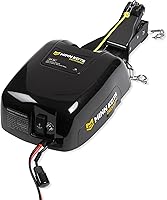
The Minn Kota bracket requires a Talon adapter bracket and isn't intended for direct transom mounting. It is designed for temporary clearance, such as under a garage or bridge, and not for transport on water or trailering.
How is a shallow water anchor different from a traditional anchor?
A shallow water anchor uses a pole or spike to hold in shallow water, while a traditional anchor uses an anchor and rode to secure a boat in a broader range of settings. They serve different purposes, so one doesn't automatically replace the other.
A shallow water system can be quick to deploy when the boat is in range of a suitable bottom. A traditional anchor is the more familiar choice when you need to anchor beyond a pole's reach.
Your boat's equipment should match the water and conditions you expect. Store an anchor and its gear so they remain accessible; our guide to boat anchor storage has storage tips.
What should you check before using one?
Before deploying a shallow water anchor, check depth, bottom conditions, boat compatibility, and the system's instructions. A quick check can help you avoid relying on a pole that can't reach or hold.
- Confirm the water is within the system's working range.
- Look for rocks, debris, or other obstructions where the spike will enter.
- Check the boat's loaded weight and the system's stated limits.
- Verify the mount, power source, and spike requirements for your setup.
- Watch the boat after setting the pole, especially if wind or current is present.
Keep a conventional anchor suited to your boat and water as part of your equipment plan. A shallow water anchor is one positioning tool, not a guarantee that the boat will stay put.
Which shallow water anchor should you choose?
Choose a manual pin if you want to place the pole by hand, or a powered spike driver if frequent stops make deployment convenience important. Start with the depth and bottom where you fish, then confirm the boat and mount fit the system.
The Superstick pin is an 8 ft hand-set option. The Power-Pole Micro Anchor is a removable powered driver for kayaks and small boats, while the Minn Kota tilt bracket is an accessory for temporary clearance with a compatible Talon.
The right shallow water anchor is the one that suits your boat, fishing spots, and conditions. For other anchoring needs, use the boat anchor guide to compare the broader options.
Frequently asked questions
What is a shallow water anchor used for?
A shallow water anchor holds a boat in place by planting a pole or spike into the bottom. Anglers use one to stay near a bank, flat, or other shallow fishing spot without repeatedly correcting their position with a trolling motor.
Check the system's depth, bottom, boat, and weather limits before use.
How deep can a shallow water anchor work?
Its working depth depends on the pole length, anchor design, and bottom conditions. A manual pin can only reach as far as its usable length, while powered systems have their own limits.
Check the exact model instructions and leave enough pole in the bottom to hold securely.
Can a shallow water anchor replace a regular boat anchor?
No. A shallow water anchor is intended to hold a boat in suitable shallow conditions, while a conventional anchor and rode are used for broader anchoring needs.
Wind, current, depth, and bottom type affect both choices, so carry the right gear for the water and follow local safety guidance.
Do shallow water anchors work on every bottom?
No. A pole or spike needs a bottom it can enter and hold in, and hard, rocky, or obstructed ground may prevent a secure set.
Soft bottoms can also affect holding.
Check the system's instructions, assess the spot, and be ready to use another positioning method.