How to Store a Boat Anchor
Rinse the anchor and rode, drain them, then secure both in a ventilated holder or locker so they can't slide, snag, or scratch the boat. Keep wet gear contained until it dries, and check that the anchor is restrained before moving.
On this page (8 sections)
- How do you store a boat anchor after use?
- Where should a boat anchor go while underway?
- How can you protect the boat from scratches and runoff?
- Is a bag or locker better for anchor storage?
- How should you store the anchor rope or chain?
- How do you keep a shallow-water anchor ready for storage?
- What should you check before leaving the dock?
- Which boat anchor storage setup should you choose?
Store a boat anchor by rinsing it, letting it drain, and securing it with the rode in a ventilated, contained space. Keep metal and grit away from finished surfaces, and restrain the gear so it can't slide or tangle when the boat moves.
The right setup depends on the anchor style and where you carry it. A locker, bag, box, or deck holder can work if it contains runoff, keeps the anchor from shifting, and lets the rope pay out cleanly.
How do you store a boat anchor after use?
Rinse the anchor and rode, drain them, then stow them where they won't move. Remove mud, weeds, and loose grit before those materials dry onto the gear or collect in a locker.
If the anchor is wet, use a holder or bag that can drain or breathe. Don't seal wet rope and metal in an airtight container for long-term storage.
Keep the rode in loose, even coils or flakes. Avoid tight bends, crossed loops, or piles that can snag when you need to deploy the anchor.
For anchor types and uses, start with our boat anchor guide. It can help you choose storage around the anchor's shape and how you use it.
Where should a boat anchor go while underway?
Store the anchor in a locker or restraint designed to keep it from shifting. A loose anchor can strike the hull, deck, or other gear as the boat rocks.
Before choosing a spot, check that you can reach the anchor without stepping over loose rope. Keep the line's bitter end attached to a secure point, and leave enough room for the rode to run out without catching.
A deck-mounted holder can keep an anchor accessible, while a locker or box contains it out of the way. Whichever you use, check fasteners and tie-downs before each trip.
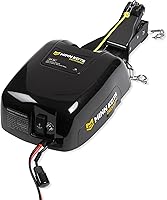
The Minn Kota Deckhand Electric Anchor Winch handles anchors from 20 to 40 lb and comes with 100 ft of nylon rope. Its horizontal stow position can help keep the anchor from swinging, but plan the mount location and rope path before installation.
If the anchor is stored in a separate bag, box, or locker, see our guides to the best boat anchor tie downs and best boat anchor rope holders for ways to keep gear in place.
How can you protect the boat from scratches and runoff?
Keep the anchor from rubbing against the boat, and direct water away from finished surfaces. Sand, shell fragments, and rust can mark a deck or hull when metal shifts against it.
Use a bag, cover, or lined compartment that fits the anchor without forcing it. A loose cover can still let the anchor move, so add a restraint if the storage spot allows one.
Let water drain into a locker or overboard drain intended for that purpose. Don't leave a wet anchor on upholstery, carpet, or a surface where water can pool.
A bag can contain drips and grit between trips. Compare boat anchor bags and covers and anchor rope bags for boats if you want a removable storage option.
Is a bag or locker better for anchor storage?
Choose a locker for fixed, contained storage and a bag when you want removable containment. Either option should fit the anchor, hold the rode without crushing it, and allow drainage or airflow.
A locker can keep the anchor out of the way, but inspect its drain and interior for grit. Check that the hatch closes without pinching the rope or resting on the anchor.
A bag is easy to lift out for rinsing and drying. Use a bag with enough room for the anchor and rope, and keep it secured so it can't roll around.
See our guide on how to use an anchor rope bag for coiling and stowing the rode. For hard-sided options, compare boat anchor storage boxes and buckets.
How should you store the anchor rope or chain?
Keep the rode in a loose coil or flake with its end secured. This helps it pay out smoothly and reduces the chance of knots forming in storage.
For rope choices, see boat anchor rope options.
Keep rope away from sharp edges and pinch points. If the rode includes chain, keep the chain from resting against painted or gel-coated surfaces, and secure both materials so they don't shift.
For chain choices, see boat anchor chain options.
Let wet rope dry when you can, with enough airflow to avoid trapping moisture. If the anchor locker has a drain, check it for debris so water can escape.
For other storage layouts, see boat anchor rope reels and anchor rope storage solutions. Choose a holder that suits your rode and the space available on your boat.
How do you keep a shallow-water anchor ready for storage?
Secure a removable shallow-water anchor in its mount or a padded storage spot. Keep the unit and its power cord from swinging or dragging across the deck.
The Power-Pole Micro Anchor is removable, includes a quick-release bracket, and uses a 15 ft power cord for a 12-volt battery. Its driver accommodates a 3/4 in spike, which is sold separately.
Follow the anchor's mounting instructions, and secure the spike separately if you carry one. Don't let the power cord become a trip hazard or a loose loop around other gear.
A tilt bracket serves a different purpose. The Minn Kota Talon Tilt Bracket lets a Talon tilt forward for temporary clearance in low-height areas, and Minn Kota says it isn't intended for transport.
The bracket requires a Talon adapter bracket and is not intended for direct transom mounting. Use its temporary tilt position for clearance, not as a way to secure the anchor during travel.
What should you check before leaving the dock?
Confirm the anchor is restrained, the rode is clear, and the storage area can drain. A quick check helps catch loose hardware, tangled rope, or a clogged locker drain before the boat is underway.
- Tug the anchor or holder to check that it stays in place.
- Make sure the rode's end is secured and its coil can pay out.
- Check the locker drain and remove grit or debris.
- Look for contact between metal, rope, and finished surfaces.
Check the storage spot again after rough water or a long trip. If the anchor shifted, adjust the restraint or move it to a better-fitting holder.
Which boat anchor storage setup should you choose?
Choose a draining locker if your boat has a suitable compartment and you want fixed storage. Choose a bag or box if you want to remove the anchor for rinsing and drying, and add a tie-down or holder if it can shift.
For rode management, pick a rope bag, holder, or reel that fits the line and lets it run out without snagging. Measure the storage space and anchor before choosing a container, and check that the drain or airflow suits wet gear.
Keep the anchor clean, restrained, and separated from delicate boat surfaces. Review the best boat anchor locker drain covers and best boat anchor locker hatches if your locker needs a better-fitting closure or drain cover.
Frequently asked questions
How should you store a wet boat anchor?
Rinse off mud, sand, and salt when practical, then let the anchor drain in a ventilated, contained spot. Keep it from touching finished surfaces, and secure the anchor and rode so they cannot slide or tangle while the boat is underway.
Can you leave an anchor in the anchor locker?
Yes, if the locker is sized for the anchor and rode, drains properly, and has a secure tie point. Keep the rode flaked or coiled so it can pay out without knots, and check the locker and drain for grit or blockage after use.
How do you keep anchor rope from tangling in storage?
Flake the rope in broad loops or coil it loosely, keeping the bitter end attached to a secure point. Let wet rope drain and dry with airflow when possible.
A rope bag or holder can contain the coil, but it should not pinch the line.
How do you protect a boat deck from an anchor?
Keep the anchor off gelcoat, paint, and upholstery with a purpose-sized bag, covered holder, or padded locker. Secure it against movement, and keep grit between the anchor and the boat from acting like sandpaper.