7 Best Batteries for the Lowrance Eagle Eye 9 (November 2026)
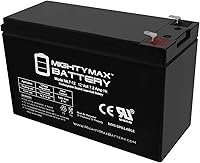
The best Lowrance Eagle Eye 9 battery include the Mighty Max Battery ml9-12 for proven SLA replacement, the Mighty Max Battery ML9-12NB -12 Volt for nut and bolt terminals, and the HWE Energy 12V 9Ah Lithium Battery for UPS for light lithium replacement.
On this page (6 sections)
The best battery for Lowrance Eagle Eye 9 use is a 12V 9Ah to 15Ah rechargeable battery with F2 or matching terminals, because that size fits portable fish finder setups and gives steady power for a full outing. Lithium picks weigh less and last more cycles, while sealed lead acid picks cost less up front and work as direct replacements.
Our score weighs specs, features and buyer feedback against what you're shopping for. We compared capacity, weight, terminal type, cycle life and battery chemistry across these seven picks.
Start with your boat setup. A kayak, small jon boat or float tube puts a premium on weight.
A larger boat with a battery box gives you more room for a 15Ah lithium battery.
If you are new to portable power, our best portable fish finder battery guide covers the same basics in more depth. It helps you match amp hours to your screen and transducer draw.
Our picks at a glance
-
1

-
2
 Best for nut and bolt terminals
Mighty Max Battery ML9-12NB -12 Volt
9.6/10 our score
See it on Amazon -
3
 Best for light lithium replacement
HWE Energy 12V 9Ah Lithium Battery for UPS
9.4/10 our score
See it on Amazon
- 4
 Check it
SEFEPODER 12V 9Ah Rechargeable Sealed Lead Acid
Best for a two pack spare - 5
 Check it
GOLDENMATE 12V 10Ah LiFePO4 Lithium Battery
Best for waterproof lithium power - 6
 Best for long warranty SLACheck it
- 7
 Check it
LIPULS 12.8V 15Ah LiFePO4 Lithium Battery
Best for longer runtime
How we compared these Lowrance Eagle Eye 9 batteries
We compared seven 12V batteries by capacity, chemistry, weight, size and terminals. The top two are SLA batteries in the classic 9Ah size.
The lithium picks trade a higher upfront cost for less weight and far more cycles.
We checked dimensions against common battery boxes and kayak compartments. A battery that is 5.94 inches long fits many 9Ah trays.
Wider lithium batteries need a wider box, so measure first.
We also checked what is included. Some picks are battery only with no wire harness.
Others include terminal adapters. That detail changes your first trip cost and setup time.
For background on chemistry, our guide to marine battery for boat use explains why boat batteries differ from car batteries. It also covers storage and charging habits that apply here.
Weight, cycles and included parts
Weight changes how a battery feels on a kayak and on a dock. SLA picks here sit between 5.2 and 6.8 pounds.
Lithium picks sit between 2.1 and 3.38 pounds for similar or higher capacity.
Cycle life changes how often you replace the battery. Lithium picks claim 4000 to 5000 deep cycles.
SLA picks do not state a cycle count in these listings, so treat replacement timing as shorter.
Included parts change the first setup. The Mighty Max picks list no wire harness or mounting accessories.
The HWE Energy pick includes an F2 to F1 adapter and a user manual. The Energizer pick includes F2 to F1 adapters, while the LIPULS pick includes F2 terminals and a manual.
Battery picks for the Lowrance Eagle Eye 9
The seven picks below cover proven SLA replacements, light lithium options and one larger 15Ah model. Choose by terminal type and runtime first, then by weight.
Mighty Max Battery ml9-12: Best for proven SLA replacement
- 12 Volt 9 Ah
- F2 terminal
- Rechargeable SLA AGM
- 5.94 x 2.56 x 4.02 inches
- 5.5 pounds
A proven 12V 9Ah SLA AGM battery with F2 terminals for simple portable fish finder power.
Pros
- Direct 12V 9Ah replacement size
- F2 terminal
- Mounts in any position
Cons
- Heavier than lithium options
- Battery only, no harness included
This Mighty Max ML9-12 suits anglers who want a proven 12V 9Ah SLA replacement. It measures 5.94 x 2.56 x 4.02 inches and weighs 5.5 pounds.
The F2 terminal matches many portable fish finder connectors. It is rechargeable and maintenance free, so there is no water to check during the season.
Its SLA AGM design is spill proof and uses valve regulated construction. Mighty Max says it can mount in any position and resists shock and vibration.
That helps in a small boat that bounces in chop or on a trailer ride to the ramp. The calcium alloy grid is meant for float and cyclic use, which fits backup power and repeated fishing days.
The trade-off is weight and cycle life versus lithium. You carry about 3 pounds more than a 9Ah lithium battery.
You also give up the long deep cycle claims that lithium picks make for years of use. For a simple replacement, that trade can be worth it.
Mighty Max backs it with a full one year warranty. The battery is sold alone with no wire harness or mounting parts.
Budget for connectors if your old battery had them.
Mighty Max Battery ML9-12NB -12 Volt: Best for nut and bolt terminals
- 12 Volt 9 Ah
- Nut and Bolt terminal
- Rechargeable SLA AGM
- 5.94 x 2.56 x 3.94 inches
- 5.2 pounds
Same 12V 9Ah SLA capacity as the top pick, with nut and bolt terminals instead of F2.
Pros
- Nut and bolt terminal option
- Compact 9Ah footprint
- SLA AGM spill proof design
Cons
- Heavier than lithium options
- Battery only, no harness included
This Mighty Max ML9-12NB suits anglers whose connectors use nut and bolt terminals. It gives the same 12V 9Ah SLA capacity as the top pick.
It measures 5.94 x 2.56 x 3.94 inches and weighs 5.2 pounds. The slightly lower height can help in a tight tray where the F2 version sits too tall.
The nut and bolt terminal is the main difference. Check your existing cables before you choose it.
A mismatch here means a new connector or an adapter, and that change can erase the benefit of a direct size match. Photograph your old terminals and compare the shape before ordering.
Its SLA AGM build is spill proof and maintenance free. Mighty Max says it handles high discharge rates and wide operating temperatures.
It also mounts in any position, with resistance to shock and vibration. Those traits suit portable power that moves between boats and storage boxes.
The trade-off is the same as other SLA picks. It is heavier than lithium and will not match 4000 plus cycles.
The one year warranty and familiar 9Ah size make it a safe replacement for the right cable setup.
HWE Energy 12V 9Ah Lithium Battery for UPS: Best for light lithium replacement
- 12V 9Ah LiFePO4
- 4000+ deep cycles
- 2.1 pounds
- F2 terminal with F2 to F1 adapter
- Built-in BMS
A light 12V 9Ah LiFePO4 battery that replaces 9Ah SLA size with far less weight.
Pros
- Only 2.1 pounds
- 4000+ deep cycles
- Includes F2 to F1 terminal adapter
Cons
- Needs a lithium charger
- Not for engine starting
This HWE Energy battery suits anglers who want lithium without changing size. It is a 12V 9Ah LiFePO4 battery that weighs only 2.1 pounds.
It measures 5.94 x 2.56 x 3.7 inches. That shape lets it drop into many trays built for 9Ah SLA batteries.
That weight saving matters on a kayak or a small boat. You carry less than half the weight of the SLA picks, which changes carry and balance.
HWE Energy says it provides 4000 plus deep cycles and a 10 year lifetime. The low self discharge rate of 2 percent per month also helps when the battery sits between trips.
It uses an F2 terminal and includes an F2 to F1 adapter. That adapter helps if your connectors are F1 type.
The built-in BMS protects against overcharge, deep discharge, overloading, overheating and short circuits. The BMS rating here is 15A, so check your draw against that limit.
The trade-off is charging. Use a dedicated lithium charger at 14.6V.
HWE Energy does not recommend a lead acid charger for extended use. It is also not for engine starting.
SEFEPODER 12V 9Ah Rechargeable Sealed Lead Acid: Best for a two pack spare
- 12V 9Ah SLA
- F2 terminals
- 2 pack
- 5.94 x 2.56 x 3.94 inches
- Rechargeable
A two pack of 12V 9Ah SLA batteries with F2 terminals for backup power.
Pros
- Two batteries in one pack
- F2 terminals
- Shock and vibration resistant
Cons
- Lead acid weight for each battery
- No lithium cycle life
This SEFEPODER two pack suits anglers who want a spare battery in the box. Each battery is a 12V 9Ah SLA battery with F2 terminals.
Each measures 5.94 x 2.56 x 3.94 inches. The pack gives you two batteries for rotation rather than one unit to track.
A two pack helps on long weekends. You can swap in a fresh battery without waiting for a charge.
It also helps if you run a second small device from the same box or keep one battery charged at home. That spare capacity can keep a trip going when the first battery runs low.
SEFEPODER says the batteries are shock and vibration resistant. They are maintenance free and valve regulated, with anti spill design.
That fits portable fish finder use in a boat where the battery can shift and bounce.
The trade-off is weight and chemistry. You get SLA batteries, not lithium.
Each one will weigh far more than the 2.1 pound lithium pick. The one year warranty covers the pack, so check the listing terms for each unit.
GOLDENMATE 12V 10Ah LiFePO4 Lithium Battery: Best for waterproof lithium power
- 12V 10Ah LiFePO4
- IP67 waterproof
- 5000+ cycles
- 3.3 pounds
- Built-in BMS
A 12V 10Ah LiFePO4 battery with IP67 waterproof protection and 5000+ cycles.
Pros
- IP67 waterproof protection
- 5000+ deep cycles
- Low self-discharge for storage
Cons
- T2 terminal to check
- Not for vehicle starting
This GOLDENMATE battery suits anglers who fish in wet conditions. It is a 12V 10Ah LiFePO4 battery with IP67 waterproof protection.
It weighs 3.3 pounds and measures 2.56 x 5.94 x 3.66 inches. The waterproof rating is useful for spray, rain and kayak use where a battery box may get wet.
The extra amp hour gives a small runtime edge over 9Ah picks. GOLDENMATE says it offers 5000 plus deep cycles and a 10 year lifespan.
The built-in BMS guards against overcharging, over discharging, over current and short circuits. Continuous discharge is listed at up to 10A, which suits fish finder loads in portable setups.
Its low self-discharge rate helps with storage. GOLDENMATE says the battery can sit for up to one year.
That suits anglers who fish seasonally and do not want to charge before every outing. It also needs no water refills or routine maintenance.
The trade-off is terminal type. It uses a T2 terminal, so check your connectors.
It is also not for vehicle starting. Use a compatible LiFePO4 charger at up to 5A.
Energizer EN9-12: Best for long warranty SLA
- 12 Volt 9 Amp Hr
- F2 terminals with F2 to F1 adapters
- Sealed Lead Acid AGM
- 5.94 x 2.56 x 3.94 inches
- 2 year warranty
A 12V 9Ah AGM battery with F2 terminals, included adapters and a two year warranty.
Pros
- F2 to F1 adapters included
- Two year warranty
- Non-spillable AGM design
Cons
- 6.8 pounds
- Heavier than other 9Ah picks
This Energizer EN9-12 suits anglers who want a longer SLA warranty. It is a 12 Volt 9 Amp Hr sealed lead acid AGM battery.
It measures 5.94 x 2.56 x 3.94 inches. The classic footprint fits many 9Ah boxes, and the AGM build keeps the design spill proof.
It comes with F2 terminals and F2 to F1 adapters. That helps if your connectors are F1 type.
Energizer also offers a limited two year warranty, which is longer than the one year terms on the other SLA picks. That extra year matters if you want more coverage on a sealed battery.
Its AGM design is non-spillable and valve regulated. Energizer says it resists shock and vibration.
It can mount in any position except upside down. The low self discharge rate also helps the battery stay ready during storage periods between fishing trips.
The trade-off is weight. It weighs 6.8 pounds, which is heavier than the other 9Ah SLA picks.
You trade carry weight for warranty length and included adapters. Wire harness and mounting accessories are not included.
LIPULS 12.8V 15Ah LiFePO4 Lithium Battery: Best for longer runtime
- 12.8V 15Ah LiFePO4
- 4000+ cycles
- 3.38 pounds
- Built-in 20A BMS
- 5.9 x 3.8 x 3.8 inches
A larger 12.8V 15Ah LiFePO4 battery for longer runtime in a compact lithium package.
Pros
- 15Ah capacity for longer runtime
- Light for its capacity
- 20A BMS protection
Cons
- Larger footprint than 9Ah picks
- Check terminal fit before wiring
This LIPULS battery suits anglers who want more runtime than 9Ah provides. It is a 12.8V 15Ah LiFePO4 battery with 192Wh of energy.
It weighs 3.38 pounds. The extra capacity is the main reason to choose it over smaller lithium picks.
That larger capacity should run a Lowrance Eagle Eye 9 longer than the 9Ah and 10Ah picks. LIPULS says it delivers 4000 plus full cycles and a 10 year design life.
Its ultra low self discharge allows one year of maintenance free storage. That storage trait helps if you charge once and fish across several weekends.
It has a built-in 20A BMS with protection against overcharge, over discharge, over current, short circuit and over temperature. It measures 5.9 x 3.8 x 3.8 inches.
That wider body needs more box space than the 9Ah picks, so measure width as well as length.
The trade-off is size and terminal fit. It includes two F2 terminals, but you should still check your wiring.
LIPULS backs it with a 12 month warranty. It can connect up to 4 in series or parallel for larger systems.
12V vs 12.8V: what fits the Lowrance Eagle Eye 9?
A 12V battery is the standard choice for portable fish finder power. SLA batteries in this guide are rated at 12V.
Lithium LiFePO4 batteries are rated at 12.8V.
That difference is normal for LiFePO4 chemistry. The lithium batteries here are sold as 12V replacements.
Their BMS keeps output stable for your screen and transducer.
Choose 12V SLA if you want the simplest replacement. Choose 12.8V lithium if you want less weight and more cycles.
In both cases, match the voltage your unit and cables expect.
Our post on is a marine battery a lithium explains the chemistry split in plain terms. It helps you decide if lithium fits your budget and charging setup.
SLA AGM batteries
SLA AGM batteries use sealed lead acid chemistry. They are spill proof and maintenance free.
They work well as direct 9Ah replacements.
They weigh more than lithium. They also offer fewer deep cycles.
Their lower upfront cost makes them easy to buy as a first battery or a spare.
LiFePO4 lithium batteries
LiFePO4 lithium batteries weigh far less for the same capacity. The 9Ah lithium pick here weighs 2.1 pounds.
The SLA equivalent weighs about 5.5 pounds.
They offer 4000+ to 5000+ deep cycles in these picks. They need a lithium charger.
They also need a BMS, which all three lithium picks include.
What the voltage label means in practice
A 12.8V label does not mean the battery will power a 24V system. It means the lithium pack is built from cells that sum to a nominal 12.8V.
That is the size used for 12V replacement loads.
The BMS shapes the output and cuts power if limits are crossed. That protection is one reason lithium packs list a BMS current rating.
Check that rating against your screen and any other loads on the same battery.
Sizing and terminal fit for the Lowrance Eagle Eye 9
Most picks here share the classic 9Ah footprint. They measure about 5.94 inches long and 2.56 inches wide.
That fits many battery boxes and kayak trays.
The 15Ah LIPULS battery is wider at 3.8 inches. Measure your box before you choose it.
A battery that does not fit will not help your runtime.
Terminal type matters as much as size. F2 is the most common type in this guide.
Nut and bolt and T2 terminals need matching connectors.
F2 terminals
F2 terminals appear on the Mighty Max ML9-12, SEFEPODER, HWE Energy and Energizer picks. They are a common choice for 9Ah batteries.
Check that your cables match F2 before you order. Adapters can help with F1 connectors.
The HWE Energy and Energizer picks include adapters.
Nut and bolt and T2 terminals
The Mighty Max ML9-12NB uses nut and bolt terminals. The GOLDENMATE 10Ah uses a T2 terminal.
Both need the right connector on your cable.
If your old battery used F2, a different terminal means new hardware. That extra step may not be worth it unless the price or features win you over.
Measuring your tray before you order
Measure length, width and height with the lid closed. A battery that fits with the lid open may hit when you close it.
Leave room for cables and a fuse holder.
Check height on the taller SLA picks. The Mighty Max ML9-12 is listed at 4.02 inches tall.
The GOLDENMATE and HWE Energy lithium picks are shorter at 3.66 and 3.7 inches.
How to wire and charge your battery safely
Answer first: use the right charger for the chemistry, connect positive to positive, and fuse the line near the battery.
Lithium batteries need a LiFePO4 charger. The HWE Energy pick recommends 14.6V at 4.5A or less.
The GOLDENMATE pick allows up to 5A.
SLA batteries use a standard 12V lead acid charger. Do not use a lithium charger profile on SLA unless the charger supports it.
Follow the battery maker's charging guidance.
Keep connections tight and clean. A loose connection can cause voltage drop and heat.
Use a fuse near the positive terminal to protect the wiring.
For larger systems, our guide on how to wire 24v trolling motor batteries shows series and parallel basics. Your Lowrance Eagle Eye 9 setup stays at 12V, so do not wire these batteries in series for it.
Storage and care
Store lithium batteries partly charged if you will not use them for months. The lithium picks here have low self-discharge rates.
GOLDENMATE says storage can last up to one year.
SLA batteries should not sit discharged for long periods. Charge them after use and before storage.
Keep them in a cool, dry place.
Runtime and capacity
Capacity is measured in amp hours. A 15Ah battery holds more energy than a 9Ah battery.
That should give you longer runtime at the same screen brightness.
Screen brightness is the biggest variable you control. Lower brightness uses less power.
Transducer settings and cable losses also affect runtime.
Charger settings by chemistry
Set the charger to match the battery label before you plug it in. Lithium chargers use a different profile from lead acid chargers.
A wrong profile can cut charging short or stress the cells.
Check the voltage and current limits in the listing. HWE Energy lists 14.6V plus or minus 0.2V and current at 4.5A or less.
GOLDENMATE lists a maximum charge current of 5A.
Which battery should you buy for the Lowrance Eagle Eye 9?
The best battery for Lowrance Eagle Eye 9 use depends on weight, runtime and terminal fit. Pick the Mighty Max ML9-12 if you want a proven SLA replacement with F2 terminals.
Pick the HWE Energy 9Ah lithium if weight matters most. It weighs 2.1 pounds and still fits the 9Ah footprint.
You will need a lithium charger.
Pick the LIPULS 15Ah if you want the longest runtime here. It gives 15Ah in a 3.38 pound lithium pack.
Measure your battery box first.
If you compare with other brands, our best battery for garmin fish finder guide covers similar 12V picks. Our best battery for kayak fish finder guide focuses on light carry weight.
Our best forward facing sonar battery guide covers higher draw setups.
For lithium brand comparisons, our best lithium marine battery guide explains cycle life and BMS features. It helps you judge the lithium picks above.
Buy the battery that fits your box, matches your terminals and suits your charger. That choice will give your Lowrance Eagle Eye 9 steady power for more time on the water.
Our top 3 picks at a glance
-
1
-
2
Best for nut and bolt terminals
Mighty Max Battery ML9-12NB -12 Volt
9.6/10 our score
See it on Amazon -
3
Best for light lithium replacement
HWE Energy 12V 9Ah Lithium Battery for UPS
9.4/10 our score
See it on Amazon
Frequently asked questions
What battery does the Lowrance Eagle Eye 9 use?
It uses a 12V portable battery for fish finder power in these setups. A 9Ah battery is the common starting size, and 10Ah to 15Ah lithium options give more runtime.
Match voltage, terminal type and physical size before you wire it.
How long will a 9Ah battery run a Lowrance Eagle Eye 9?
Runtime depends on screen brightness, transducer use and how low you let the battery run. A 9Ah battery is a starting point for a half day or full day for many anglers.
Choose 15Ah if you fish long days or run the screen bright.
Is lithium better than SLA for a fish finder?
Lithium is lighter and offers more deep cycles than SLA in the models here. SLA costs less up front and fits familiar 12V replacement sizes.
Lithium needs a compatible lithium charger and a built-in BMS.
What terminal type should I choose?
F2 is common on 9Ah SLA and lithium replacement batteries. Some picks use nut and bolt or T2 terminals, so match them to your connectors or adapters.
Check the inches before you order, because a perfect capacity still needs the right fit.