9 Best Batteries for Garmin Fish Finders (November 2026)
The best best battery for Garmin fish finder include the ExpertPower EXP1270 for simple 12V replacement, the Mighty Max Battery ML7-12 for budget sealed lead acid, and the Nocqua Pro Power Kit (best ready to fish lithium kit).
On this page (10 sections)
- Our top picks for the best battery for Garmin fish finder setups
- How we compared these Garmin fish finder batteries
- What voltage does your Garmin fish finder need?
- How much capacity do you need for a full day of fishing?
- Lead acid or lithium: which chemistry fits your Garmin setup?
- What size and terminals should you check before you order?
- How do chargers and battery protection change your choice?
- Which Garmin models and setups do these picks fit?
- What else affects Garmin sonar performance besides the battery?
- Our verdict on the best battery for Garmin fish finder power
The best battery for Garmin fish finder power is the ExpertPower EXP1270 for a simple 12V setup. It gives you a sealed 12V 7Ah battery with F1 terminals that is easy to wire and replace.
This guide explains how to match capacity and voltage to Garmin sonar power needs, so you do not buy a battery that is too small or the wrong type.
Garmin fish finder battery choice comes down to three facts. Voltage must match your unit, amp hours set how long you can fish, and chemistry sets weight and cycle life.
See whether marine batteries are lithium before choosing a chemistry.
A 12V Garmin Striker, echoMAP or UHD unit needs 12V power. A 16V LiveScope system needs a battery and wiring built for 16V.
For live sonar, compare forward-facing sonar batteries sized for the system.
Our score weighs specs, features and buyer feedback against what you are shopping for. We compared capacity, voltage, cycle life, weight, size, terminals and included parts.
We also checked which picks suit a Garmin fish finder and battery setup on a boat, kayak or small boat rig.
Our picks at a glance
-
1

-
2

-
3

- 4
 Check it
Enegitech 12V 10Ah LiFePO4 Lithium Battery
Best lightweight lithium value - 5
 Check it
Akiisolo 12V 15Ah Lithium Battery LiFePO4 Deep
Best for longer days on the water - 6
 Check it
Mighty Max Battery 12V 8Ah SLA Battery
Best for fish finder replacement fit - 7
 Check it
Garmin Rechargeable NiMH Battery for GPSMAP 64s/Oregon
Best for handheld Garmin GPS use - 8
 Check it
LiTime 16V 70Ah Lithium Fish Finder Battery
Best for 16V LiveScope systems - 9
 Check it
LIPULS 12.8V 15Ah LiFePO4 Lithium Battery
Best expandable compact lithium
Our top picks for the best battery for Garmin fish finder setups
The ExpertPower EXP1270 is the top pick for most anglers who want a basic 12V replacement. The Nocqua kit wins for buyers who want lithium power with charger and leads in one box.
The LiTime 16V battery only fits buyers with a 16V imaging system.
ExpertPower EXP1270: Best for simple 12V replacement
- 12V 7Ah sealed lead acid
- F1 terminals
- 5.94 x 2.56 x 3.70 in
- Maintenance free and spill proof
A familiar 12V 7Ah sealed lead acid battery with F1 terminals for straightforward Garmin sonar power.
Pros
- Simple 12V replacement format
- Sealed and maintenance free
- No special tools for F1 wiring
Cons
- Heavier than lithium at similar capacity
- 7Ah limits long days
The ExpertPower EXP1270 suits anglers who want a plain 12V 7Ah battery for a Garmin fish finder. Its sealed lead acid design needs no maintenance and will not spill acid if tipped in a boat box.
F1 terminals match common fish finder wiring, so your existing leads should connect with no special tools.
Its capacity is 7Ah at 12 volts, with dimensions of 5.94 x 2.56 x 3.70 inches, or 3.94 inches high with terminals. It weighs 4.3 pounds and has a rugged ABS case with leak proof design.
That size fits many small boat and kayak battery boxes, and its high density plates are built for extended life.
Runtime depends on screen size and brightness, so treat 7Ah as a short trip size. The trade off against lithium is weight and usable charge, since lead acid gives up charge as voltage drops.
Lithium holds steadier voltage longer, but this sealed battery remains simple and easy to replace.
Buy it for a basic 12V Garmin sonar setup. Skip it for all day LiveScope use, where a larger lithium battery will last longer.
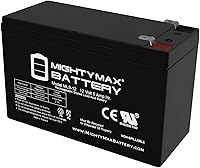
Mighty Max Battery ML7-12: Best for budget sealed lead acid
- 12V 7.2Ah sealed lead acid
- F1 terminal
- Rechargeable SLA
- Mounts in any position
A 12V 7.2Ah sealed lead acid battery that resists shocks and vibration for boat and kayak use.
Pros
- Slightly more capacity than 7Ah rivals
- Sealed lead acid design
- Flexible mounting positions
Cons
- Battery only, no harness included
- Lead acid weight for its size
The Mighty Max Battery ML7-12 suits budget buyers who want a 12V 7.2Ah sealed lead acid battery. It is rechargeable, maintenance free and built to resist shocks and vibration.
That matters on small boats where the battery can shift and bounce, and it can be mounted in any position.
It weighs 5 pounds and measures about 5.94 x 2.56 x 3.94 inches with F1 terminals. The listing is for the battery only, with no wire harness or mounting parts included.
Plan to use your existing leads or buy a harness that fits your Garmin unit before the battery arrives.
Against the ExpertPower pick, this battery adds 0.2Ah of capacity in a similar footprint. Against lithium picks, it weighs more for less usable runtime and fewer cycles.
Its strength is low cost and a sealed design that performs in high and low temperatures.
Buy it for a low cost 12V replacement. Add a harness if your current leads do not fit F1 terminals.
Nocqua Pro Power Kit: Best ready to fish lithium kit
- 12V 20Ah lithium battery
- 110V wall charger included
- Water resistant case
- Universal pigtail leads
A 12V 20Ah lithium kit with charger and pigtail leads for Garmin fish finders on boats and kayaks.
Pros
- 20Ah lithium capacity
- Charger included in the kit
- Built in short circuit protection
Cons
- Higher cost than a bare SLA battery
- Kit parts may exceed small setups
The Nocqua Pro Power Kit suits kayak and small boat anglers who want a complete power kit. It pairs a 12V 20Ah lithium battery with a 110V wall charger and universal pigtail leads.
Garmin compatibility is stated for its marine electronics range, including fish finders and GPS units.
The kit is water resistant, compact and weighs 2.2 pounds. It is encased in a silicone sealed case for rugged outdoor use, and fits to 8 x 4 x 7 inches in a gear bag.
Built in short circuit protection shuts off power in case of high voltage, overcharging or deep discharge.
That safety suite helps protect both the battery and your fish finder through a full day. Its trade off is cost and size, since a 20Ah lithium battery costs more than a 7Ah sealed lead acid battery.
For short trips, a smaller battery may be enough.
Buy it to get battery, charger and leads in one kit. It is a strong fit for kayak fish finder use.
Enegitech 12V 10Ah LiFePO4 Lithium Battery: Best lightweight lithium value
- 12V 10Ah LiFePO4
- 2000+ cycles
- Built in BMS
- 5.87 x 2.52 x 3.7 in
A light 12V 10Ah LiFePO4 battery with smart low temperature cut off for Garmin Striker 4 and similar 12V sonar.
Pros
- Light at 1.87 lb
- 2000+ deep cycles
- Built in BMS protection
Cons
- Do not connect in series or parallel
- Maximum wattage of 128W
The Enegitech 12V 10Ah LiFePO4 battery suits anglers who want lithium power at a lower weight. It weighs 1.87 pounds and measures 5.87 x 2.52 x 3.7 inches.
That is about one third the weight of a lead acid battery of similar capacity, which helps in a kayak.
Enegitech rates it for over 2000 deep cycles, compared with 200 to 300 cycles for lead acid. A built in BMS guards against overheating and overcooling.
Smart low temperature cut off stops charging below 0 C and discharging below -20 C, which protects the cells in cold storage.
It is compatible with Garmin Striker 4 and other 12V devices, but it is rated to 128W maximum. Do not connect these batteries in series or parallel.
That limit matters for larger screens or added electronics on the same battery.
Buy it for a light 12V lithium upgrade. Check wattage first if you run more than one device.
Akiisolo 12V 15Ah Lithium Battery LiFePO4 Deep: Best for longer days on the water
- 12.8V 15Ah LiFePO4
- Up to 8000 cycles at partial depth
- Charger included
- Low self discharge
A 12.8V 15Ah LiFePO4 deep cycle battery with charger for fish finders that need more runtime than 10Ah provides.
Pros
- 15Ah capacity for longer use
- Charger included
- Flat discharge curve to 95% capacity
Cons
- Heavier than smaller lithium picks
- 12 month warranty only
The Akiisolo 12V 15Ah LiFePO4 deep cycle battery suits anglers who fish longer days. At 12.8V and 15Ah, it gives more runtime than 7Ah or 10Ah picks.
It weighs 3 pounds and is 67% lighter than traditional lead acid options, so carrying it to the boat is easier.
Akiisolo says it delivers over 2000 cycles at full capacity and up to 8000 cycles at partial capacity. The flat discharge curve keeps voltage steady for up to 95% of capacity.
That helps your Garmin screen stay bright late in the day, and low self discharge retains power after months of storage.
A compatible charger is included for fast and efficient charging at home. The trade off is size and warranty length, since it is bigger than the 10Ah Enegitech battery and carries a 12 month warranty.
It also supports parallel and series use where the maker allows it.
Buy it for more runtime than small lithium batteries. It fits fish finders, lighting and other 12V gear.
Mighty Max Battery 12V 8Ah SLA Battery: Best for fish finder replacement fit
- 12V 8Ah sealed lead acid
- F1 terminal
- 5.94 x 2.56 x 4.02 in
- One year warranty
A 12V 8Ah sealed lead acid battery sized as a direct fish finder replacement with F1 terminals.
Pros
- 8Ah capacity in a compact case
- Spill proof SLA design
- One year warranty
Cons
- Battery only, no harness included
- Lead acid weight
The Mighty Max Battery 12V 8Ah SLA battery suits anglers who want a direct fish finder replacement. It is a sealed lead acid battery with F1 terminals at 5.94 x 2.56 x 4.02 inches.
It weighs 5 pounds and is UL certified, which signals a standard sealed build for boat use.
At 8Ah, it gives a small step up from 7Ah batteries for a longer trip. It is rechargeable, spill proof and can mount in any position.
High discharge rate and wide operating temperatures help on cold mornings and hot afternoons when power demand changes.
It is battery only, with no wire harness or mounting parts included, so keep your existing leads. Against lithium picks, it weighs more and gives less usable runtime.
Against the ML7-12, it adds 0.8Ah in a similar case and carries a one year warranty.
Buy it for a compact 12V replacement with a bit more capacity. Keep your existing harness or add one that fits F1 terminals.
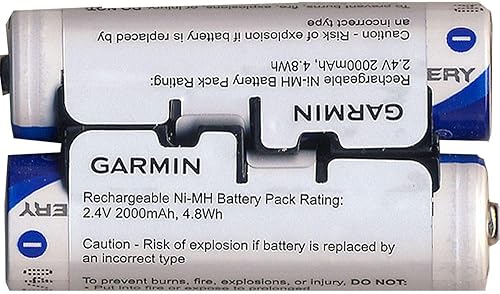
Garmin Rechargeable NiMH Battery for GPSMAP 64s/Oregon: Best for handheld Garmin GPS use
- NiMH rechargeable pack
- 2000 mAh
- 1.5 volts
- For GPSMAP 64 and Oregon 600 series
A Garmin NiMH pack for GPSMAP 64 and Oregon handhelds, not a 12V fish finder battery.
Pros
- Made for Garmin handhelds
- Rechargeable NiMH pack
- Charges in the Oregon unit
Cons
- Not for 12V fish finders
- Only suits listed handheld models
The Garmin Rechargeable NiMH Battery for GPSMAP 64s/Oregon suits a different job from the other picks. It is a 1.5V NiMH pack rated at 2000 mAh for Garmin GPSMAP 64 and Oregon 600 series handhelds.
It is not a 12V fish finder battery and should not be wired to sonar gear.
This pack charges in the Oregon unit with an AC adapter or USB cable. It gives handheld GPS users a rechargeable option instead of two AA batteries.
That can help on land trips, hunting walks and scouting days, where a spare pack keeps the handheld running.
Battery weight is listed at 3 g and the pack uses two AA format cells for 1.5 volts. For boat sonar use, skip this pick.
A Garmin fish finder needs a 12V or 16V battery matched to its input range, and a 1.5V handheld pack cannot power it.
Buy it only for listed Garmin handheld GPS models. Do not use it for a Garmin fish finder.
LiTime 16V 70Ah Lithium Fish Finder Battery: Best for 16V LiveScope systems
- 16V 70Ah lithium
- 1120Wh usable energy
- Bluetooth 5.0 monitoring
- 10A charger kit included
A 16V 70Ah lithium battery with charger for Garmin, Lowrance and Humminbird imaging systems built for 16V.
Pros
- Large 70Ah capacity
- Bluetooth battery monitoring
- 4000+ deep cycles
Cons
- Large and heavy at 19.1 lb
- Only for 16V systems
The LiTime 16V 70Ah Lithium Fish Finder Battery suits anglers with a 16V imaging system. It delivers 1120Wh of usable energy and 9.7 to 17.8 hours of power for a single device.
Bluetooth 5.0 lets you check battery data on a phone app before you launch.
It is optimized for Humminbird, Garmin and Lowrance fish finders, sonar and radar. LiTime says 16V power gives clearer, brighter charts and more stable power than 12V for sensitive sonar.
A 10A charger kit is included, with a 16V IP65 waterproof charger that charges in 7 hours.
The trade off is size and system fit. It weighs 19.1 pounds and measures 10.24 x 8.27 x 6.61 inches, excluding terminals.
It is not for starting engines and not for standard 12V fish finders. Lowrance units need a 16.4V voltage regulator while charging.
Buy it for a Garmin LiveScope or imaging setup built for 16V. It is too large for most kayak rigs.
LIPULS 12.8V 15Ah LiFePO4 Lithium Battery: Best expandable compact lithium
- 12.8V 15Ah LiFePO4
- 192Wh
- Built in 20A BMS
- 4000+ full cycles
A compact 12.8V 15Ah LiFePO4 battery with 20A BMS protection and 4P4S flexibility for fish finder power.
Pros
- Compact 5.9 x 3.8 x 3.8 in
- 20A BMS with five protections
- Expandable up to 4P4S
Cons
- 12 month warranty
- Charger not included
The LIPULS 12.8V 15Ah LiFePO4 battery suits anglers who want compact lithium power with growth room. It weighs 3.38 pounds and measures 5.9 x 3.8 x 3.8 inches.
That size fits tight kayak and small boat spaces and is over 60% lighter than lead acid.
It delivers 192Wh with 4000+ full cycles and a 10 year design life. A built in 20A BMS protects against overcharge, over discharge, over current, short circuit and over temperature.
Ultra low self discharge allows 1 year of maintenance free storage between trips.
It supports up to 4P4S wiring for up to 48V or 60Ah, which helps if you add capacity later. The trade off is a 12 month warranty and no charger in the box.
F2 terminals are included, so check your leads before you order.
Buy it for compact 15Ah lithium power. It works well for fish finders, solar and small off grid setups.
How we compared these Garmin fish finder batteries
We compared nine batteries by voltage, capacity, chemistry, weight, size and included parts. We ranked 12V picks for standard Garmin fish finders first, then placed 16V and handheld picks where they fit.
A battery that cannot power your unit cannot win, no matter its capacity.
We checked cycle life claims against chemistry. Lead acid batteries in this guide rate around a few hundred cycles.
LiFePO4 batteries rate from 2000 to 8000 cycles depending on depth of discharge. That gap drives long term value for anglers who fish often.
We also checked terminals and included parts. F1 terminals are common on sealed lead acid batteries.
Some lithium kits include chargers and pigtail leads. Others are battery only.
Missing parts cost extra, so we noted what is in the box.
How weight and usable capacity were weighed
Lead acid batteries in this guide weigh 4.3 to 5 pounds for 7Ah to 8Ah. Lithium batteries weigh 1.87 to 3.38 pounds for 10Ah to 15Ah.
That weight gap shows up on every carry to the truck and every lift into a kayak hatch.
Usable capacity also differs by chemistry. Sealed lead acid loses voltage as it discharges, so a Garmin screen can dim before the battery is empty.
LiFePO4 batteries hold a flatter discharge curve, so more of the stated amp hours stay usable through a full day.
What voltage does your Garmin fish finder need?
Most Garmin fish finders need 12V power. A 12V battery is the safe default for Striker, echoMAP, UHD and many other Garmin sonar units.
Read the manual for your exact model before you buy. Voltage mismatch can damage electronics or stop the unit from starting.
16V batteries are for systems built for 16V. The LiTime 16V 70Ah battery is made for fish finders, sonar and radar that call for 16V input.
It is not a drop in swap for a 12V unit. Do not force a 16V battery into a 12V Garmin setup.
A 1.5V NiMH pack is for handheld GPS units, not boat sonar. The Garmin NiMH pack in this guide fits GPSMAP 64 and Oregon handhelds.
It cannot replace a 12V battery for a fish finder. Keep voltage first in your shopping order.
How much capacity do you need for a full day of fishing?
Amp hours tell you how much charge a battery holds. A 7Ah battery suits short trips of a few hours.
A 10Ah to 15Ah battery suits most full days. A 20Ah kit suits long days, big screens and added electronics.
Screen size and brightness change runtime a lot. Larger Garmin units draw more power than small Striker models.
LiveScope also raises power use. If you run sonar, GPS and lights on one battery, size up by at least one step.
Our best portable fish finder battery guide covers small rigs in more detail. Read it if you fish from a kayak, float tube or small boat.
Portable power matters more when weight and box size are tight.
Lead acid or lithium: which chemistry fits your Garmin setup?
Sealed lead acid batteries cost less and use simple wiring. The ExpertPower EXP1270 and Mighty Max picks are maintenance free and spill proof.
They work well for occasional use and simple replacements. Their main cost is weight.
LiFePO4 lithium batteries weigh less and last through more cycles. The Enegitech, Akiisolo and LIPULS picks hold steadier voltage and give more usable runtime.
They cost more up front but can save money over years of use.
If you fish a few times a year, sealed lead acid can be enough. If you fish weekly or run LiveScope, lithium usually pays off.
Match chemistry to how often you fish, not just to price.
What size and terminals should you check before you order?
Measure your battery box before you buy. Height matters most because terminals add height on many models.
The ExpertPower battery is 3.70 inches tall, or 3.94 inches with terminals. The LiTime battery is much larger at 10.24 x 8.27 x 6.61 inches.
Check terminal type next. F1 terminals are common on 7Ah to 8Ah sealed lead acid batteries.
F2 terminals appear on some lithium batteries. Your fish finder leads must match, or you will need an adapter or new harness.
Our marine battery for boat guide explains box fit and wiring checks in full. Use those checks on any boat rig.
A battery that does not fit or wire up correctly will not help your Garmin unit.
How do chargers and battery protection change your choice?
A charger in the box saves extra cost and guesswork. The Nocqua kit and Akiisolo battery include chargers.
The LiTime battery includes a 10A charger kit. Battery only picks need a charger you already own or buy next.
Built in BMS protection matters on lithium batteries. A BMS guards against overcharge, deep discharge, short circuit and temperature extremes.
The Enegitech, Akiisolo and LIPULS batteries all include protection systems. That reduces risk when you charge at home or store a battery for months.
Our best fish finder battery charger guide covers charger types and charging habits. Read it if your pick does not include a charger.
Correct charging helps any chemistry last longer.
Which Garmin models and setups do these picks fit?
Most picks in this guide fit 12V Garmin fish finders. The Enegitech battery states compatibility with Garmin Striker 4 and Humminbird HELIX 5.
Other 12V picks fit by voltage, not by brand claim alone. Always confirm input range in your manual.
Kayak anglers should stick to compact batteries. The Nocqua kit, Enegitech 10Ah and LIPULS 15Ah batteries suit small rigs by weight.
Our best battery for kayak fish finder guide breaks down kayak fit by size and weight.
Small Garmin units have their own needs. Our best battery for garmin striker vivid 4cv guide covers that model and similar small screens.
Read it if you run a compact Striker unit on a small boat or kayak.
What else affects Garmin sonar performance besides the battery?
A good battery keeps voltage steady, but settings also shape what you see. Sensitivity, gain and frequency change how clear fish arches and bottom detail appear.
Our What Is Sonar Sensitivity on a Fish Finder? guide explains those settings in plain terms.
It also helps to know what sonar can and cannot do. Our [Do Fish Finders Really Work?
What to Know](/do-fish-finders-really-work/) guide sets honest limits about range, fish ID and water conditions. A strong battery will not fix poor transducer placement or bad settings.
Other brands use similar power rules. Our best battery for lowrance eagle eye 9 guide covers a different brand with the same voltage and capacity logic.
The same shopping checks apply across brands.
Our verdict on the best battery for Garmin fish finder power
The ExpertPower EXP1270 is the best all around pick for a standard 12V Garmin fish finder. It is simple, sealed and easy to replace.
Pick the Nocqua Pro Power Kit if you want lithium power with charger and leads included. Pick the Enegitech 10Ah or LIPULS 15Ah battery if weight matters most.
Pick the Mighty Max ML7-12 or 8Ah SLA battery for a low cost sealed lead acid replacement. Pick the Akiisolo 15Ah battery for longer days than small batteries allow.
Pick the LiTime 16V 70Ah battery only for a system built for 16V power.
Skip the Garmin NiMH pack for boat sonar use. It fits handheld GPS models, not 12V fish finders.
Match voltage first, then size capacity to your longest trip. That rule will lead you to the right Garmin fish finder battery every time.
Our top 3 picks at a glance
-
1
-
2
-
3
Frequently asked questions
What voltage does a Garmin fish finder need?
Most Garmin fish finders in this guide use a 12V battery. Check your unit manual for the exact input range before you buy.
A 16V battery only fits systems built for 16V power, such as some LiveScope setups.
How many amp hours does a Garmin fish finder need?
Amp hours set runtime, not voltage. A 7Ah battery suits short trips, while 15Ah to 20Ah lithium batteries suit longer days.
Larger screens and LiveScope use power faster, so size up if you fish all day.
Can I use a lithium battery for a Garmin fish finder?
Yes, if voltage matches your unit. Look for a 12V LiFePO4 battery with built in BMS protection.
Avoid connecting lithium batteries in series or parallel unless the maker states that configuration is supported.
What is the difference between SLA and LiFePO4 for sonar?
SLA batteries cost less and use simple 12V wiring, but they weigh more and hold less usable charge. LiFePO4 batteries weigh less, last through more cycles and keep voltage steadier.
Both work when voltage and capacity match your Garmin unit.