Which Trolling Motors Work with Forward Facing Sonar?
Almost any bow mount trolling motor can work with forward facing sonar if you can mount the transducer and turn the motor without shaking the view. Choose the motor for steering, thrust and GPS first, then match the transducer mount to the shaft and brand.
On this page (12 sections)
- Which trolling motors work with forward facing sonar?
- How does forward facing sonar work on a trolling motor?
- What is forward facing sonar when it is not on a motor?
- How do you mount a forward facing sonar transducer on a shaft?
- Does steering type matter for forward facing sonar?
- What shaft length do you need with forward facing sonar?
- Do you need GPS or Spot-Lock with forward facing sonar?
- Can you add GPS and Spot-Lock to a trolling motor you own?
- Which GPS trolling motors pair well with forward facing sonar?
- How do you set up a forward facing sonar trolling motor?
- What mistakes should you avoid with forward facing sonar on a motor?
- How should you choose your final forward facing sonar trolling motor setup?
Almost any bow mount trolling motor can work with forward facing sonar if you can mount the transducer and turn the motor without shaking the view. A setup succeeds or fails on mount stiffness, steering smoothness and depth control more than on brand name alone.
Start with the motor you already own or plan to buy for thrust and control. Then add a transducer mount that keeps the sonar aimed straight ahead.
If you want Spot-Lock style position holding, add GPS as a separate layer on top of that pairing. Our trolling motor buying guide covers thrust, shaft length and mounting before you add sonar.
Which trolling motors work with forward facing sonar?
Most bow mount motors work, provided the shaft accepts a mount and the motor steers predictably. Transom mount motors can work too, but the transducer then faces backward from the stern and the view changes as you turn.
Forward facing sonar shows what is ahead of the transducer. On a bow mount, ahead matches the direction the boat is moving.
You need three things to line up. The shaft must be deep enough to keep the transducer submerged.
The mount must hold the transducer at a fixed angle. The steering must move slowly enough that fish do not blur past the view.
Brand integration is an optional layer. Some brands share control between motor and display.
That is convenient, but it is not required to see fish ahead of the boat.
Rule: pick the motor for control first, then fit the sonar to it, not the other way around.
Transom mount versus bow mount for forward sonar
A transom mount turns from the back of the boat. Your forward facing sonar would look forward from the stern, which can work for slow trolling.
Steering inputs are more indirect, and the boat can swing while you watch the screen.
A bow mount puts the transducer at the front, where you are already looking and steering from. Small motor turns make small, clear changes on screen.
Hand control motors link your hand to the shaft and the view at the same time. Foot pedal and remote motors let you change direction gently while you stay near the display.
Rule: choose a bow mount for forward facing sonar unless you already own a transom mount you can test cheaply.
How does forward facing sonar work on a trolling motor?
Forward facing sonar sends a fan of sound waves ahead of the transducer and shows what they hit. The trolling motor matters because it moves and aims that transducer.
Our guide on How Does Forward Facing Sonar Work? A Quick Answer explains the picture in plain terms.
Think of the transducer as a torch head on a pole. The motor is the hand holding that pole steady, so every jerk smears fish on screen.
Slow, smooth steering therefore beats fast corrections, since a sharp turn can swing the beam past fish entirely. Depth matters too, as too shallow risks breaking the surface in chop and too deep loses detail near the boat.
Rule: if the picture shakes, fix the mount and steering before you change sonar settings.
What is forward facing sonar when it is not on a motor?
Forward facing sonar is a sonar style, not a trolling motor feature. You can mount the transducer on a motor shaft, on a separate pole, or on the hull.
Each choice changes how the view moves.
A separate pole lets you point the sonar without turning the boat. That is handy when you want to scan a dock or a brush pile while anchored.
It also means a second mount, a second cable and more gear to manage.
A motor mount keeps everything in one setup. You see in the direction you are traveling, which matches how you fish with a trolling motor.
The trade-off is that every motor turn moves the view. Hull mounts work for larger boats that travel faster.
On a small bass boat, the motor mount is usually the simpler path.
Rule: mount sonar on the motor if you fish while moving, and on a pole if you scan while still.
How do you mount a forward facing sonar transducer on a shaft?
Mounts clamp, strap or bolt to the shaft and hold the transducer at a set pitch angle. The key is a mount that fits your shaft diameter exactly and does not slip when the motor turns.
Measure shaft diameter before you buy a mount. A mount made for a common shaft size may not fit a thicker or thinner shaft.
Vibration will loosen a loose fit within a few trips.
Keep the transducer as low as needed to stay submerged, but not so low that it hits weeds or bottom. You can change depth by sliding the whole motor shaft, so the mount does not need to move for depth changes.
Route the cable with slack and zip ties so it does not pull the transducer sideways. A tight cable acts like a spring and can twist the mount out of line.
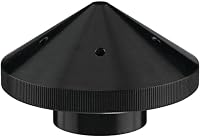
A depth collar like that Bonbo assembly helps a hand control motor stay at one depth. It fits Minn Kota freshwater and saltwater motors on bow and transom mounts with 1-1/8 in shafts.
Steel gives structure and plastic keeps it light, with a locking action that resists boat vibration.
Rule: measure the shaft first, then buy the mount, and leave cable slack at every turn.
Shaft clamps, straps and built in mounts
Clamp mounts use a band and bolts that grip the shaft. They suit most round shafts and can be repositioned for depth.
Check them after your first trip because the first vibration cycle can settle the bolts.
Strap mounts use a flexible strap and a bracket. They install fast and fit a wider range of shafts, but they can creep over time.
Built in mounts put the transducer inside the motor housing or on a factory bracket. They look clean and hold alignment well.
They also lock you to one brand and one motor model.
Rule: use a factory mount when you buy motor and sonar together, and a quality clamp when you add sonar later.
Does steering type matter for forward facing sonar?
Yes, because every steering input moves the sonar beam in real time. A motor that turns in small, even steps gives a steadier picture than one that jumps.
Foot pedal steering is popular for this reason. You can make tiny corrections with your toe while you watch the screen.
The motor head and transducer turn together, so the view follows your foot.
Remote steering works the same way from farther away. You can stand beside the display and make small directional changes.
Hand control steering is the most direct. Your hand is on the shaft, so you feel every movement.
It can be precise, but it also transmits every bump and correction straight to the sonar.
Electric steer motors often turn more smoothly than cable driven ones. A slow, steady turn rate is a feature you should value highly for forward facing sonar.
Rule: choose the steering you can move in the smallest smooth steps, and practice slow turns.
What shaft length do you need with forward facing sonar?
Shaft length must keep the transducer underwater in chop while still allowing you to raise it in shallow water. Too short and it breaks the surface, while too long it drags or blocks raising the motor.
Measure from the bow mount surface to the waterline at rest, adding room for waves, boat load and your usual depth. A few extra inches give choice if you can raise the motor clear.
A 57 in shaft, such as on the Garmin Force below, suits many bass boats and gives deep reach without forcing the head close to the water. A collar that locks shaft position also stops the motor sliding down after a bump.
Rule: buy the longest shaft you can raise clear of the water, then lock depth with a collar.
Garmin describes the Force as a freshwater bow mount with a 57 in shaft, a rugged mount, a stainless steel shaft and corrosion resistant parts. It runs on 24 or 36 volts and includes wireless foot pedal and remote control.
Integrated sonar, GPS, anchor lock and MFD integration are built in, so the mount and steering questions above are largely solved at purchase.
That integration is the trade-off to weigh. You get a matched system with fewer cables to route.
You also accept one brand's sonar and control choices for the life of the motor.
Rule: if you want factory matched sonar and steering, weigh an integrated motor before you buy mounts.
Do you need GPS or Spot-Lock with forward facing sonar?
No, GPS is not required for the sonar picture, but it changes how you fish with it. Forward facing sonar shows fish ahead.
GPS holds the boat in one spot while you watch them.
That pairing is powerful on a ledge or a weed edge. You hold position, watch fish move, and cast or drop directly to them.
Without GPS, wind and current push you off the spot while you watch.
If you are adding GPS to an existing motor, a gateway can link motor control to your display. MotorGuide's Xi Series Pinpoint GPS Gateway does that for Xi3 and Xi5 motors with compatible Lowrance displays over NMEA 2000.
The kit includes a T-connector and works with Lowrance HDS Gen2, Gen2 Touch, Gen3 and Elite-7Ti displays in the data we checked. It is a control link, not a sonar transducer.
Pair it with the right motor and display and you can run Pinpoint GPS features from the screen.
GPS also adds a decision about voltage and battery size. Spot-Lock style holding draws power for long periods.
Our guides on How to Choose a 12V Trolling Motor with Spot-Lock, How to Choose a 36V Trolling Motor with Spot-Lock, How to Choose a 24V Trolling Motor with Spot-Lock and the Best Budget Spot-Lock Trolling Motors help you size that system.
Rule: add GPS when you want to hold a spot and watch fish, not just to see them.
Can you add GPS and Spot-Lock to a trolling motor you own?
Sometimes, depending on the motor head, the display and the network between them. A trolling motor head with gps approach can turn a compatible motor into a GPS controlled one.
First check whether your motor supports a GPS head or gateway, then whether your display can talk to it over the right network. A gateway helps only if both ends use the same protocol.
Brand matching helps here, as one family often shares control with fewer steps, though mixed brands can work if compatibility is confirmed first. If your motor cannot take GPS, a separate puck can mark your spot while you steer by hand.
Our explainer on What Is a Spot-Lock Trolling Motor? breaks down position holding. Read it before buying a gateway or new head.
Rule: confirm motor model and display protocol first, and buy the gateway second.
Which GPS trolling motors pair well with forward facing sonar?
GPS motors pair well when their steering is smooth and their sonar mount is rigid. The GPS holds the boat steady, and the sonar shows you what is ahead while you hold.
For bass boats in particular, check our Best GPS Trolling Motors for Bass Boats and the broader Best GPS Trolling Motors roundup. Compare shaft length, voltage and how the motor turns, not just the GPS features.
A brushless motor, such as the one Garmin describes for the Force, can run more quietly and with less vibration. Less vibration means a steadier sonar picture.
Thrust matters too. You need enough thrust to hold in wind without running the motor hard.
A motor working near its limit shakes more and drains batteries faster.
Rule: shortlist GPS motors by smooth steering and shaft length, then compare GPS features.
How do you set up a forward facing sonar trolling motor?
Set depth first, then angle, then cable routing, then steering speed. That order prevents you from tuning the picture while the mount is still moving.
Lower the motor until the transducer sits below the surface with room for chop. Lock shaft depth with a collar or the motor's own lock.
Run the motor at low speed and watch whether the surface breaks the view.
Set pitch so the beam points straight ahead or slightly down, depending on your water. A slight downward angle helps in shallow water and near structure.
Too much angle and you lose range ahead.
Route the cable with slack, secure it with ties, and test a full left to right turn. The cable should never pull the transducer off center.
Tighten clamps, then run the motor again and recheck. Calibrate direction on screen so left on the motor matches left on the display.
Rule: install, tighten, test a full turn, then fine tune sonar settings last.
What mistakes should you avoid with forward facing sonar on a motor?
The top mistakes are a loose mount, fast steering, wrong depth and a reversed view. Each one is easy to fix once you know to look for it.
A loose mount shows as wobble in the picture when you turn. Tighten the clamp and check the cable for pull.
If the wobble stays, the shaft or mount may not fit.
Fast steering shows as fish sliding off screen before you can react. Slow down and make smaller turns.
Wrong depth shows as surface noise or a dead view in chop. Lower the motor a few inches and lock it.
In shallow water, raise it instead and accept a shorter range.
A reversed view shows as fish moving the wrong way on screen. Fix the direction setting before you fish a real spot.
Practice in open water where mistakes cost nothing.
Rule: fix mount, depth and direction in that order before you touch any other setting.
How should you choose your final forward facing sonar trolling motor setup?
Match shaft, steering and GPS to how you fish, then add the sonar mount that fits. There is no single best motor for every boat, but the order of decisions matters.
Start with your usual depth and wind to set shaft length and thrust. Pick steering you can move in small steps, then decide if GPS position holding suits your style before mounting the transducer and locking depth.
For a matched system, the Garmin Force above covers sonar, GPS and steering in one purchase. A MotorGuide Xi gateway can add display control, while a depth collar suits a hand control Minn Kota.
Review the sonar in our guide on What Is Forward Facing Sonar? A Quick Answer and pair it with the trolling motor buying guide so you buy once.
Rule: decide shaft, steering and GPS first, and let the sonar mount follow those choices.
Frequently asked questions
Can any trolling motor use forward facing sonar?
Yes, if the transducer can mount firmly on the shaft or motor and the motor steers smoothly. Brand matching is not required for the sonar picture itself, but it matters for integrated mounts, cables and control from the display.
Will a transducer on a trolling motor shaft stay steady?
It stays steady when the shaft is rigid, the mount is tight and you make slow steering changes. Fast turns, a loose collar and a long shaft all add shake that shows on the forward view.
Do I need GPS on my trolling motor for forward facing sonar?
No, GPS is not required for the sonar image. GPS helps you hold position while you watch fish, so it pairs well with forward facing sonar even though the two systems are separate.
Can I move a forward facing sonar transducer between boats?
You can if the mount fits the new shaft and the display and wiring are compatible. Check shaft diameter, cable length and connector type before you move it.