Garmin Force Trolling Motor Review: Worth It? (November 2026)
The Garmin Force Trolling Motor 57 in suits freshwater bow-mount use where boat control, GPS hold and sonar integration matter most. Pair it with the Garmin foot pedal for familiar cable-like steering, and check shaft length and battery system before you order.
On this page (11 sections)
- Garmin Force trolling motor reviews at a glance
- Who the Garmin Force suits best
- Specs that matter in daily use
- Bow mount, shaft length and boat size
- Controls: pedal, remote and GPS hold
- Sonar, GPS and Garmin display integration
- Setup steps before the first trip
- Care, maintenance and storage
- Trade-offs between the motor, pedal and nut
- Alternatives on this page
- Verdict: Garmin Force trolling motor reviews
The Garmin Force Trolling Motor 57 in is built for freshwater boat control with GPS hold, integrated sonar and wireless steering options. These Garmin Force trolling motor reviews focus on the original Force motor, its separate foot pedal and its prop nut.
Together they cover the motor, the control you stand on and the small part that keeps the prop secure.
Our score weighs specs, features and buyer feedback against what you're shopping for. We compared the shaft length, voltage options, thrust ratings and control methods across these three products.
The motor itself scores lower than the accessories because its value depends so much on your battery system, bow mount and water depth.
Garmin Force trolling motor reviews at a glance
The Garmin Force 57 in is the centerpiece, with a 57 inch shaft and bow mount for freshwater use. It runs on 24 volts or 36 volts, giving 80 lb of thrust at 24V and 100 lb at 36V.
Garmin describes a brushless motor, a rugged mount, a stainless steel shaft and corrosion-resistant components.
Garmin Force Trolling Motor 57": Best for freshwater GPS control

- 57 inch shaft
- Bow Mount
- 24 volts or 36 volts
- 80 lb thrust at 24V or 100 lb at 36V
- Brushless motor
- Stainless steel shaft
The original Force freshwater bow motor with integrated sonar, GPS, anchor lock and wireless controls.
Pros
- 57 in shaft for deeper bow setups
- Works on 24V or 36V systems
- Integrated sonar and GPS features
- Stainless steel shaft
Cons
- 109.1 lb weight needs a strong bow mount
- Freshwater use is the stated recommendation
- Battery system choice limits thrust
The motor also includes integrated CHIRP sonar with ClearVü and SideVü, a wireless foot pedal and remote, built-in GPS and anchor lock. It integrates with Garmin multifunction displays.
Those features make it a system motor, not just a propulsion unit, so the rest of your electronics matter when you judge it.
The foot pedal and prop nut are not included in that same package in the products here. Treat the motor, pedal and nut as three separate decisions.
You can buy the motor for remote control, add the pedal for foot steering, and keep a prop nut as a spare.
Who the Garmin Force suits best
The Force suits bass and multispecies anglers who fish from the bow and want GPS spot hold while they cast. Anchor lock is the feature that matters most on windy days, because it holds position without constant corrections.
If you fish docks, brush piles or deep structure, that hold saves focus for presentation.
It also suits Garmin users who already run Garmin displays at the console or bow. Integration means sonar views and motor controls can share a screen.
That helps when you want to mark a spot, return to it and hold there with one system.
It suits fewer people with small boats, shallow ponds or saltwater plans. The 57 inch shaft and 109.1 lb weight ask for a solid bow and enough depth.
For saltwater, compare the best saltwater electric trolling motor picks before you commit to a freshwater model.
Kayak anglers should also look elsewhere first. Our best kayak trolling motor guide covers motors sized for kayaks, where a 109.1 lb bow motor would be far too large.
Specs that matter in daily use
The 57 inch shaft is the first spec to check against your boat before thrust or electronics. Shaft length controls how deep the prop sits when the motor is deployed.
Too short, and the prop can ventilate in chop. Too long, and it can reach bottom in shallow water.
Voltage is the second choice. At 24 volts you get 80 lb of thrust, and at 36 volts you get 100 lb.
More thrust helps in wind and current, but it also demands a larger battery bank. Our garmin 36v trolling motor guide explains how that choice shapes the whole system.
The stainless steel shaft and brushless motor affect smoothness and upkeep. A brushless design is built for efficient electric operation.
Stainless construction helps with corrosion resistance, which matters even in fresh water over time.
Weight shapes installation. At 109.1 lb, this motor needs a bow mount rated for the load and a deck that can carry it.
Plan the install with help, and check clearance for stow and deploy before drilling anything.
Bow mount, shaft length and boat size
A bow mount with a 57 in shaft fits many 18 to 21 foot fishing boats when depth and trim line up. Measure from the mount point to the waterline with the boat loaded with fuel, gear and passengers.
That loaded measurement is the one that counts on a real fishing day.
Check the bow layout for a pedestal, trolling motor plug, storage door swing and rod storage. The Force needs room to raise, lower and rotate without hitting a rail or windshield.
Dry fit the swing path before you finalize hardware.
Pontoon owners face a different layout, with rails and open decks that change mount options. If that is your boat, compare the best pontoon trolling motor guide first.
A bow mount that works on a bass boat may not suit a pontoon bow.
Transom mount fans also need a reality check. Foot control questions are common, and our take on a transom mount trolling motor with foot control shows why bow mount foot pedals are the standard for this style of fishing.
Controls: pedal, remote and GPS hold
The wireless foot pedal gives you cable-like steering without a cable to the motor. Garmin says the pedal provides instant control and responsiveness, yet feels and steers just like a cable-steered pedal.
It runs wirelessly on AA batteries, or it can be hardwire installed if you prefer.
That choice comes down to how you fish. A pedal lets you steer while you cast with both hands.
A remote keeps control in your hand when you move around the deck. Many anglers want both, which is why the motor ships with wireless foot pedal and remote control in its feature set.
GPS anchor lock changes how you hold a spot in wind. Instead of feathering the motor all day, you set a position and let the motor correct.
That is a major help when you work a flat in steady wind.
Learn the basics before your first trip with our guide to how to use garmin force trolling motor features. Practice in open water first, then add sonar and waypoint work once steering feels natural.
Sonar, GPS and Garmin display integration
Integrated CHIRP sonar with ClearVü and SideVü puts fish finding at the motor where you fish. For a wider look at motors paired with forward-facing sonar, see trolling motors for forward-facing sonar.
That matters when you want to see bait and structure right under the bow.
It also means the transducer is part of the motor package rather than a separate install.
Built-in GPS supports anchor lock and route work. The motor can hold a spot, follow a line or return to a point, depending on how you set it up.
Those functions depend on a clean GPS signal and a calm setup routine.
Integration with Garmin multifunction displays ties it together. You can manage motor and sonar from a screen you already know.
If you run other brands at the console, check compatibility before you buy.
Compare it with the lowrance ghost trolling motor reviews if you already own Lowrance electronics. The smarter buy is usually the motor that talks to the screens on your boat.
Setup steps before the first trip
Start with battery, charger and mount before you think about features. Confirm whether your system will be 24 volts or 36 volts, then size batteries and a charger for that system.
A trolling motor is only as good as the power you feed it.
Mount the motor on a flat, solid bow surface and test the full swing. Raise and lower it through its range, and confirm the prop clears the hull at every angle.
Have a second person help, since the motor weighs 109.1 lb.
Install the pedal where your foot lands naturally when you cast. Deck mount means the position is fairly fixed, so stand in your usual spot and check reach.
Our trolling motor buying guide walks through the full shopping checklist.
Pair the remote, pedal and display, then set your heading and GPS units. Do a short dockside test first.
Make sure the pedal responds, the prop spins the right way and anchor lock engages before you launch.
Care, maintenance and storage
Freshwater rinse and a dry storage spot cover most routine care for this motor. After each trip, rinse the shaft and lower unit with fresh water and let it dry.
Wipe the mount and check for line, weeds or debris around the prop.
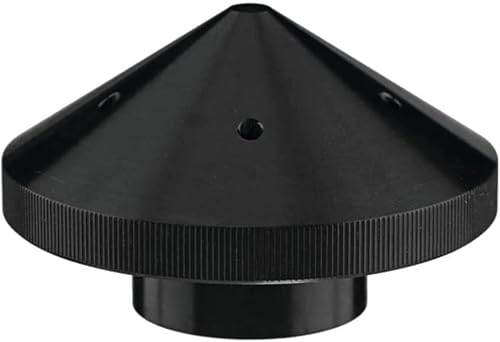
The prop nut is a small part that deserves attention. Keep the T-H Marine GFEL-GF-BK-DP prop nut as a spare in a dry bag on the boat.
A spare costs little space and saves a trip if the original is damaged or lost.
Check pedal batteries on a schedule rather than waiting for a failure. The pedal runs on AA batteries in wireless mode, so keep spares in the boat.
If you hardwire the pedal, inspect connections during your normal boat maintenance.
Store the motor raised and locked in a dry place. Cover it if it lives outdoors, and inspect the shaft for nicks that can damage seals.
Follow Garmin's manual for torque, lubrication and service intervals.
Trade-offs between the motor, pedal and nut
The motor is a big system purchase, while the pedal and nut are small add-ons with daily impact. The motor gives thrust, GPS hold and sonar, but it also brings weight, battery cost and install work.
The pedal costs far less space and changes how the motor feels all day.
The prop nut is the easiest part to overlook. It is black, One Size and made of plastic, with part number GFEL-GF-BK-DP.
It will not change how the boat fishes, but a missing or damaged nut will stop you cold.
Choose the pedal if you fish from the bow and cast constantly. Choose remote-first control if you move around the deck or fish with other people.
You can add the other control later, so start with the one that matches your style.
Voltage is the trade-off that locks in the most. A 24 volt system is simpler and lighter.
A 36 volt system gives 100 lb of thrust for wind and current. Decide based on the water you fish, not the number alone.
Alternatives on this page
T-H Marine prop nut
This nut suits Force owners who want a spare or a replacement. Its part number is GFEL-GF-BK-DP, and it is made specifically for the Garmin Force.
Keep one in a dry bag and you will not need it often, but you will be glad it is there.
Garmin foot pedal
This pedal suits anglers who want familiar foot steering. Garmin says it feels and steers like a cable-steered pedal.
It weighs 5.5 pounds and uses model number 010-12834-00.
Verdict: Garmin Force trolling motor reviews
Pick the Garmin Force 57 in for freshwater bow fishing with GPS hold and integrated sonar. Pick the foot pedal if you want hands-free steering while you cast.
Keep the prop nut as a spare so a small part never ends your day.
Skip it if your boat is small, shallow or saltwater focused. Check shaft length, bow strength and battery system before you order.
For the full shopping context, start with our trolling motor buying guide.
Our score weighs specs, features and buyer feedback against what you're shopping for. The motor earns its place through thrust options, sonar integration and GPS anchor lock.
The pedal earns its score through familiar control, and the nut earns its score through a simple, Force-specific fit.
Frequently asked questions
Is the Garmin Force a freshwater trolling motor?
The Garmin Force 57 in is recommended for fresh water, with a bow mount, electric operation and 24 volt or 36 volt power. It gives 80 lb of thrust at 24 volts and 100 lb at 36 volts.
Confirm your battery bank and bow mount before ordering, and plan for its 109.1 lb weight.
What shaft length does the Garmin Force 57 in have?
It has a 57 inch shaft, measured for the motor itself rather than your boat's water depth. Measure from the bow mount to the waterline at fishing trim, with the boat loaded as usual.
If the prop would sit too shallow or the shaft would hit bottom, a different shaft length may suit you better.
Does the Force work with a foot pedal?
The Force works with a wireless foot pedal, and Garmin sells a separate Garmin Foot Pedal for Force Trolling Motor. That pedal uses AA batteries or can be hardwire installed, and Garmin says it feels and steers like a cable-steered pedal.
Check deck space before choosing pedal control over a remote.
What voltage does the Garmin Force need?
The Garmin Force 57 in is rated for 24 volts or 36 volts. Garmin rates it at 80 lb of thrust on 24 volts and 100 lb on 36 volts.
Your choice affects battery size, charger and runtime, so match the motor to the system you plan to install.
Our guide to a garmin 36v trolling motor helps you compare that choice.


