How to Wire a 12V Trolling Motor
To wire a 12V trolling motor, connect one 12V battery's positive lead through a circuit breaker to the motor's positive lead, and the negative lead directly to the motor. Use marine-grade wire sized for the motor's current draw, secure the run, and check polarity before you power it up.
On this page (10 sections)
- What do you need before you wire a 12V trolling motor?
- How do you connect a single 12V battery to the motor?
- How to wire a 12v trolling motor step by step
- What size wire should you use for a 12V run?
- Do you need a circuit breaker on a 12V trolling motor?
- Should you use a plug and receptacle on a 12V motor?
- How do you route and secure the wiring?
- What safety checks should you do before first use?
- How do you maintain a 12V trolling motor wiring?
- Final check: is your 12V wiring ready?
To wire a 12V trolling motor, connect one 12V battery's positive lead through a circuit breaker to the motor's positive lead, and the negative lead directly to the motor. Use marine-grade wire sized for the motor's current draw, secure the run, and check polarity before you power it up.
A 12V system uses a single battery. There is no series wiring to balance and no second battery to maintain.
The key work is wire size, breaker placement, and clean dry connections.
What do you need before you wire a 12V trolling motor?
You need one 12V marine battery, marine-grade wire, a circuit breaker, connectors, and the wiring diagram from your motor maker.
Check the manual for current draw and recommended wire size. That number drives the breaker rating, wire gauge, and plug rating.
Bring a matching crimping tool, drill and bits, cable ties or loom, and a multimeter. A battery box and hold-down strap keep the battery steady and dry.
Plan the route from battery to bow or transom first. Note bulkheads and rub points, and use grommets at each pass-through.
How do you connect a single 12V battery to the motor?
Connect battery positive to the breaker, then breaker to motor positive, and run negative straight from battery to motor.
Mount the battery where it cannot slide if the boat heels. Secure it with a strap and keep terminals clear of metal.
From the breaker output, run the lead to the motor positive terminal or plug. Tighten each terminal until snug, as a loose terminal causes heat and voltage drop.
Before switching the breaker on, set the speed control off. Check for about 12V across the motor leads, and if polarity is reversed, swap leads at the motor, not at the battery.
How to wire a 12v trolling motor step by step
Mount the battery, run positive through the breaker, run negative, then test with the control off.
Switch the breaker off and fit the battery box and hold-down. Lay wire on deck to check length, leaving extra at bends and both ends.
Crimp positive to the breaker, then to the motor, using insulated marine terminals and heat shrink. Connect negative directly battery to motor, secure with ties, and fit grommets at panels.
Test out of water, check voltage at the motor, then run briefly at slow speed.
Read our guide to how to wire a trolling motor for more on crimps and routing.
Fixtures and terminals worth checking
Use tinned copper terminals and marine-grade crimps, because plain copper corrodes fast in marine air. Heat shrink over each crimp barrel keeps spray out.
Ring terminals suit battery posts and breaker studs because they stay on if a nut loosens. Match the terminal to the stud size.
Never force a terminal onto an oversized post.
Check that battery terminals are clean and tight. A loose clamp will make the whole system behave badly.
Our notes on what size wire for a trolling motor help you match gauge and terminal size to current draw.
What size wire should you use for a 12V run?
Use the wire size your motor manual specifies for its current draw, and go thicker if the run is long. Wire that is too thin gets warm and loses voltage.
A 12V motor draws more current than a comparable 24V motor for the same thrust. That higher current is why gauge matters so much here.
A short transom run may suit 8 AWG, while a long bow run often calls for 6 AWG or thicker.
Measure the full path, as both legs count toward voltage drop. Use stranded, tinned copper marine wire, which flexes with vibration and resists breaking at the crimp.
Why length changes the gauge
Voltage drop grows with length and current, so a long run needs thicker wire than a short one. A motor on a long thin run can act sluggish.
Keep voltage drop under about 3 percent on the full round trip. If your run is more than 15 to 20 feet each way, check the gauge chart for your amp draw.
Our guide to what size wire for a trolling motor has charts and examples.
Buy wire by the foot in the size you need. One continuous length from battery to motor is cleanest.
If you must splice, use a sealed butt connector and keep it accessible.
Do you need a circuit breaker on a 12V trolling motor?
Yes, fit a breaker close to the battery positive terminal, rated for your motor's current draw. The breaker protects the wire, not the motor.
Mount it where you can reach it and where spray cannot pool. Use a manual-reset breaker rated at or slightly above full-load current, as the manual directs.
Run the main positive lead from battery to breaker input. The wire between battery and breaker is unprotected, so keep it as short as you can and never move the breaker to the motor end.
If the breaker trips, do not just reset it. Find the cause first, fix it, then reset.
Should you use a plug and receptacle on a 12V motor?
A plug and receptacle is worth it if you remove the motor often or move it between boats. It also simplifies trailering and storage.
Choose a connector rated above your motor's current draw, with corrosion-resistant marine contacts. A 50A plug suits most 12V motors, while a 100A unit gives headroom.
Match the gauge the connector accepts to your run.
Wire the receptacle on the boat side and the plug on the motor side, with the same polarity on both. Keep positive and negative pins in the same orientation and label them if not keyed.
A reversed plug can damage a motor fast.
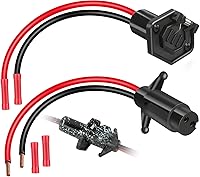
The HKAIMING plug uses thick 8-gauge wire and marine-grade tinned wires to reduce resistance and heat. Its weatherproof female receptacle has a spring for secure closure, and the male plug has wing tabs for easy fitting and removal.
That suits a 12V bow mount installed with a screwdriver and wire cutters.
The NOVINO set is rated at 50A continuous, with tinned copper connectors and 8 AWG marine-grade wire already fitted. NOVINO states the self-locking design gives IP67 waterproof performance, with a gasket in the plug and a sealing cap on the receptacle.
It covers 12V to 48V two-wire systems, so it stays useful if you upgrade later.
Which plug suits a 12V setup?
Pick a 50A plug for most 12V motors, and a 100A plug if your motor runs near that current. Both help you avoid a connector that runs warm.
The RVMARINEPAT set handles up to 100A continuous current and works with 6 to 4 AWG wire, which suits longer 12V runs. It uses silver-plated brass contacts, has a self-locking design, and carries IP67 protection with sealing caps and gaskets.
RVMARINEPAT rates it for 1,000 plug cycles and -40°F to 220°F.
Compare options in our roundup of best trolling motor plug and receptacle 12v picks.
How do you route and secure the wiring?
Secure the run every 12 to 18 inches, grommet every pass-through, and keep wire away from sharp edges.
Use UV-resistant ties and adhesive mounts on clean, dry surfaces, with low tension so wire flexes with hull instead of pulling at terminals.
Fit grommets at bulkheads and deck fittings, leave a service loop at motor for pivoting, and keep run clear of bilge or raise it in conduit.
What safety checks should you do before first use?
Check polarity, terminal tightness, breaker rating, and insulation before switching the motor on in water.
With breaker off, tug each terminal and scan full run for nicks or pinches. Confirm breaker rating matches motor manual.
Switch on with motor clear of water and control off, then measure voltage at motor leads. Several volts low suggests thin wire, poor crimp, or weak battery.
Run briefly at slow speed and confirm direction, swapping motor leads with breaker off if backward.
For larger systems see how to wire a 24v trolling motor and wiring 36v trolling motor.
How do you maintain a 12V trolling motor wiring?
Inspect terminals and wire run monthly, clean corrosion, and reseat loose connections.
Rinse spray from battery and breaker in fresh water and dry well, and clean corroded plug contacts with brass brush.
Tighten battery terminals and breaker nuts regularly, as vibration loosens them, and keep battery charged for storage with marine charger for 12V deep-cycle.
If choosing new motor, our trolling motor buying guide covers thrust and mounting. See can you use foot control with a transom-mount trolling motor for transom needs, and garmin force trolling motor reviews for premium bow mount.
Final check: is your 12V wiring ready?
Your wiring is ready when the battery is secure, the breaker sits near it, wire gauge matches draw, and connections are clean and tight.
Pick HKAIMING for 12V Minn Kota, MotorGuide, or Newport where 8-gauge wire fits, and NOVINO 50A for pre-wired 8 AWG leads and watertight upgrade-ready connector.
Pick RVMARINEPAT 100A for high current or 6 to 4 AWG runs, with silver-plated brass contacts and IP67 protection.
Do dock test and check voltage at motor before depending on it on water.
Frequently asked questions
How to wire a 12v trolling motor to one battery?
Connect the battery positive terminal to a circuit breaker, then run the breaker output to the motor positive lead. Connect the battery negative terminal to the motor negative lead.
Use wire sized for the motor's amp draw, secure the leads, and confirm polarity before switching the breaker on.
What size wire do I need for a 12v trolling motor?
Match wire size to the motor's current draw and the length of the run. Longer runs need thicker wire to limit voltage drop.
Your motor manual lists the required size, and our guide to what size wire for a trolling motor explains how to check it for your setup.
Do I need a circuit breaker for a 12v trolling motor?
Yes. A circuit breaker protects the wire and battery if a lead shorts or the motor draws too much current.
Mount it close to the battery positive terminal, use one rated for your motor, and reset it only after you find and fix the cause.
Can I use a plug and receptacle for a 12v trolling motor?
Yes, a plug and receptacle lets you remove the motor for storage or moving it between boats. Pick a connector rated above your motor's current draw, with marine-grade contacts and a watertight design, and wire it with matching polarity on both sides.